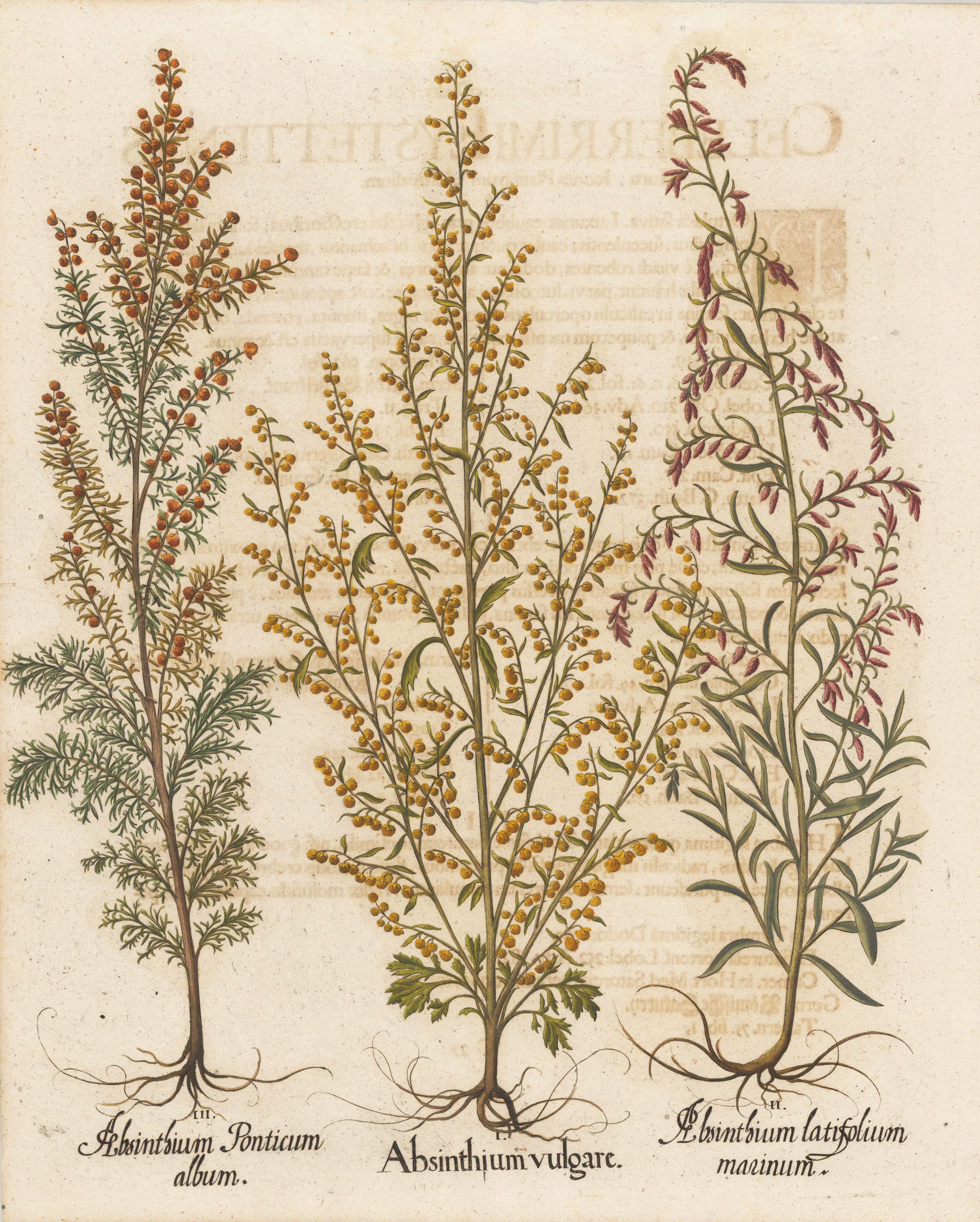
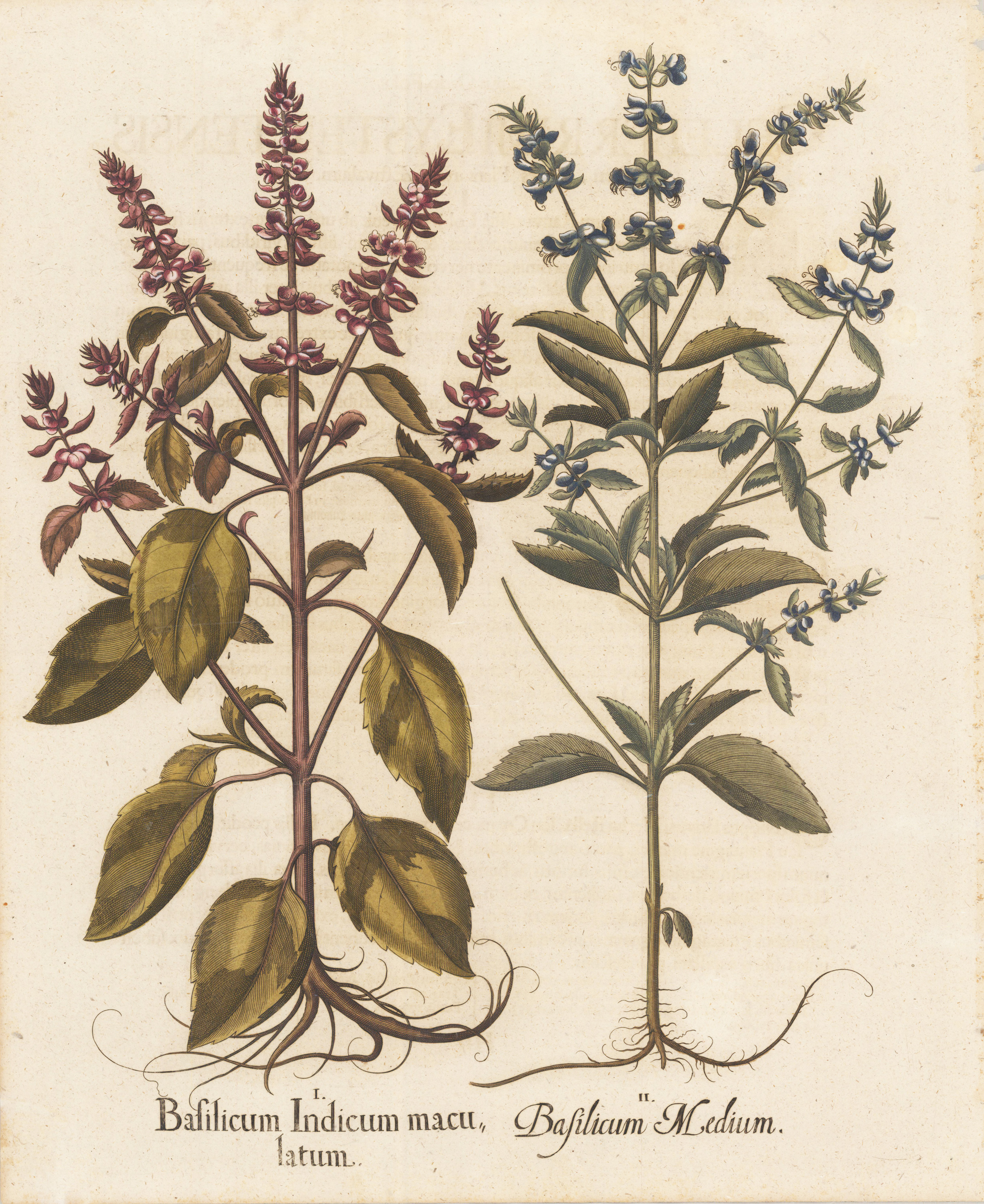
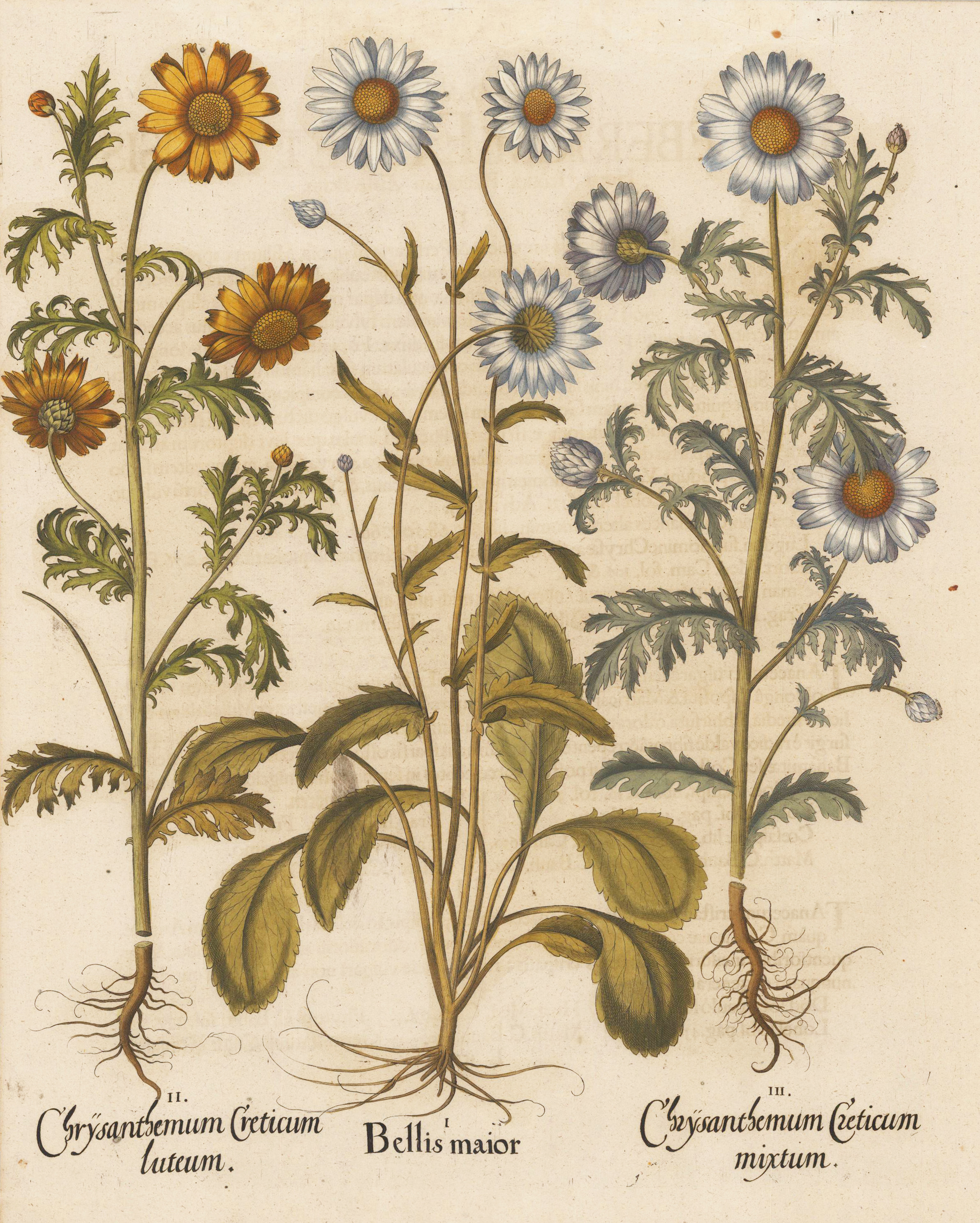
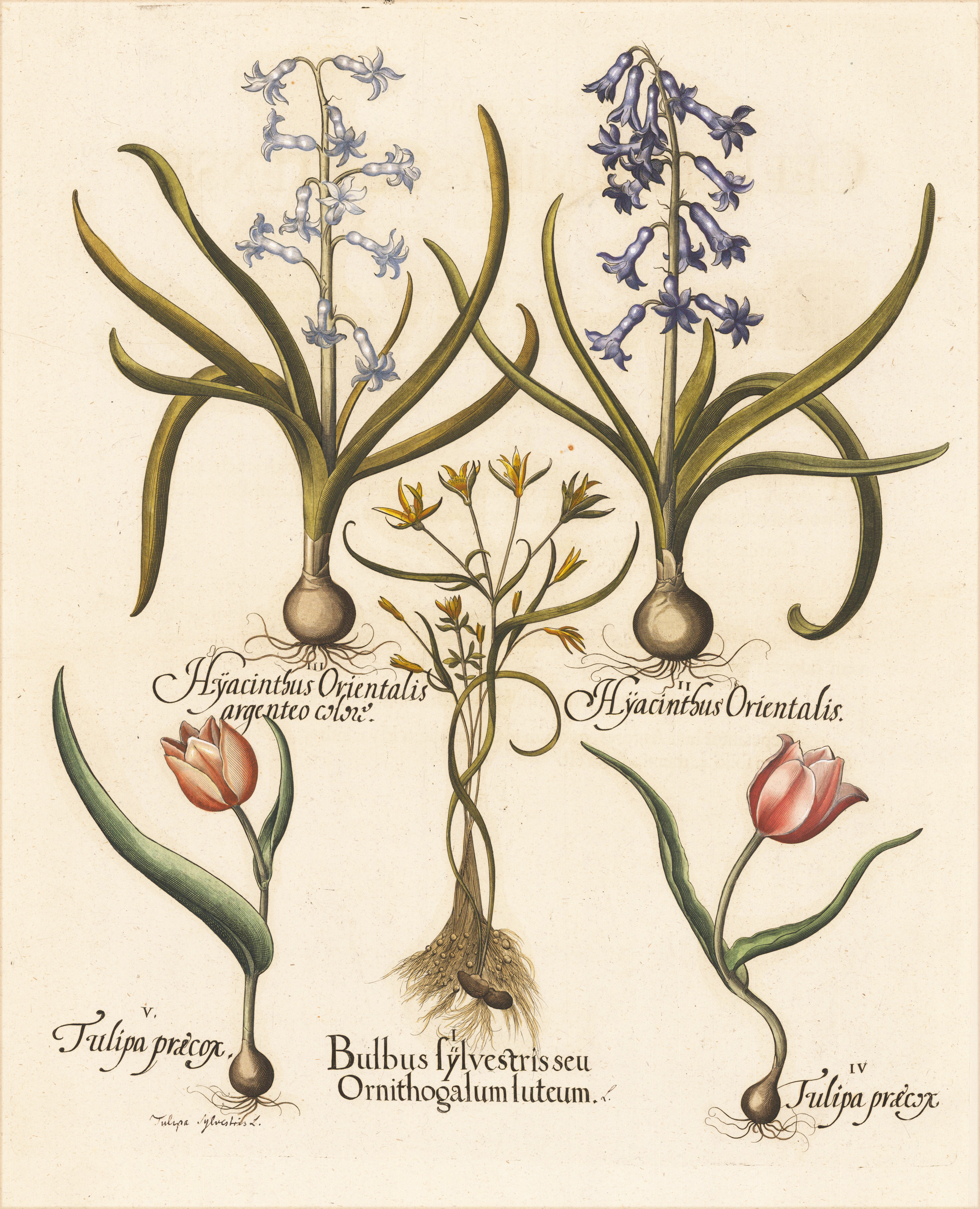
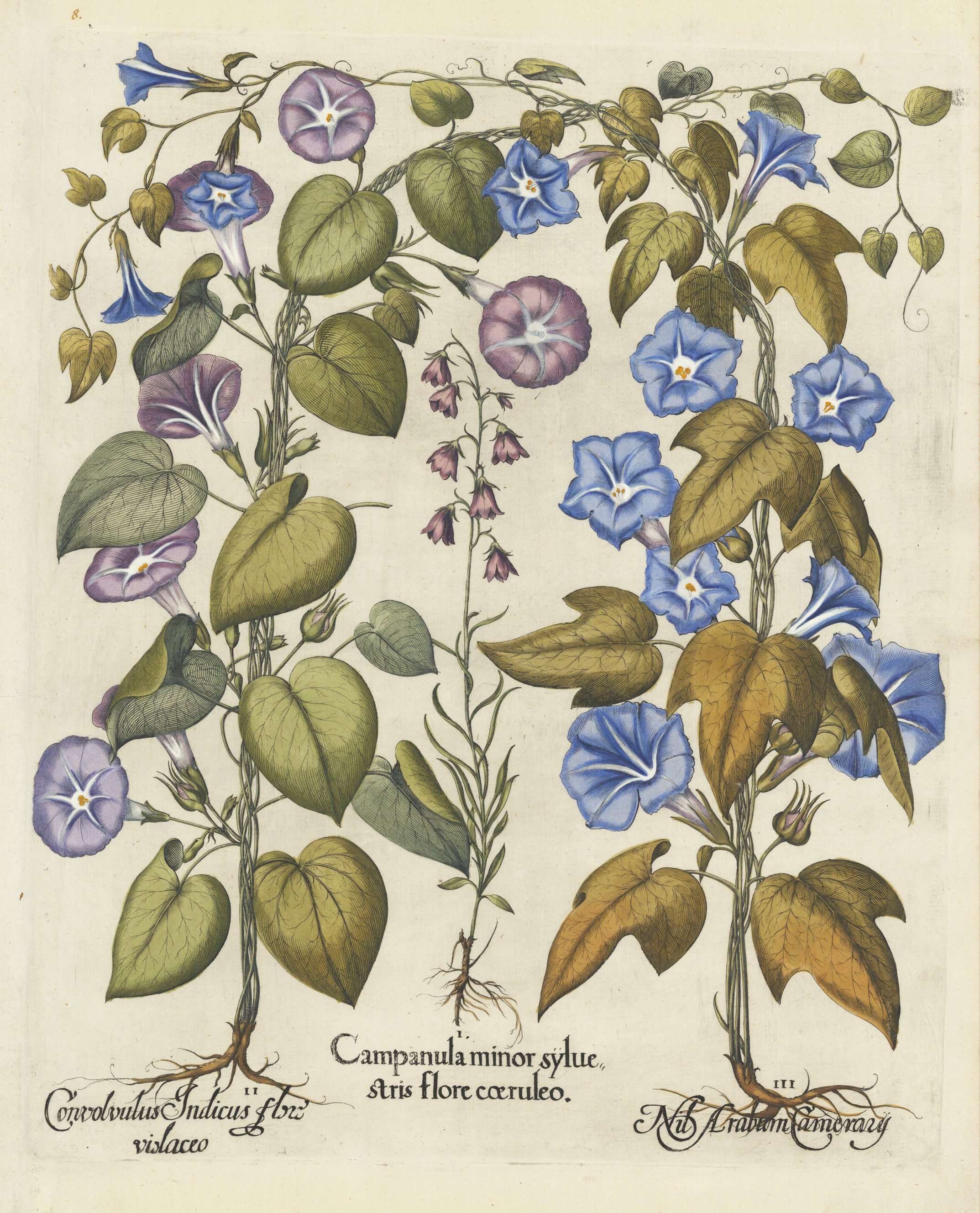
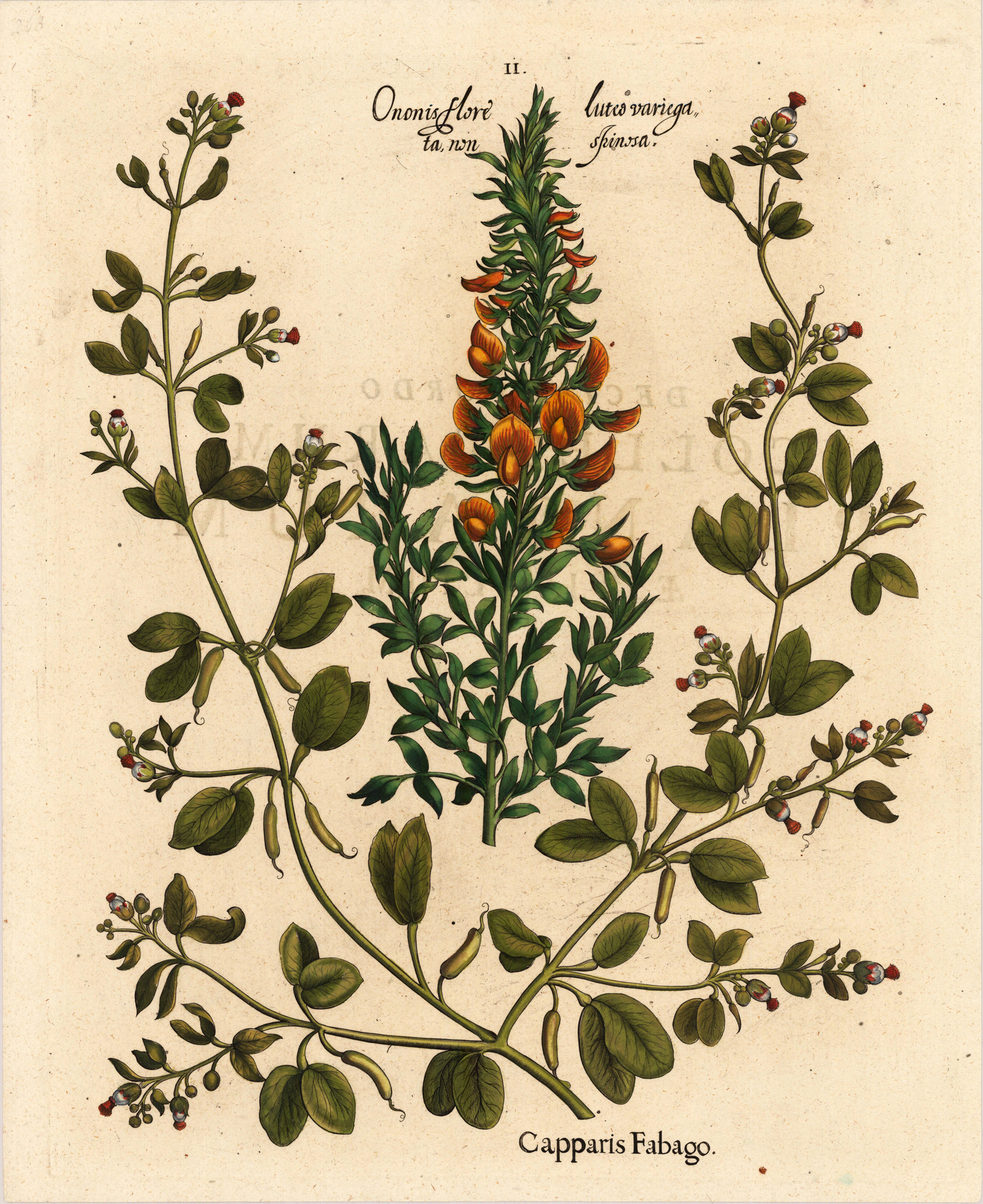
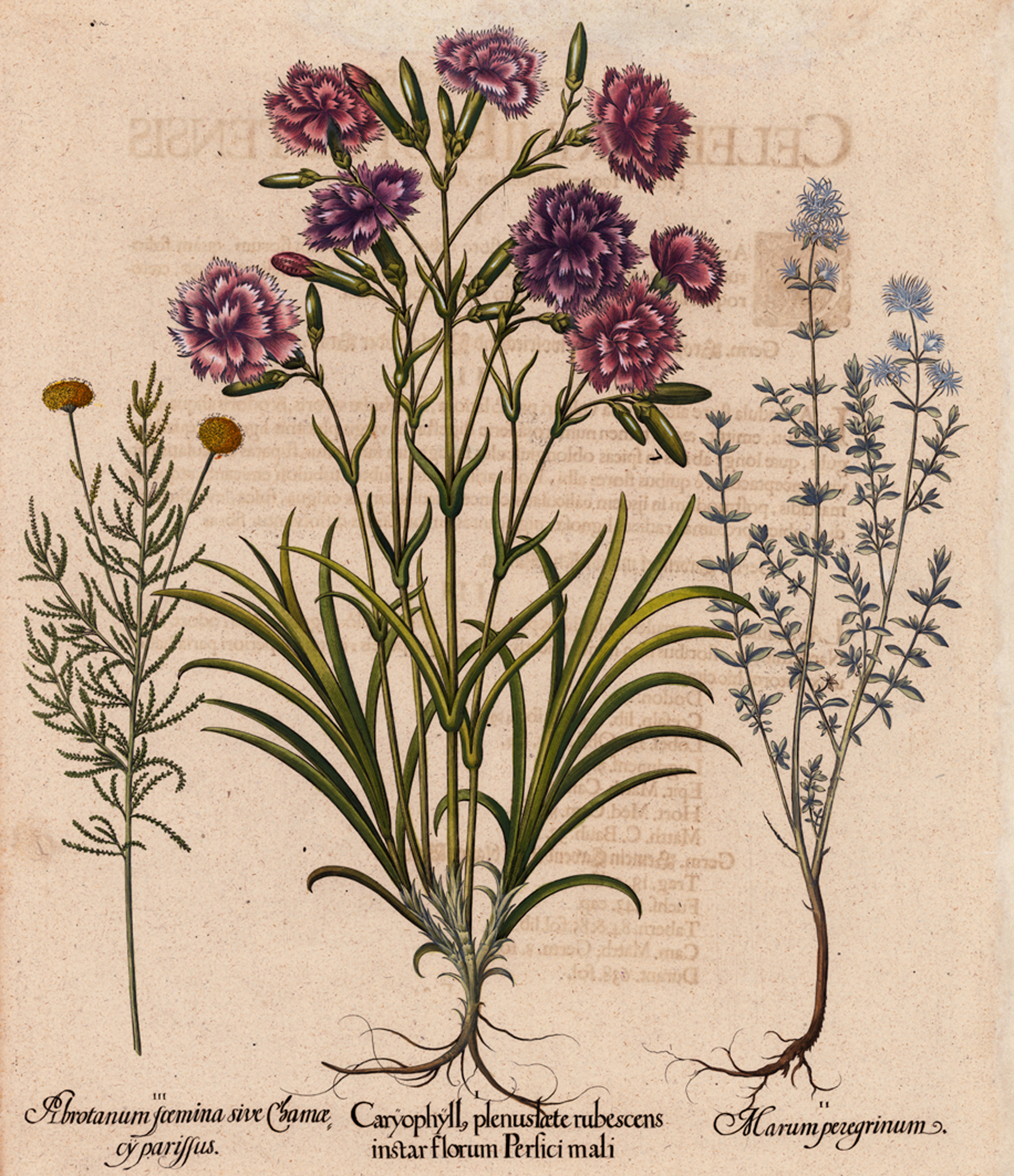
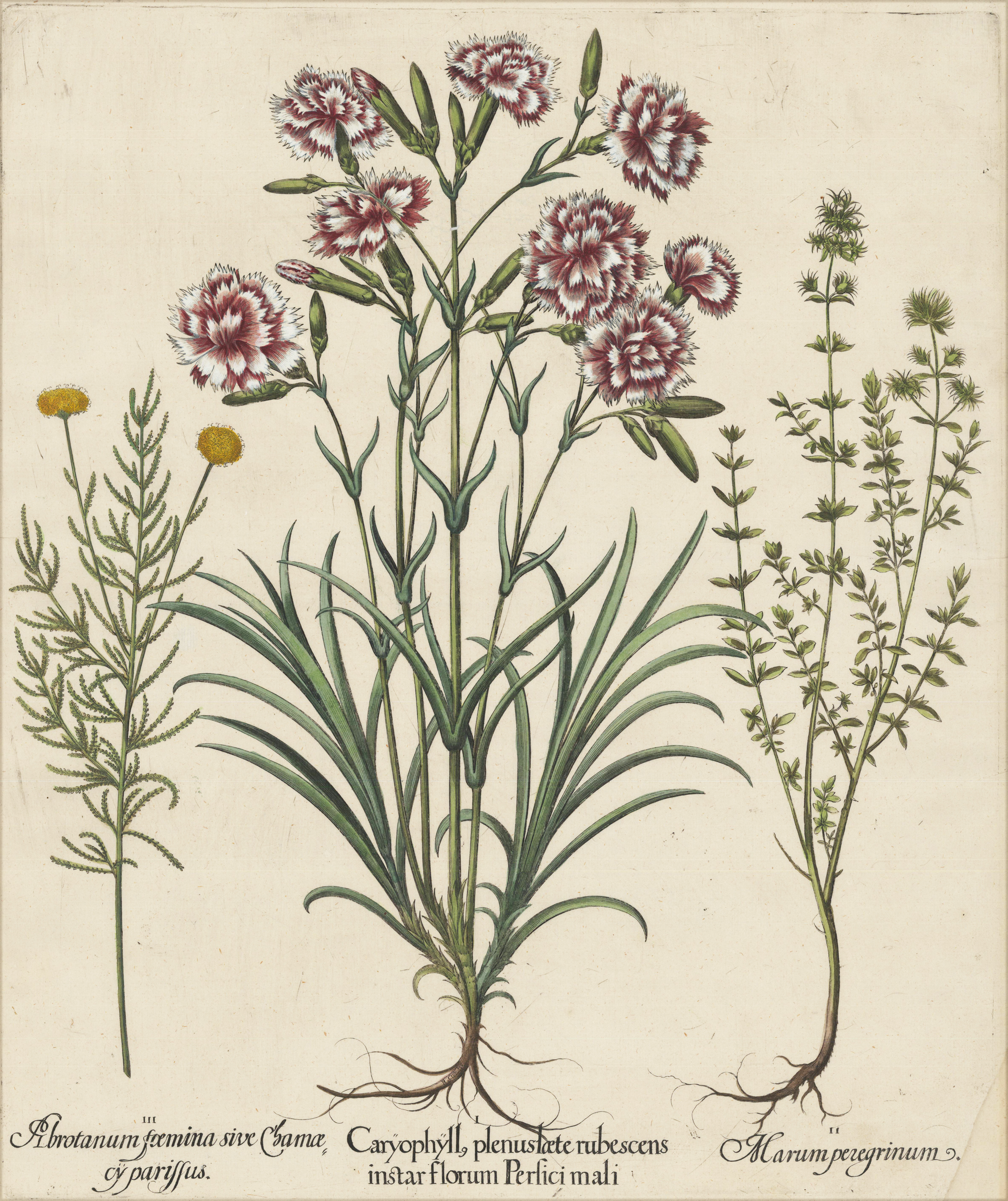
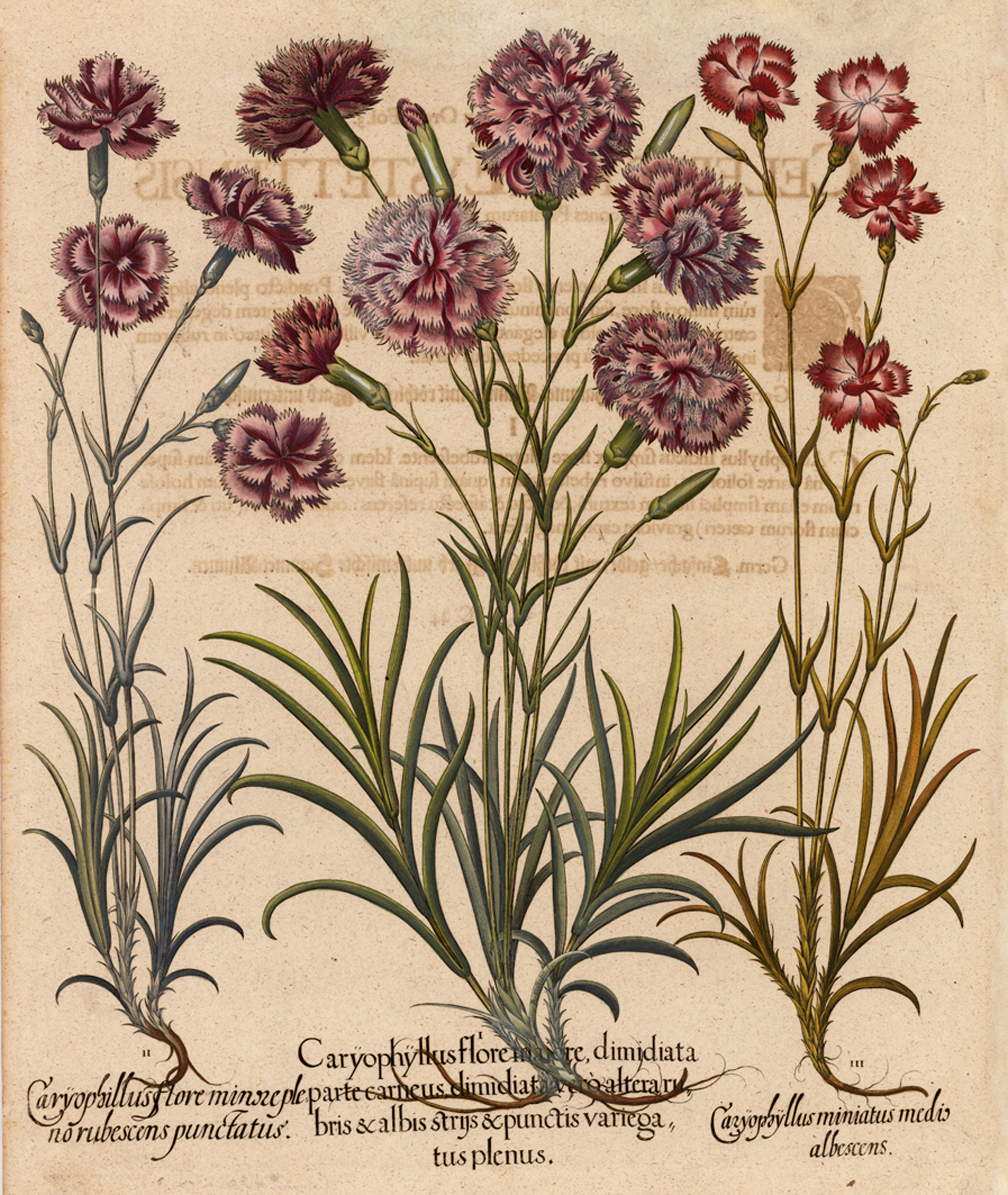
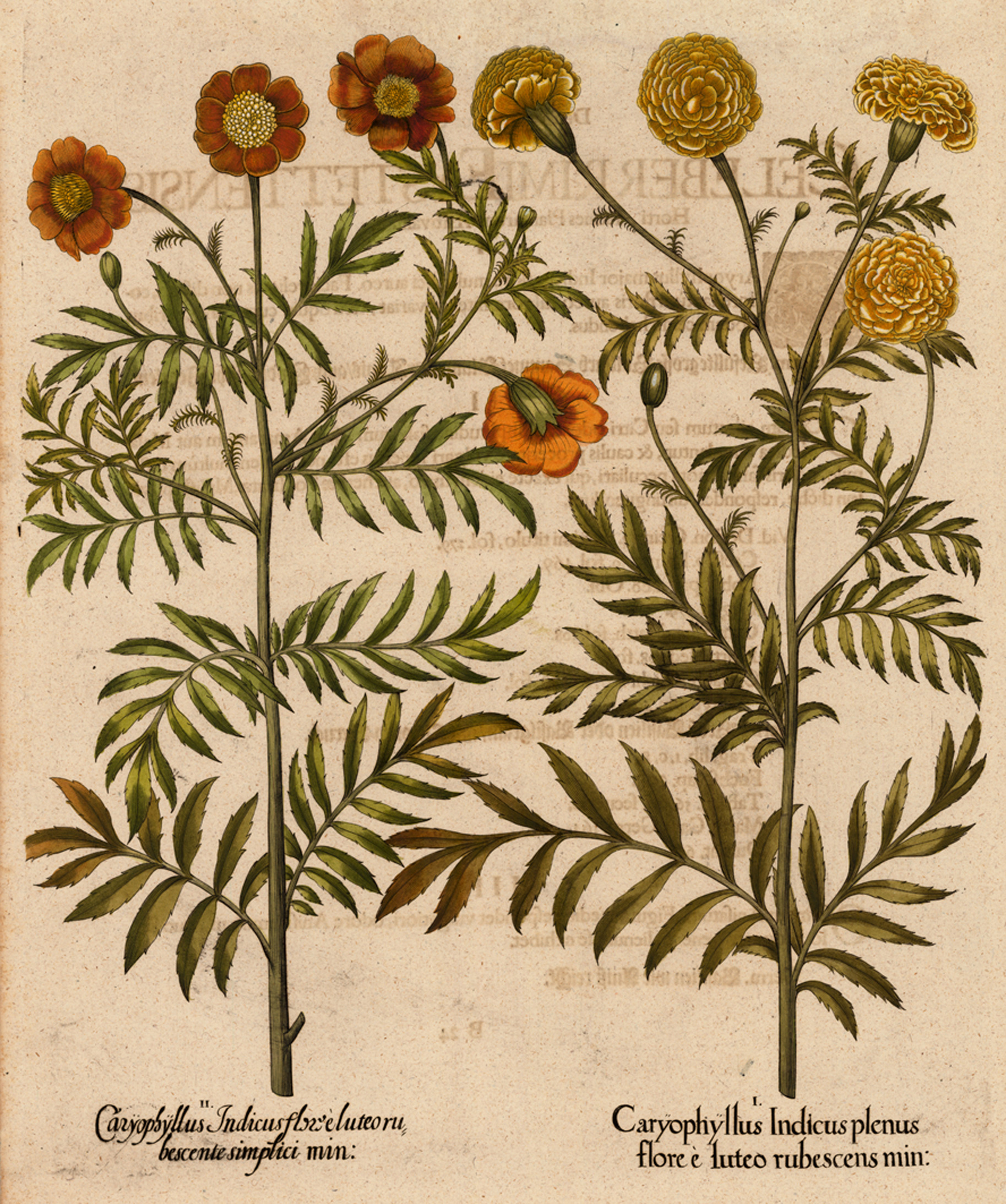
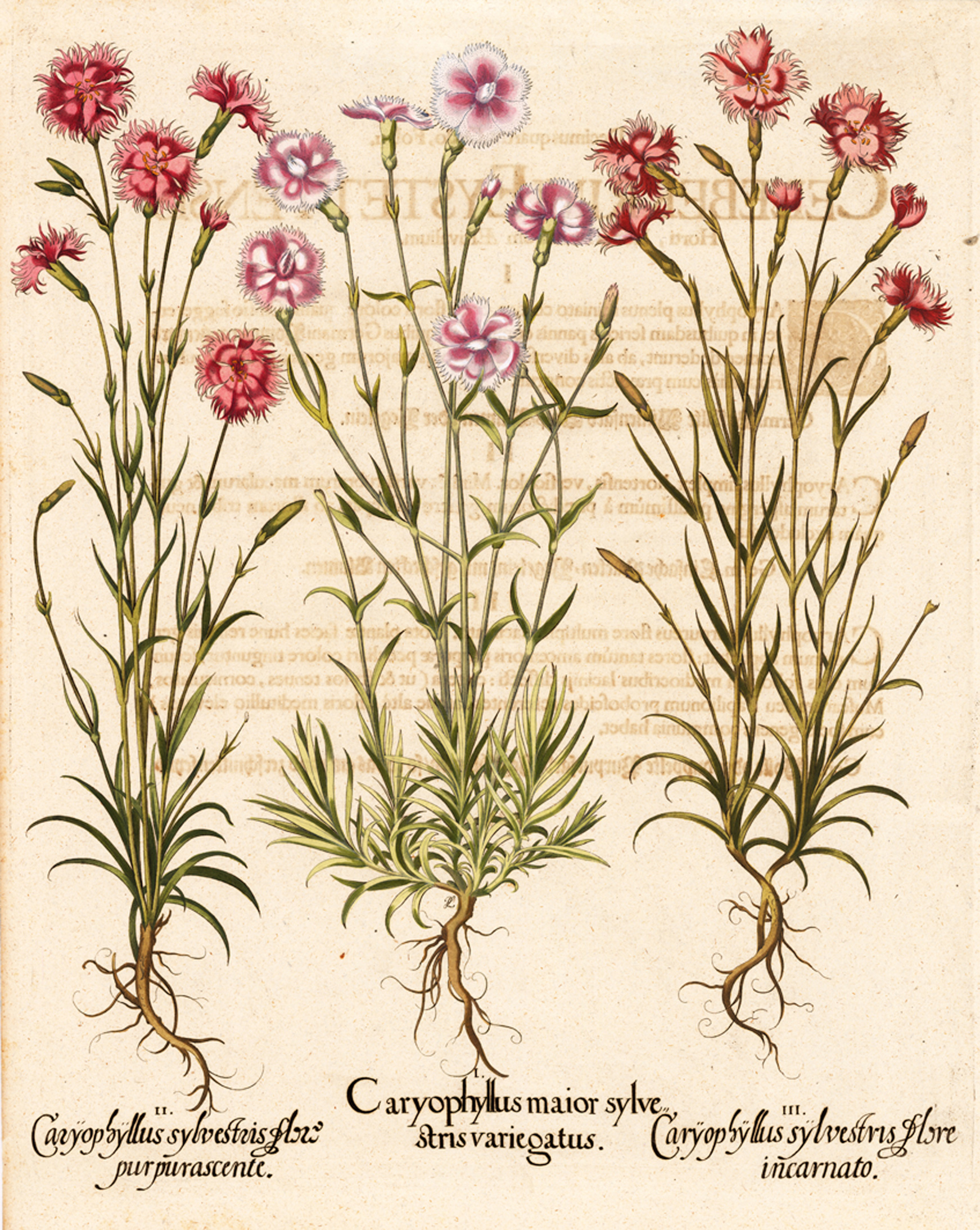
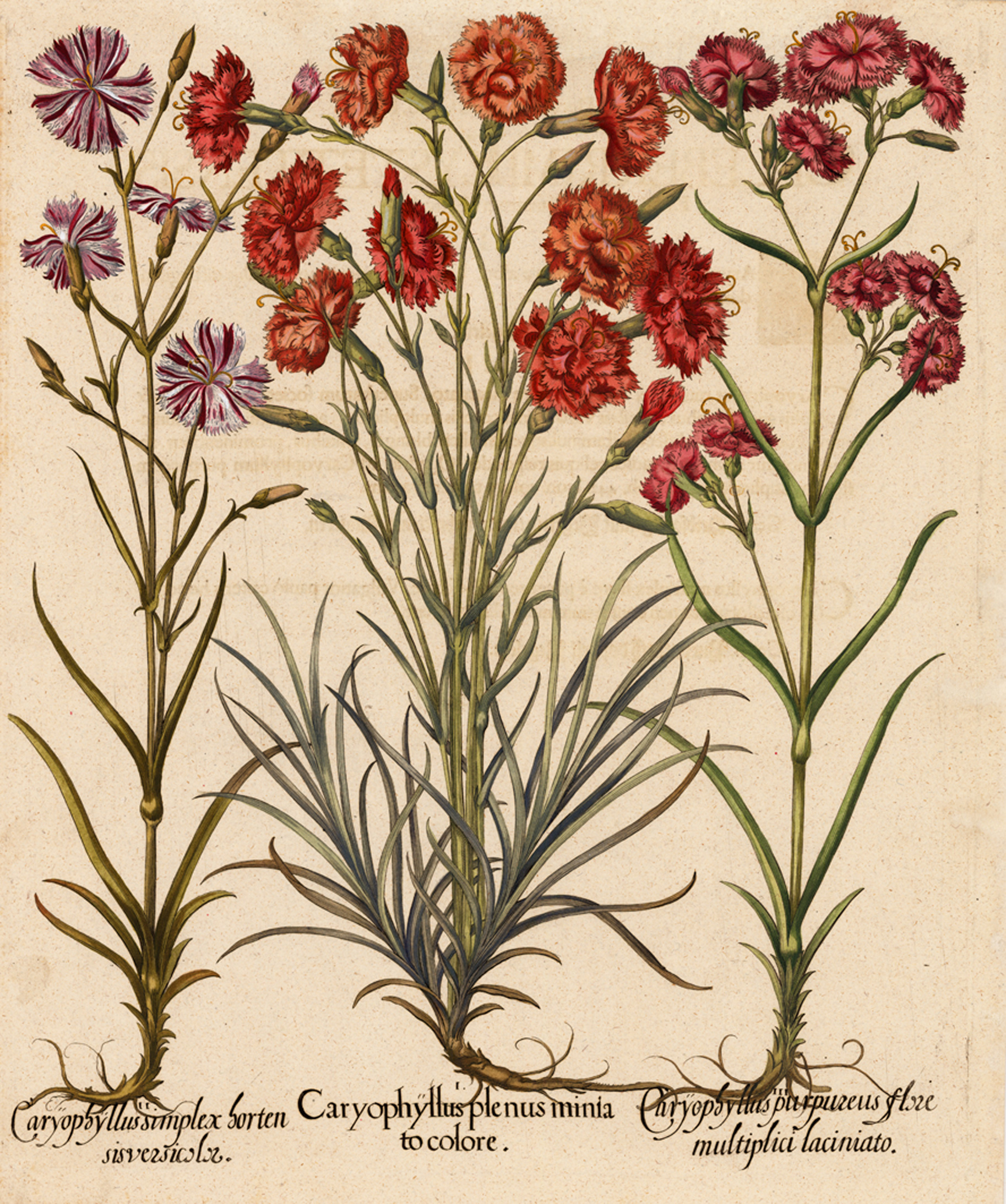
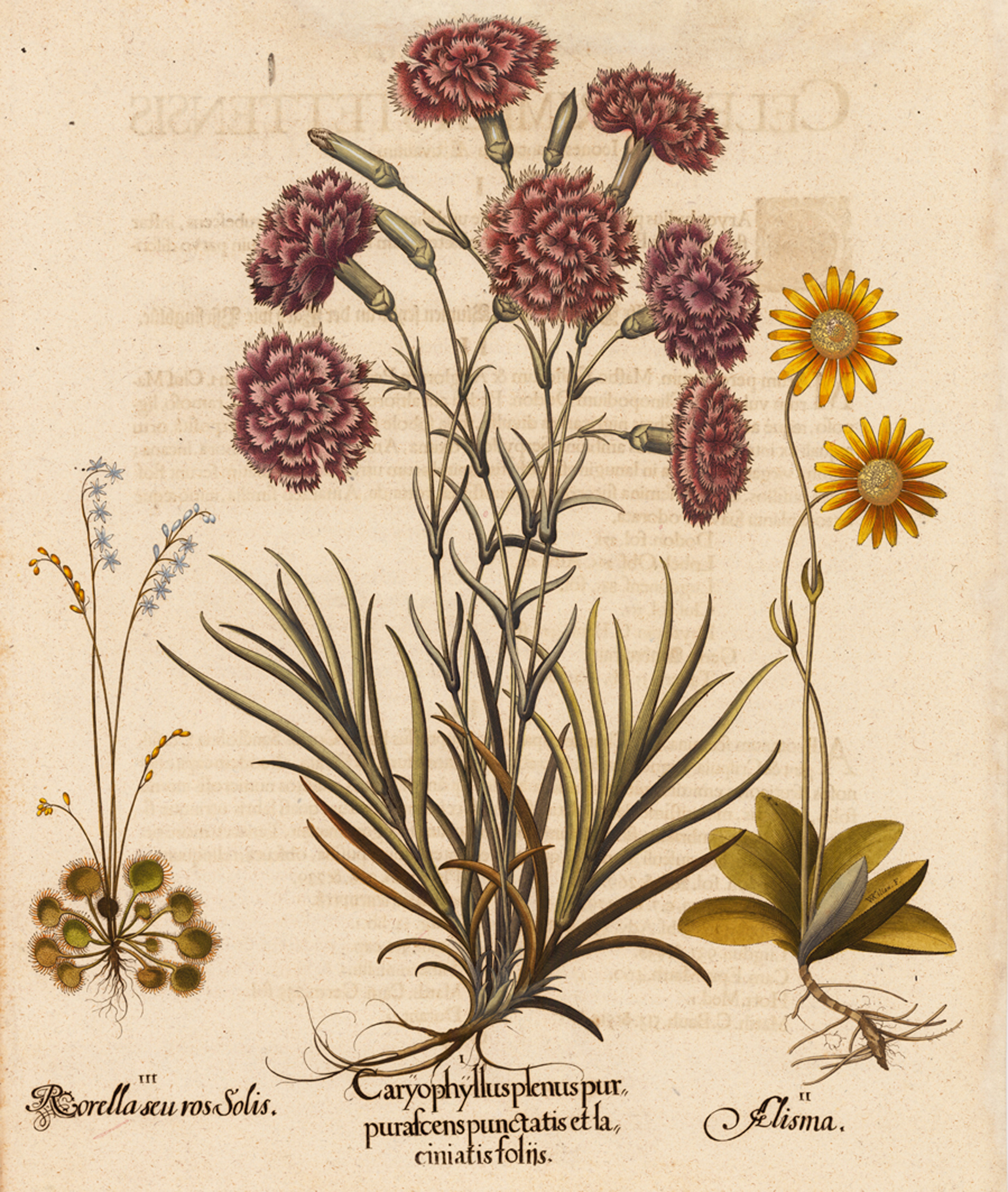
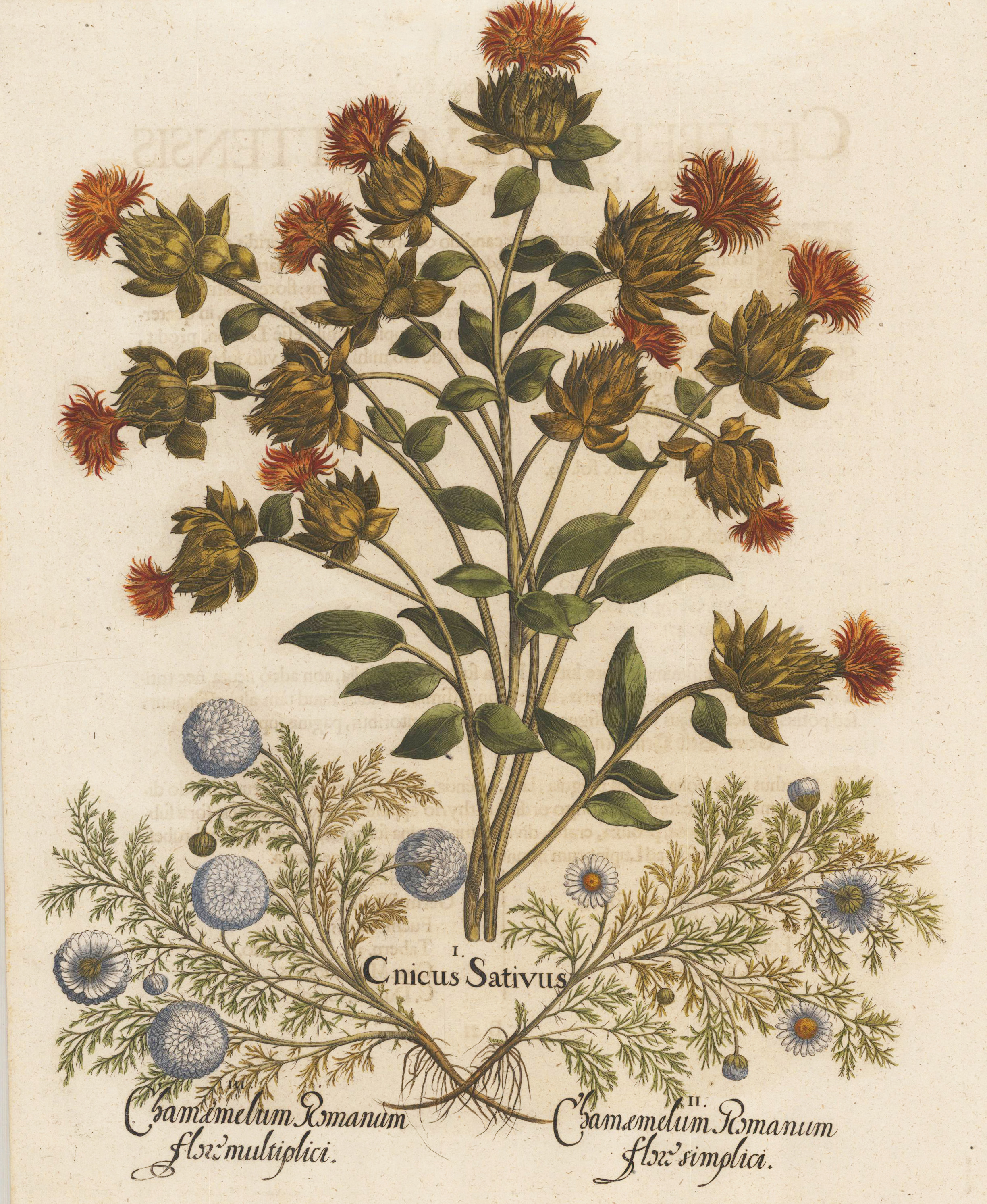
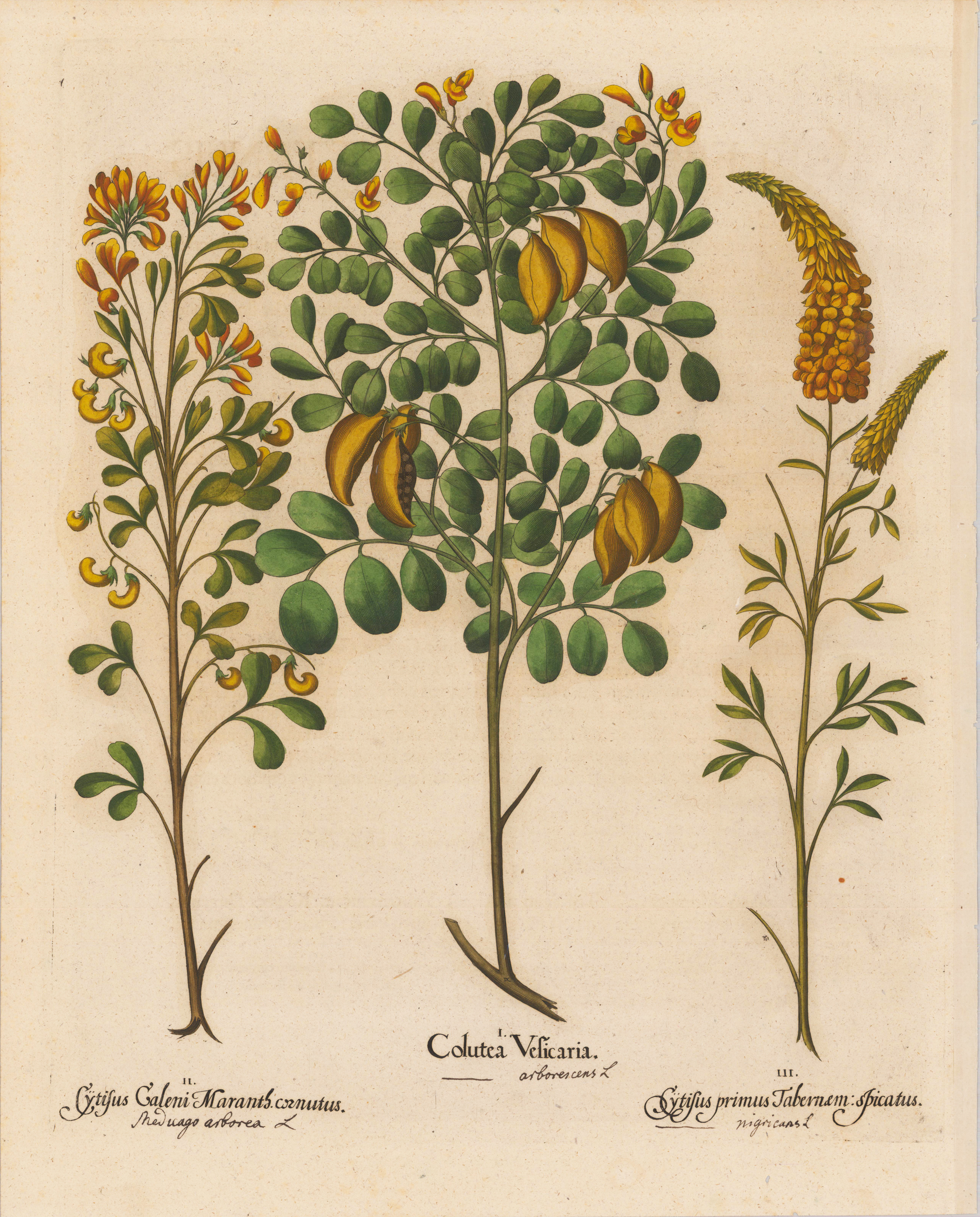
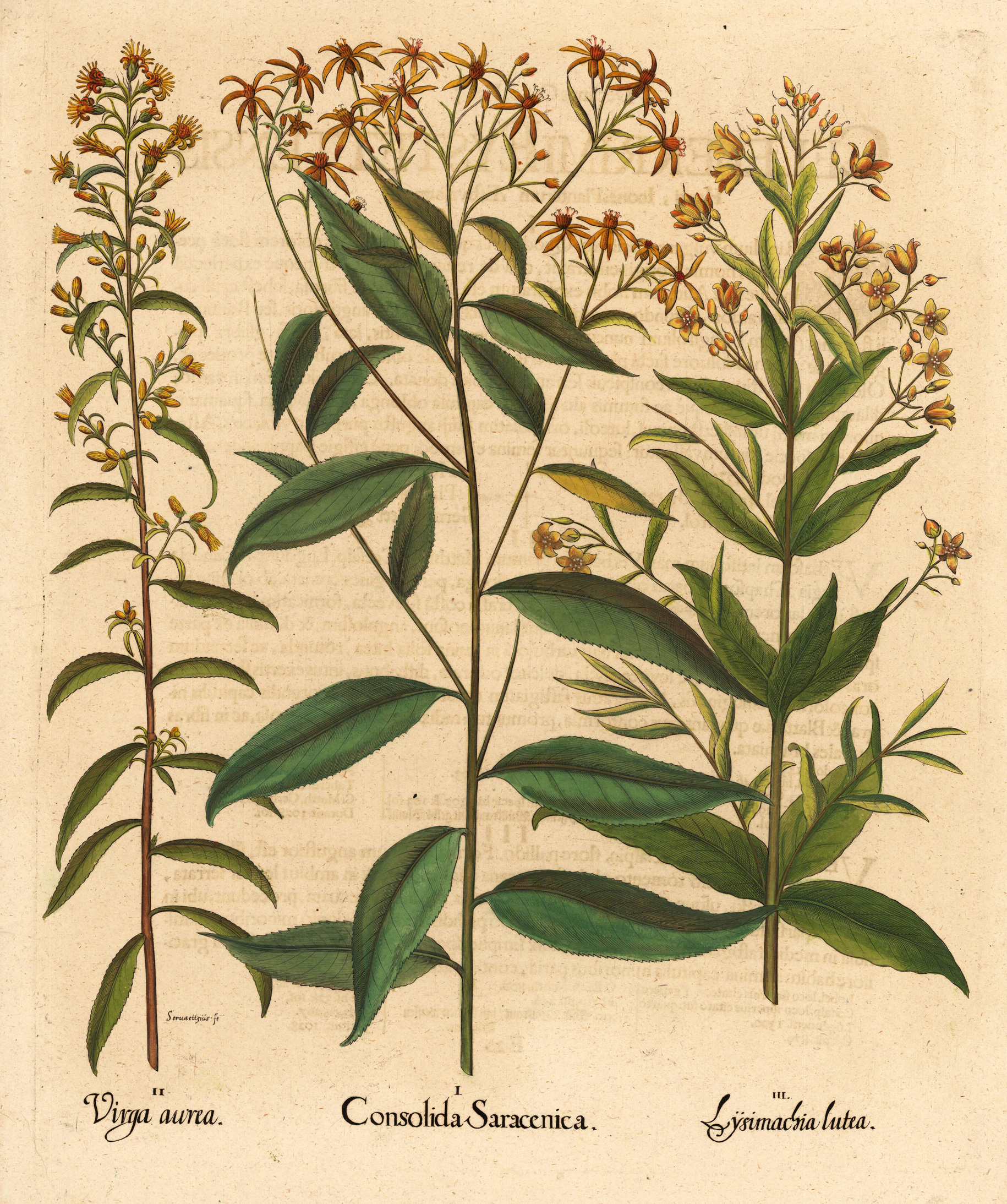
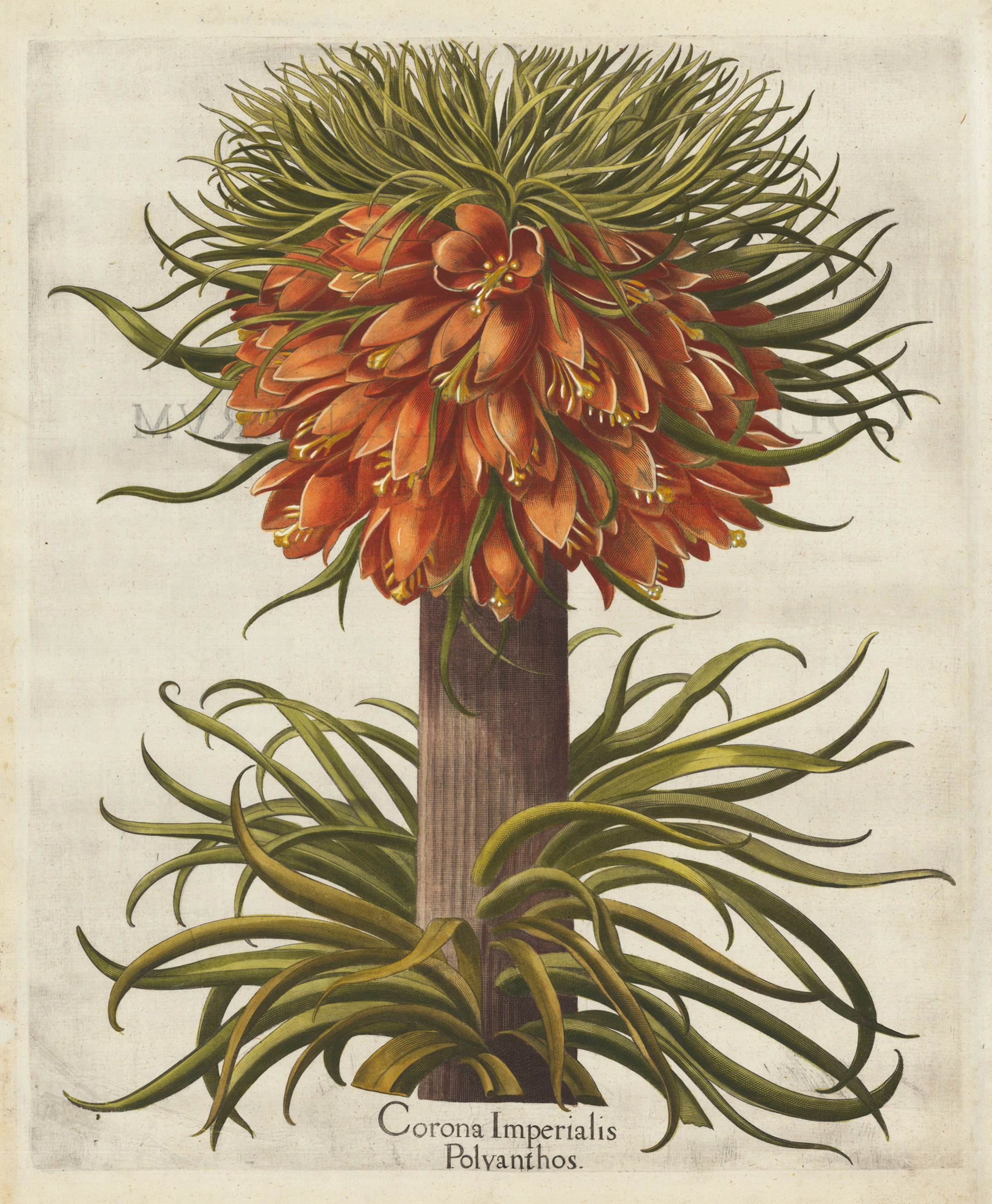
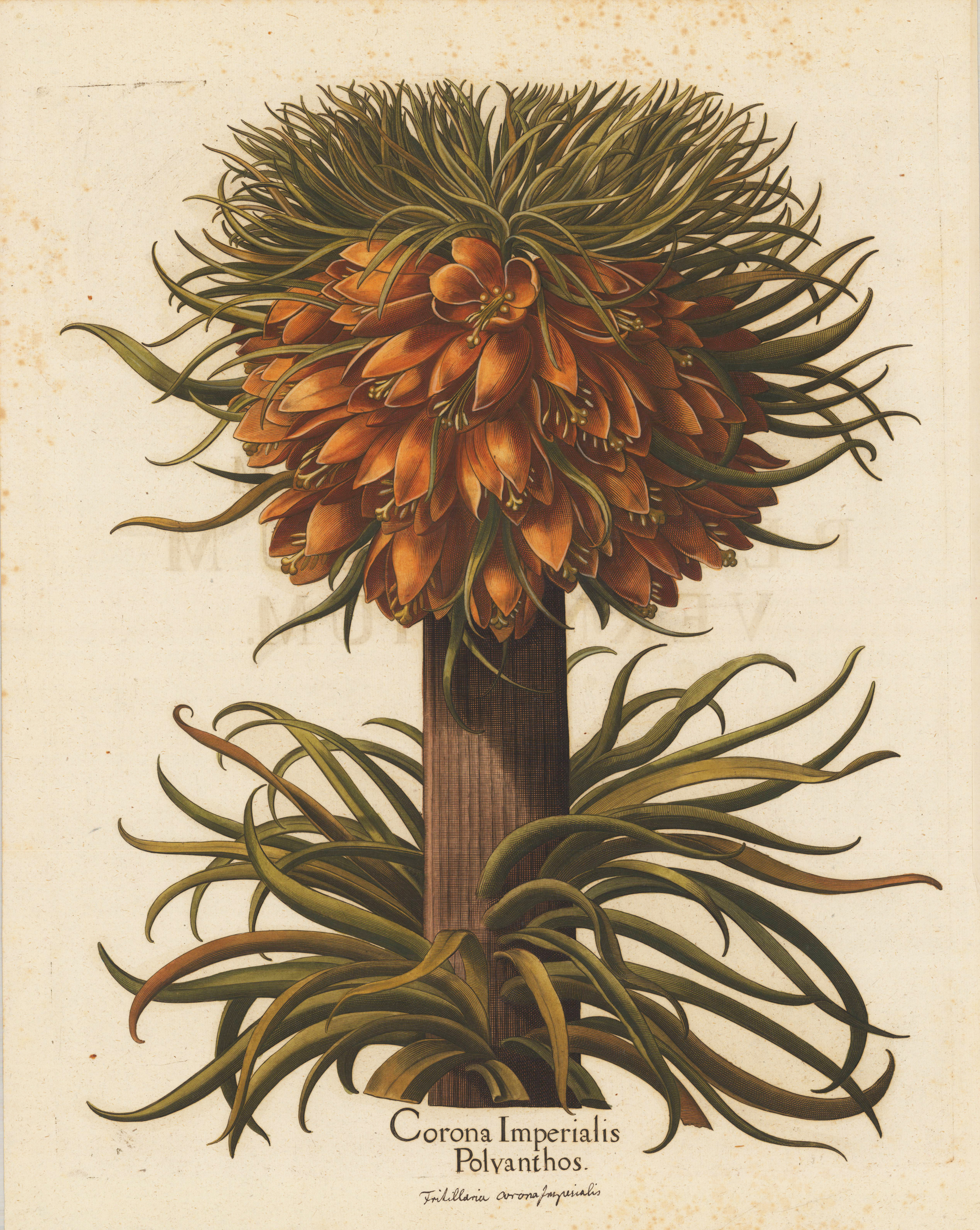
Original copper engraving, later hand colored. A fine copper engraving published in the famous large flower book,Hortus Eystettensis' in Altdorf and Nürnberg first in 1613. The,Hortus Eystettensis' was the largest flowerbook ever published in that period. It contained 367 different engraved plates, each of them depicting often with several flowers or herbs. This fine engraving was published in the so-called,jubilee edition' 1713 in Eichstätt and Nürnberg. Basilius Besler (1561–1629) was a respected Nuremberg apothecary and botanist, best known for his monumental Hortus Eystettensis. He was curator of the garden of Johann Konrad von Gemmingen, prince bishop of Eichstätt in Bavaria. The bishop was an enthusiastic botanist who derived great pleasure from his garden, which rivaled Hortus Botanicus Leiden among early European botanical gardens outside Italy. The gardens surrounded the bishop's palace, Willibaldsburg, which was built on a hill overlooking the town. These gardens had been started in 1596 and designed by Besler's colleague, Joachim Camerarius the Younger (1534–1598), a physician and botanist. Upon Camerarius' death in 1598, Besler had the remainder of Camerarius' plants moved to Eichstätt and carried on the work of planting and supervision. The bishop commissioned Besler to compile a codex of the plants growing in his garden, a task which Besler took sixteen years to complete, the bishop dying shortly before the work was published. The gardens were sacked by invading Swedish troops under Herzog Bernhard von Weimar in 1633-4; following Hortus Eystettensis they have been reconstructed and opened to the public in 1998. (Wikipedia)
Original antique copper engraving, hand colored. A fine copper engraving published in the famous large flower book,Hortus Eystettensis' in Altdorf and Nürnberg around 1713. The,Hortus Eystettensis' was the largest flowerbook ever published in that period. It contained 367 different engraved plates, each of them depicting often with several flowers or herbs.
Original copper engraving in fine hand coloring. Original copper engraving. A fine copper engraving published in the famous large flower book ,Hortus Eystettensis' in Altdorf and Nürnberg around 1613. The ,Hortus Eystettensis' was the largest flowerbook ever published in that period. It contained 367 different engraved plates, each of them depicting often with several flowers or herbs.
Original copper engraving. A fine copper engraving published in the famous large flower book,Hortus Eystettensis' in Altdorf and Nürnberg around 1613. The,Hortus Eystettensis' was the largest flowerbook ever published in that period. It contained 367 different engraved plates, each of them depicting often with several flowers or herbs. This fine engraving was published in the so-called,jubilee edition' 1713 in Eichstätt and Nürnberg. Basilius Besler (1561–1629) was a respected Nuremberg apothecary and botanist, best known for his monumental Hortus Eystettensis. He was curator of the garden of Johann Konrad von Gemmingen, prince bishop of Eichstätt in Bavaria. The bishop was an enthusiastic botanist who derived great pleasure from his garden, which rivaled Hortus Botanicus Leiden among early European botanical gardens outside Italy. The gardens surrounded the bishop's palace, Willibaldsburg, which was built on a hill overlooking the town. These gardens had been started in 1596 and designed by Besler's colleague, Joachim Camerarius the Younger (1534–1598), a physician and botanist. Upon Camerarius' death in 1598, Besler had the remainder of Camerarius' plants moved to Eichstätt and carried on the work of planting and supervision. The bishop commissioned Besler to compile a codex of the plants growing in his garden, a task which Besler took sixteen years to complete, the bishop dying shortly before the work was published. The gardens were sacked by invading Swedish troops under Herzog Bernhard von Weimar in 1633-4; following Hortus Eystettensis they have been reconstructed and opened to the public in 1998. (Wikipedia)
Original copper engraving, later hand colored. A fine copper engraving published in the famous large flower book,Hortus Eystettensis' in Altdorf and Nürnberg first in 1613. The,Hortus Eystettensis' was the largest flowerbook ever published in that period. It contained 367 different engraved plates, each of them depicting often with several flowers or herbs. This fine engraving was published in the so-called,jubilee edition' 1713 in Eichstätt and Nürnberg. Basilius Besler (1561–1629) was a respected Nuremberg apothecary and botanist, best known for his monumental Hortus Eystettensis. He was curator of the garden of Johann Konrad von Gemmingen, prince bishop of Eichstätt in Bavaria. The bishop was an enthusiastic botanist who derived great pleasure from his garden, which rivaled Hortus Botanicus Leiden among early European botanical gardens outside Italy. The gardens surrounded the bishop's palace, Willibaldsburg, which was built on a hill overlooking the town. These gardens had been started in 1596 and designed by Besler's colleague, Joachim Camerarius the Younger (1534–1598), a physician and botanist. Upon Camerarius' death in 1598, Besler had the remainder of Camerarius' plants moved to Eichstätt and carried on the work of planting and supervision. The bishop commissioned Besler to compile a codex of the plants growing in his garden, a task which Besler took sixteen years to complete, the bishop dying shortly before the work was published. The gardens were sacked by invading Swedish troops under Herzog Bernhard von Weimar in 1633-4; following Hortus Eystettensis they have been reconstructed and opened to the public in 1998. (Wikipedia)
Original copper engraving, hand colored. A fine copper engraving published in the famous large flower book ,Hortus Eystettensis' in Altdorf and Nürnberg first around 1613. The ,Hortus Eystettensis' was the largest flowerbook ever published in that period. It contained 367 different engraved plates, each of them depicting often with several flowers or herbs. Platenumber: 122 This fine engraving is published in the so-called ,jubilee edition' 1713 in Eichstätt and Nürnberg.
Original copper engraving in fine hand coloring. Original copper engraving. A fine copper engraving published in the famous large flower book ,Hortus Eystettensis' in Altdorf and Nürnberg around 1613. The ,Hortus Eystettensis' was the largest flowerbook ever published in that period. It contained 367 different engraved plates, each of them depicting often with several flowers or herbs.
Original copper engraving in fine hand coloring. Original copper engraving. A fine copper engraving published in the famous large flower book,Hortus Eystettensis' in Altdorf and Nürnberg around 1613. The,Hortus Eystettensis' was the largest flowerbook ever published in that period. It contained 367 different engraved plates, each of them depicting often with several flowers or herbs.
Original antique copper engraving, hand colored. A fine copper engraving published in the famous large flower book,Hortus Eystettensis' in Altdorf and Nürnberg around 1713. The,Hortus Eystettensis' was the largest flowerbook ever published in that period. It contained 367 different engraved plates, each of them depicting often with several flowers or herbs.
Original copper engraving. A fine copper engraving published in the famous large flower book ,Hortus Eystettensis' in Altdorf and Nürnberg around 1613. The ,Hortus Eystettensis' was the largest flowerbook ever published in that period. It contained 367 different engraved plates, each of them depicting often with several flowers or herbs.
Original copper engraving. A fine copper engraving published in the famous large flower book ,Hortus Eystettensis' in Altdorf and Nürnberg around 1613. The ,Hortus Eystettensis' was the largest flowerbook ever published in that period. It contained 367 different engraved plates, each of them depicting often with several flowers or herbs.
Original copper engraving. A fine copper engraving published in the famous large flower book ,Hortus Eystettensis' in Altdorf and Nürnberg around 1613. The ,Hortus Eystettensis' was the largest flowerbook ever published in that period. It contained 367 different engraved plates, each of them depicting often with several flowers or herbs.
A fine copper engraving published in the famous large flower book,Hortus Eystettensis' in Altdorf and Nürnberg first around 1613. The,Hortus Eystettensis' was the largest flowerbook ever published in that period.
Original copper engraving, later hand colored. A fine copper engraving published in the famous large flower book,Hortus Eystettensis' in Altdorf and Nürnberg first in 1613. The,Hortus Eystettensis' was the largest flowerbook ever published in that period. It contained 367 different engraved plates, each of them depicting often with several flowers or herbs. This fine engraving was published in the so-called,jubilee edition' 1713 in Eichstätt and Nürnberg. Basilius Besler (1561–1629) was a respected Nuremberg apothecary and botanist, best known for his monumental Hortus Eystettensis. He was curator of the garden of Johann Konrad von Gemmingen, prince bishop of Eichstätt in Bavaria. The bishop was an enthusiastic botanist who derived great pleasure from his garden, which rivaled Hortus Botanicus Leiden among early European botanical gardens outside Italy. The gardens surrounded the bishop's palace, Willibaldsburg, which was built on a hill overlooking the town. These gardens had been started in 1596 and designed by Besler's colleague, Joachim Camerarius the Younger (1534–1598), a physician and botanist. Upon Camerarius' death in 1598, Besler had the remainder of Camerarius' plants moved to Eichstätt and carried on the work of planting and supervision. The bishop commissioned Besler to compile a codex of the plants growing in his garden, a task which Besler took sixteen years to complete, the bishop dying shortly before the work was published. The gardens were sacked by invading Swedish troops under Herzog Bernhard von Weimar in 1633-4; following Hortus Eystettensis they have been reconstructed and opened to the public in 1998. (Wikipedia)
Original copper engraving, later hand colored. A fine copper engraving published in the famous large flower book,Hortus Eystettensis' in Altdorf and Nürnberg first in 1613. The,Hortus Eystettensis' was the largest flowerbook ever published in that period. It contained 367 different engraved plates, each of them depicting often with several flowers or herbs. This fine engraving was published in the so-called,jubilee edition' 1713 in Eichstätt and Nürnberg. Basilius Besler (1561–1629) was a respected Nuremberg apothecary and botanist, best known for his monumental Hortus Eystettensis. He was curator of the garden of Johann Konrad von Gemmingen, prince bishop of Eichstätt in Bavaria. The bishop was an enthusiastic botanist who derived great pleasure from his garden, which rivaled Hortus Botanicus Leiden among early European botanical gardens outside Italy. The gardens surrounded the bishop's palace, Willibaldsburg, which was built on a hill overlooking the town. These gardens had been started in 1596 and designed by Besler's colleague, Joachim Camerarius the Younger (1534–1598), a physician and botanist. Upon Camerarius' death in 1598, Besler had the remainder of Camerarius' plants moved to Eichstätt and carried on the work of planting and supervision. The bishop commissioned Besler to compile a codex of the plants growing in his garden, a task which Besler took sixteen years to complete, the bishop dying shortly before the work was published. The gardens were sacked by invading Swedish troops under Herzog Bernhard von Weimar in 1633-4; following Hortus Eystettensis they have been reconstructed and opened to the public in 1998. (Wikipedia)
Original antique copper engraving, hand colored. A fine copper engraving published in the famous large flower book,Hortus Eystettensis' in Altdorf and Nürnberg around 1613. The,Hortus Eystettensis' was the largest flowerbook ever published in that period. It contained 367 different engraved plates, each of them depicting often with several flowers or herbs.
A fine copper engraving published in the famous large flower book,Hortus Eystettensis' in Altdorf and Nürnberg first around 1613. The,Hortus Eystettensis' was the largest flowerbook ever published in that period. Platenumber: 80 The,Hortus Eystettensis' was the largest flowerbook ever published in that period. It contained 367 different engraved plates, each of them depicting often with several flowers or herbs. This fine engraving is published in a 1st edition with watermark large crown.
A fine copper engraving published in the famous large flower book,Hortus Eystettensis' in Altdorf and Nürnberg first around 1613. The,Hortus Eystettensis' was the largest flowerbook ever published in that period. The,Hortus Eystettensis' was the largest flowerbook ever published in that period. It contained 367 different engraved plates, each of them depicting often with several flowers or herbs. This fine engraving is published in a 1st edition with watermark large crown.