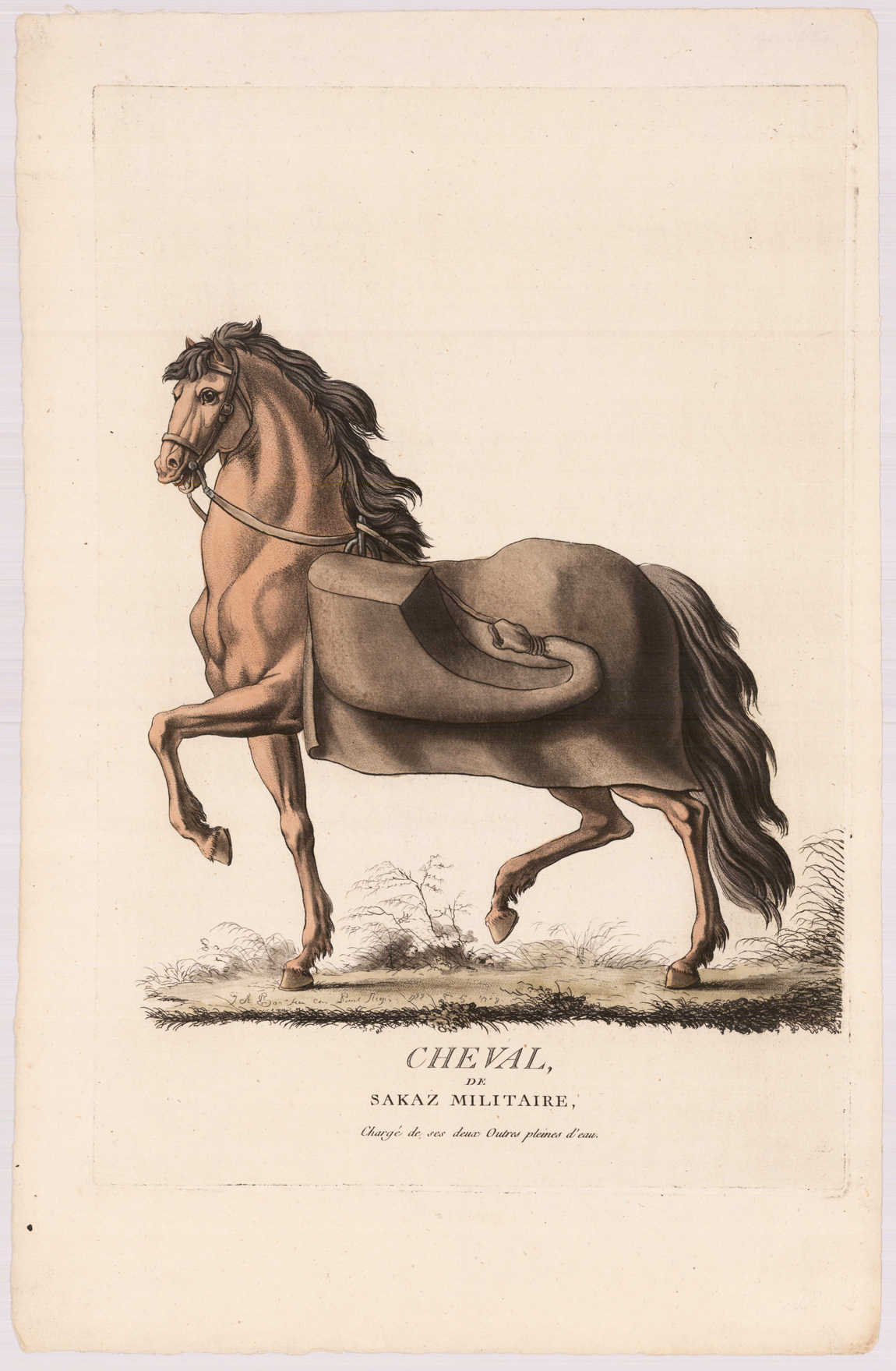
Copper engraving, aquatint, hand colored when published. This fine engraving was published in the series ,Recueil de tous les costumes des ordres religieux et militaires avec un abrégé historique et chronologique' in Paris 1778-1791. The szene depicts Sakaz's Military Horse, Charging his two Waterskins full of water. The sheet comes from the encyclopedia by Jacques Charles Bar, which deals with the religious and military costumes of various European orders published during the French Revolution. Bar, Jacques Charles - (1740-1811) was a French draftsman, etcher, costume designer, and writer.
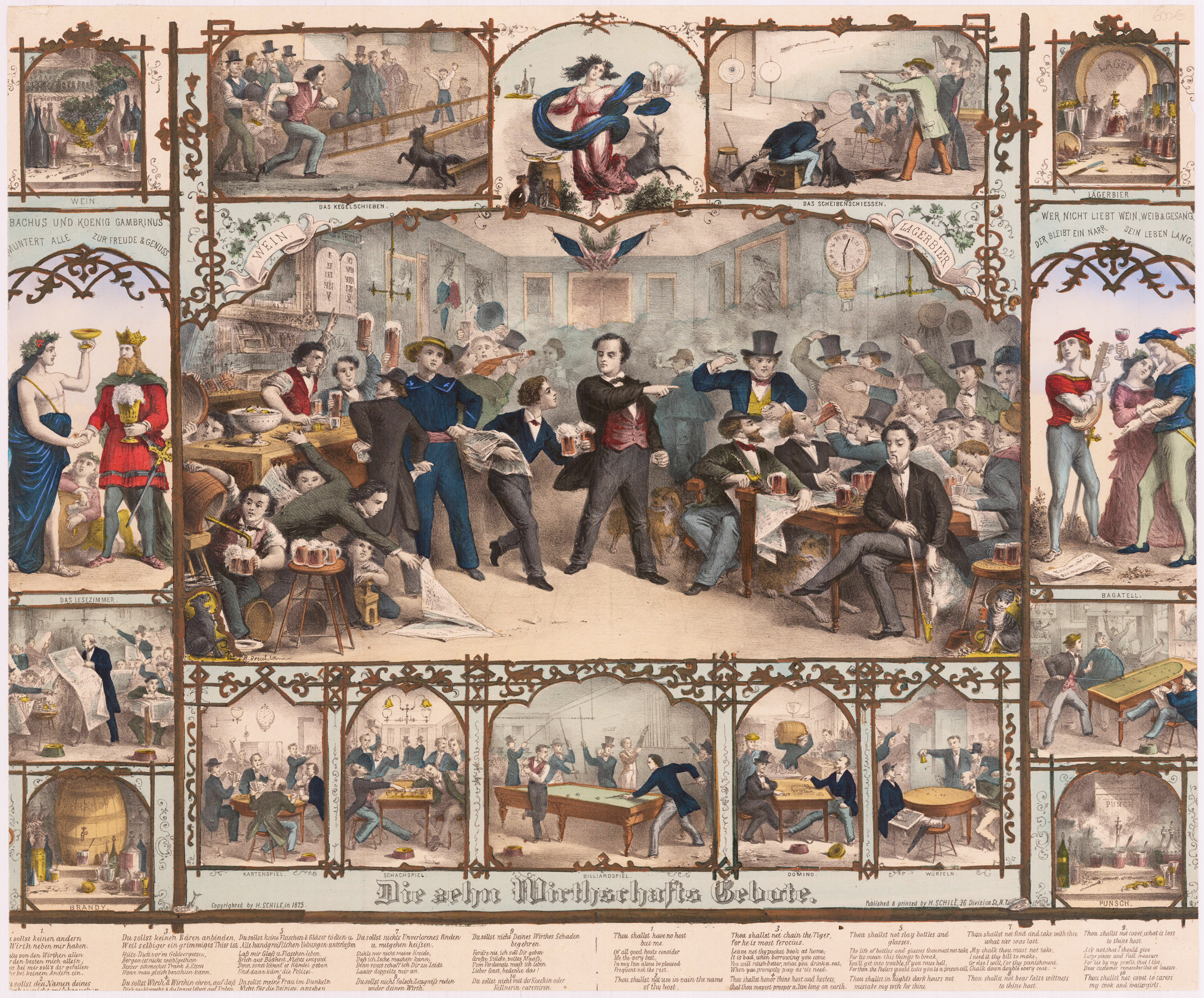
Original antique hand colored chromolithograph. Hand colored chromolithograph with numerous vignettes of tavern scenes. The central scene depicts a crowded drinking hall. Innkeeper at right of scene points to a tablet containing ten Roman numerals. The vignettes in the fours corners depict wine, beer, punch, and brandy. Nine surrounding vignettes depict tavern, or beer garden, related activites, such as billiards, dominoes, card playing, and bowling. Panels on either side of central scene are allegorical scenes related to drinking. All vignettes are labeled with German titles. Beneath the print in German and English are the "Ten Commandments" as referred to in the title.
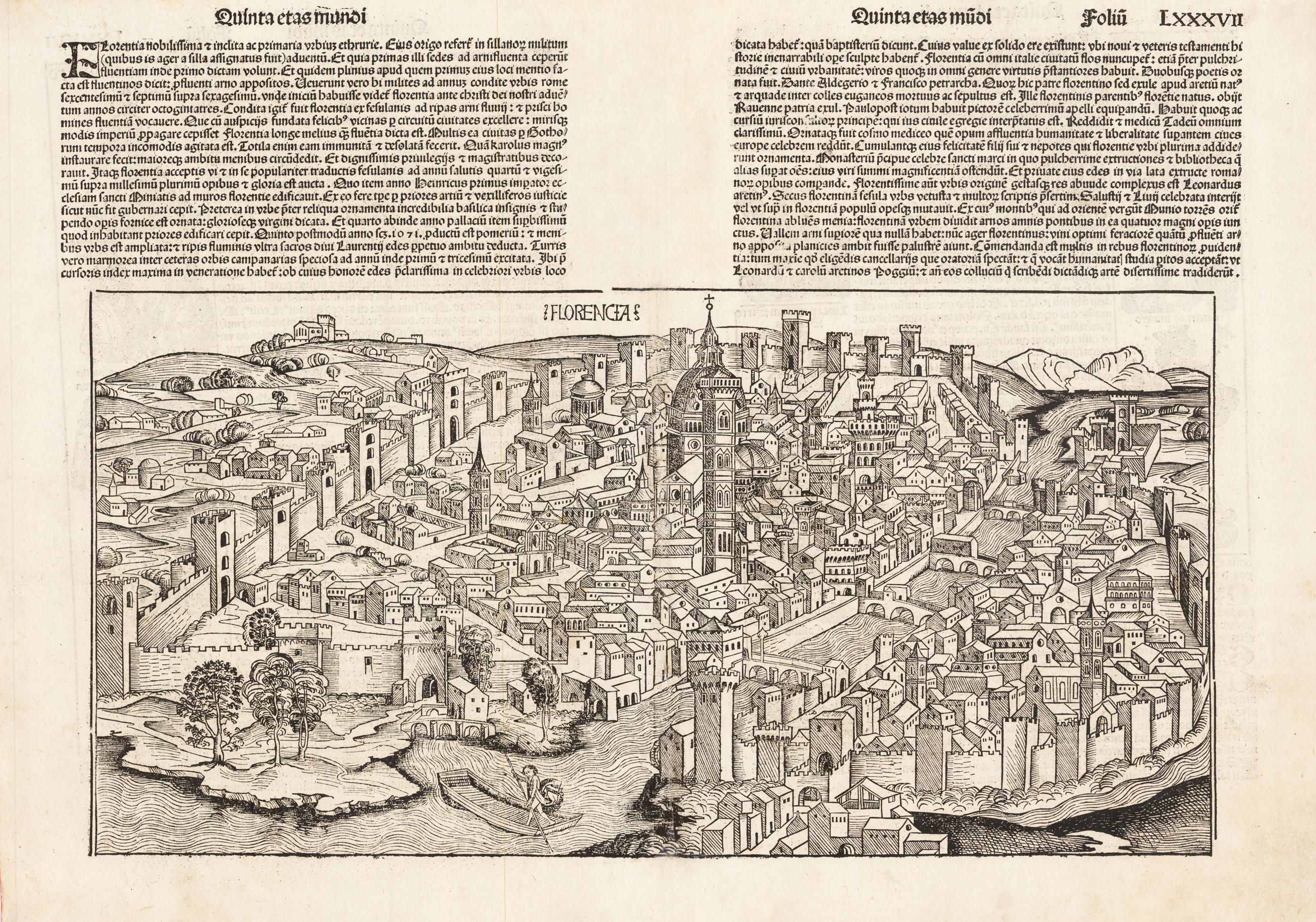
Original woodcut from the famous "Nurnberg Chronicle", printed in Nürnberg, in July 1493. Verso illustrated as well with fourteen smaller woodcuts of saints. Latin text edition. This view of Florence is one of the earliest obtainable authentic city views, published only a few years before 1500. This plate was exactly published and printed in July 1493 in Nurnberg at Koberger. The "Nurnberg Chronicle" was the earliest and most richly illustrated incunabula and description of the world, which was as well illustrated with a small number of authentic double page city views. The woodcuts were mostly cut by Pleydenwurff. On the full sheet as published. Mended stitch wholes at the centre fold and other smaller paper restorations excellent done. Please note: This item, if shipped outside the EU requires an export license, please allow 10-14 work days. We will take for it. Questions please contact us.
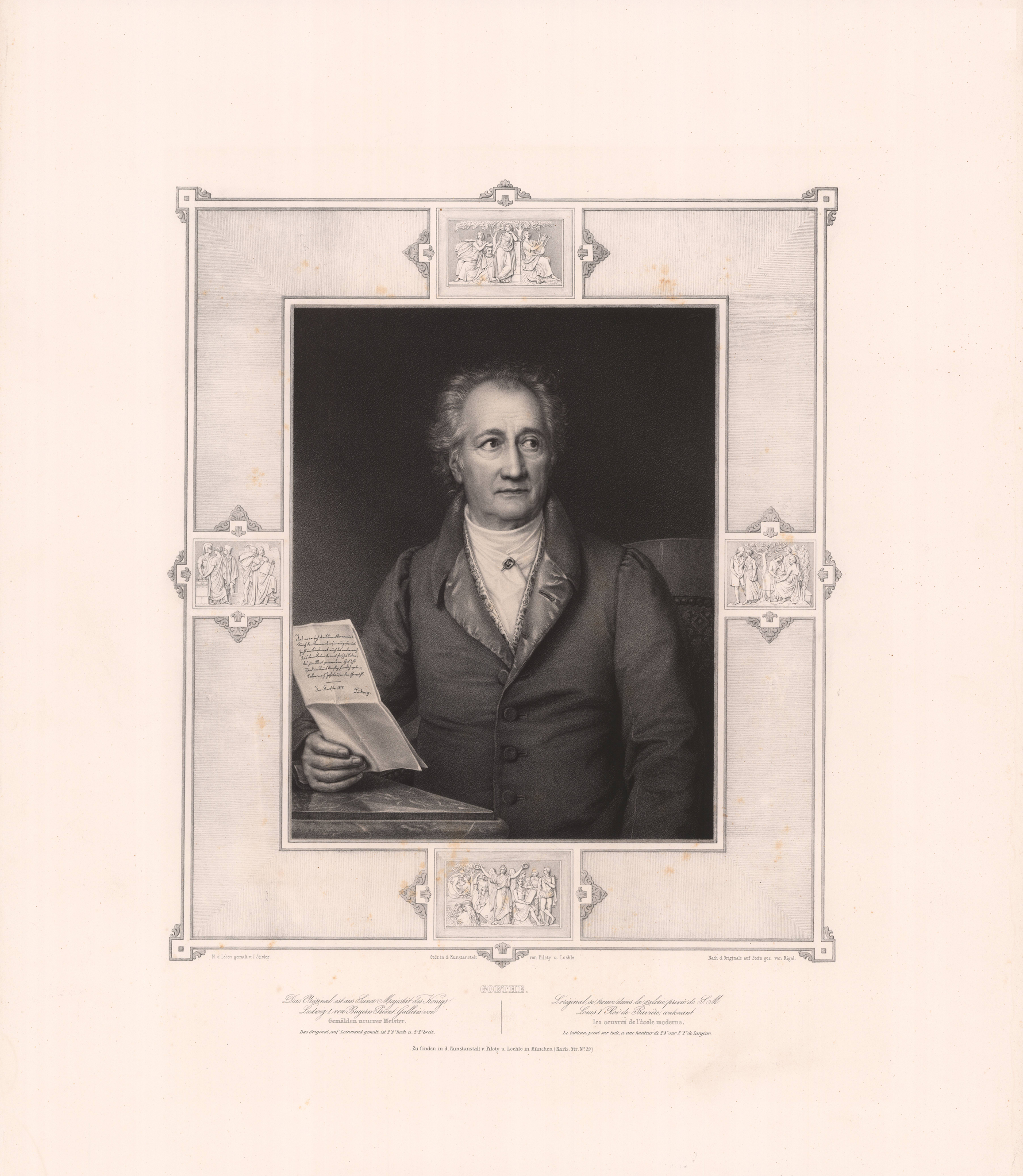
Original antike Lithographie, unkoloriert. Nach einem Gemälde von Josef Karl Stieler. Portrait von Johann Wolfgang von Goethe. In der rechten Hand hält er einen Brief von König Ludwig, datiert 1818. Umrandet von breiter Bordüre mit allegorischer Darstellung auf allen vier Seiten.
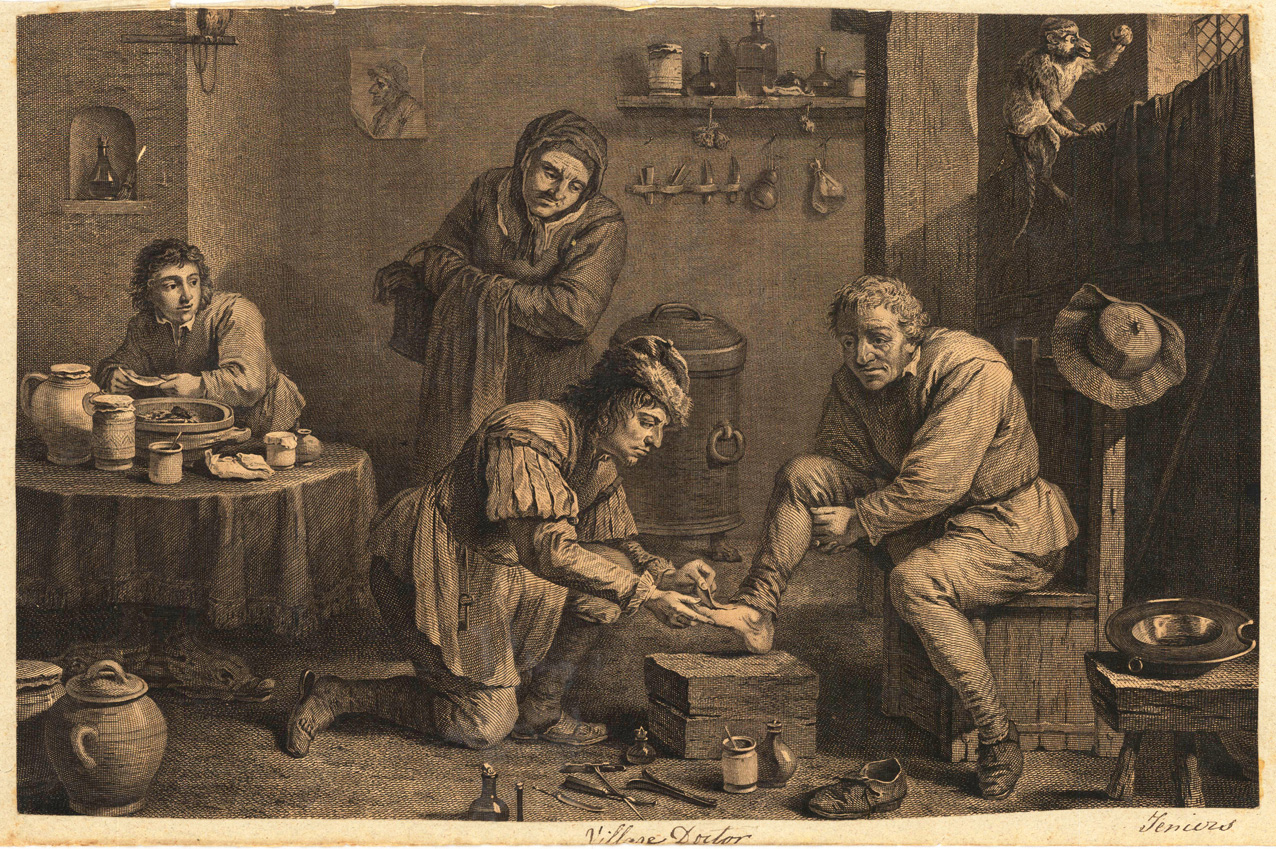
Original Kupferstich, gedruckt und verlegt um 1770 nach David Teniers. Altmontiertes Albumblatt, beschnitten zur Einfassungslinie, im Unterrand bezeichnet ,Village Doctor Teniers'.
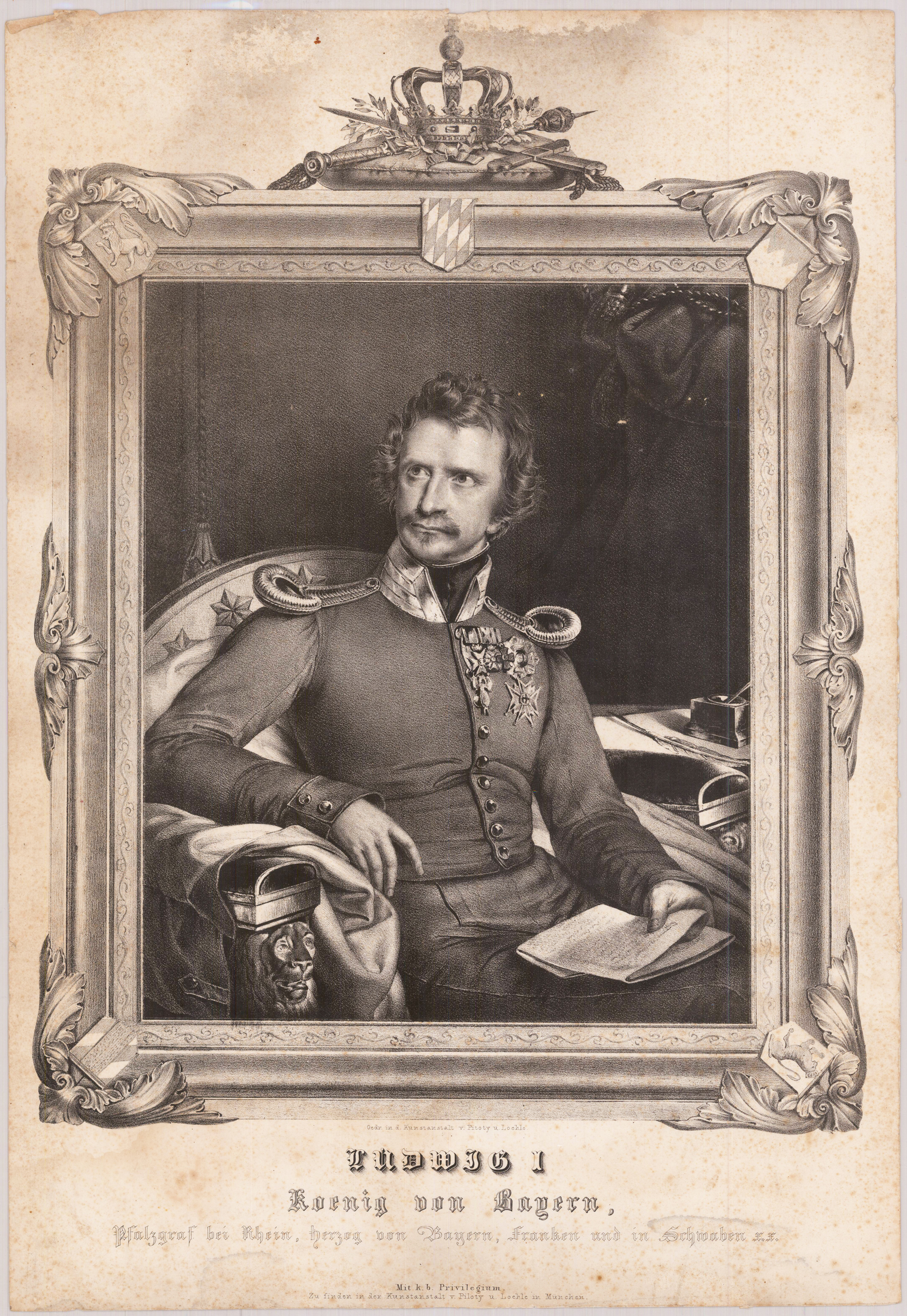
Original Lithographie, unkoloriert. Darstellung von König Ludwig I. auf seinem Thron. Umrandet mit gestochenem dekorativen Bilderrahmen mit den Wappen von Bayern und seiner Herzogthümer. Darüber auf einem Kissen die Krone, ein Schwert und ein Zepter. Ludwig I., geboren als Ludwig Karl August (* 25. August 1786 in Straßburg; † 29. Februar 1868 in Nizza), war König des Königreiches Bayern aus dem Geschlecht der Wittelsbacher. Er folgte seinem Vater Maximilian I. nach dessen Tod im Jahre 1825 auf den bayerischen Thron und dankte im Revolutionsjahr 1848 nach seiner Affäre mit Lola Montez zugunsten seines Sohnes Maximilian II. ab. Seine Hochzeit begründete das Oktoberfest, zahlreiche Kunstsammlungen und klassizistische Bauten sind mit seinem Namen verknüpft, ebenso wie die Hinwendung Bayerns zu Griechenland, die erste deutsche Eisenbahn aber auch das Hambacher Fest.
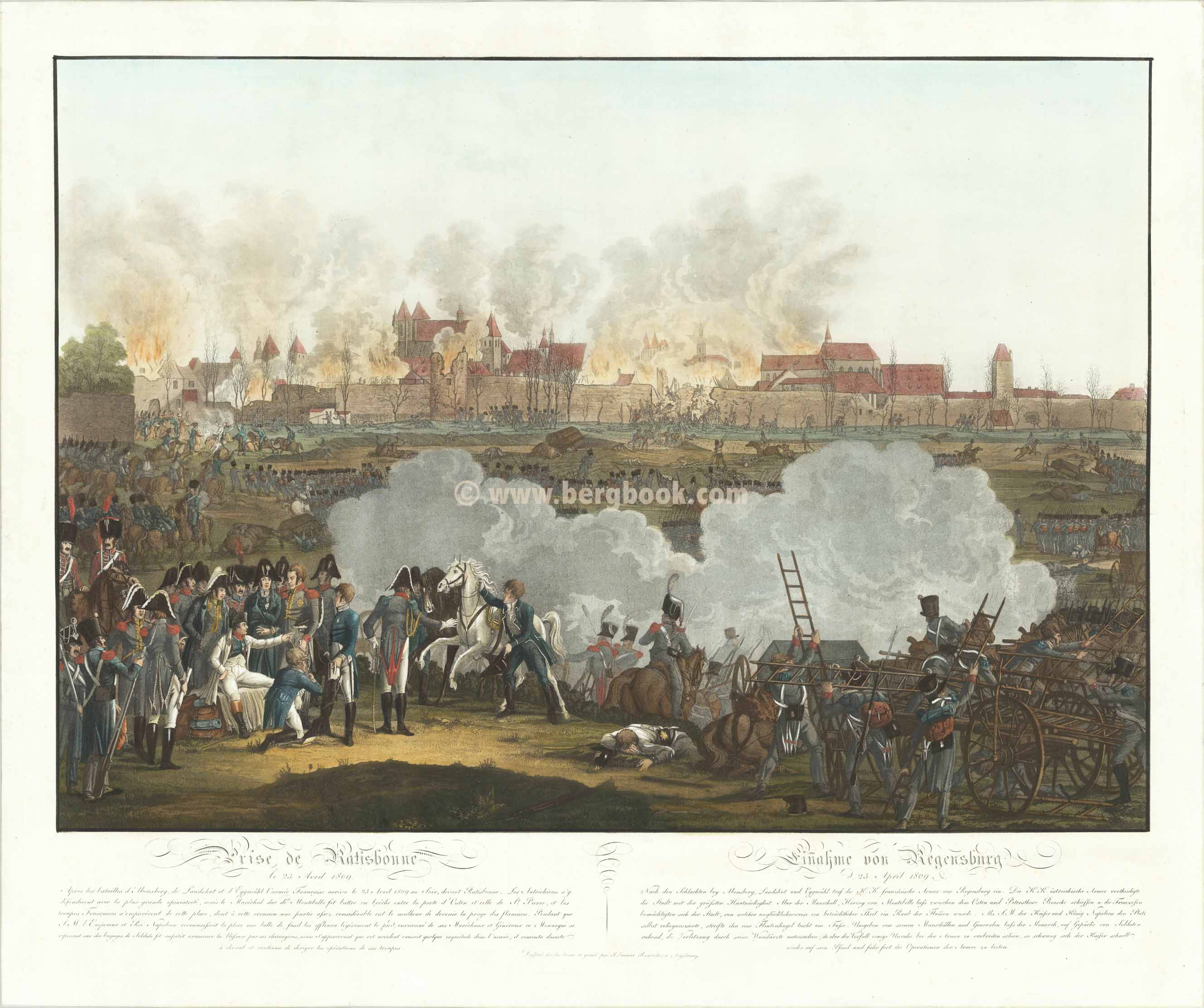
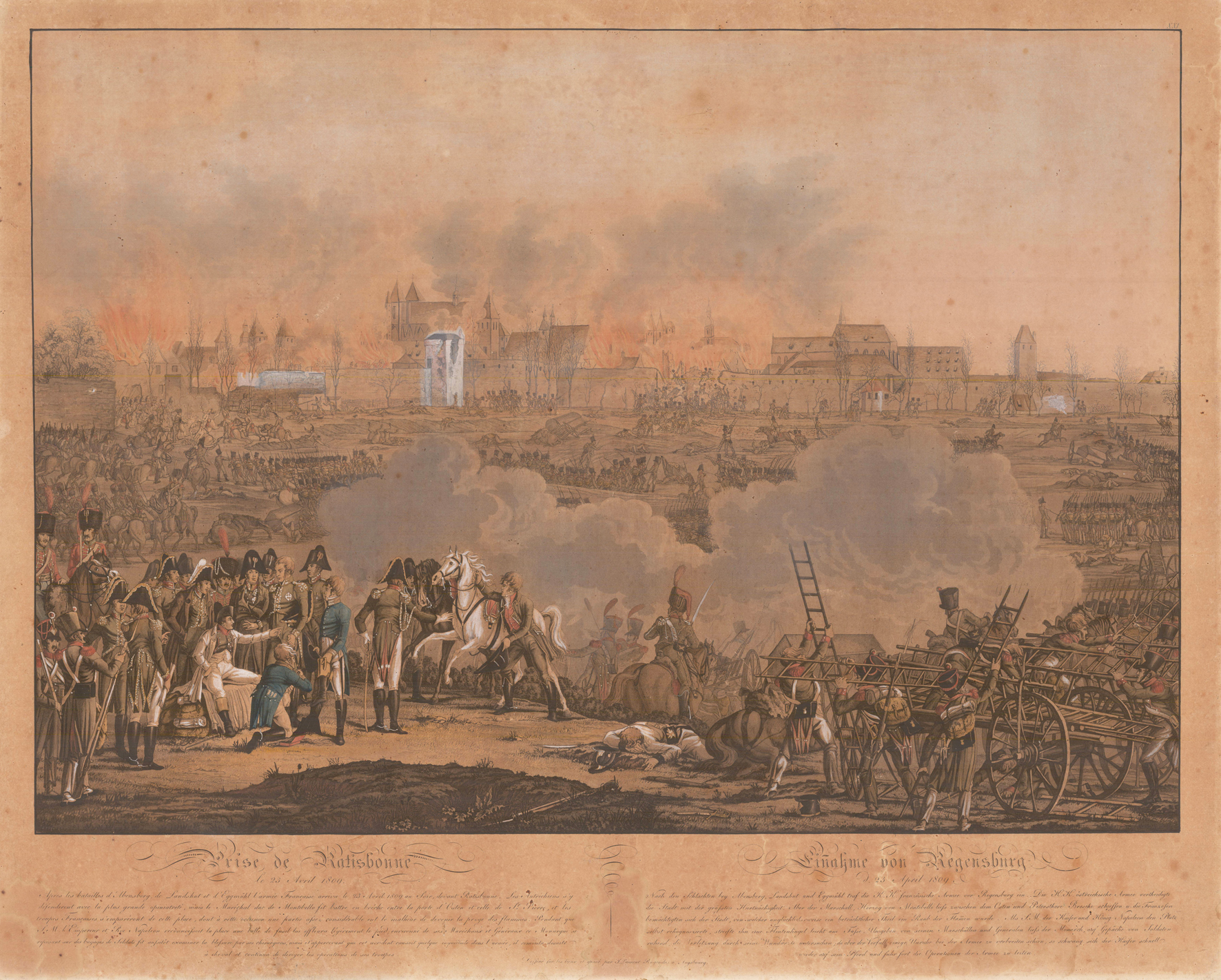
Original Kupferradierung mit Aquatinta, altkoloriert. Dargestellt wird die Einnahme und Erstürmung der Stadt Regensburg am 23. April 1809 durch die französischen Truppen. Im Vordergrund wird der am Fuß verwundete franz. Kaiser und Heerführer Napoleon I. umgeben von seinem Arzt und seinen Marschällen dargestellt. Nach den Schlachten bey Abensberg, Landshut und Eggmühl traf die K. K. französiche Armee vor Regensburg ein. Die K.K. österreichische Armee vertheidigte die Stadt mit der größten Hartnäckigkeit. Aber der Marschall, Herzog von Montebello lies zwischen dem Osten und Petersthore Bresche schiessen und die Franzosen bemächtigten sich der Stadt, von welcher unglücklicherweise ein beträchtlicher Theil ein Raub der Flammen wurde. Als S.M. der Kaiser und König Napoleon den Platz selbst rehognoszierte, streifte ihn eine Flintenkugel leicht am Fuße. Umgeben von seinen Marschällen und Generälen ließ der Monarch, auf Gepäcke von Soldaten ruhend, die Verletzung durch seine Wundärzte untersuchen; da aber der Vorfall einige Unruhe bei der Armee zu verbreiten schien, so schwang sich der Kaiser schnell wieder auf sein Pferd und fuhr vor die Operation der Armee zu leiten.
Original Kupferradierung mit Aquatinta, altkoloriert. Dargestellt wird die Einnahme und Erstürmung der Stadt Regensburg am 23. April 1809 durch die französischen Truppen. Im Vordergrund wird der am Fuß verwundete franz. Kaiser und Heerführer Napoleon I. umgeben von seinem Arzt und seinen Marschällen dargestellt. Nach den Schlachten bey Abensberg, Landshut und Eggmühl traf die K. K. französiche Armee vor Regensburg ein. Die K.K. österreichische Armee vertheidigte die Stadt mit der größten Hartnäckigkeit. Aber der Marschall, Herzog von Montebello lies zwischen dem Osten und Petersthore Bresche schiessen und die Franzosen bemächtigten sich der Stadt, von welcher unglücklicherweise ein beträchtlicher Theil ein Raub der Flammen wurde. Als S.M. der Kaiser und König Napoleon den Platz selbst rehognoszierte, streifte ihn eine Flintenkugel leicht am Fuße. Umgeben von seinen Marschällen und Generälen ließ der Monarch, auf Gepäcke von Soldaten ruhend, die Verletzung durch seine Wundärzte untersuchen; da aber der Vorfall einige Unruhe bei der Armee zu verbreiten schien, so schwang sich der Kaiser schnell wieder auf sein Pferd und fuhr for die Operation der Armee zu leiten.
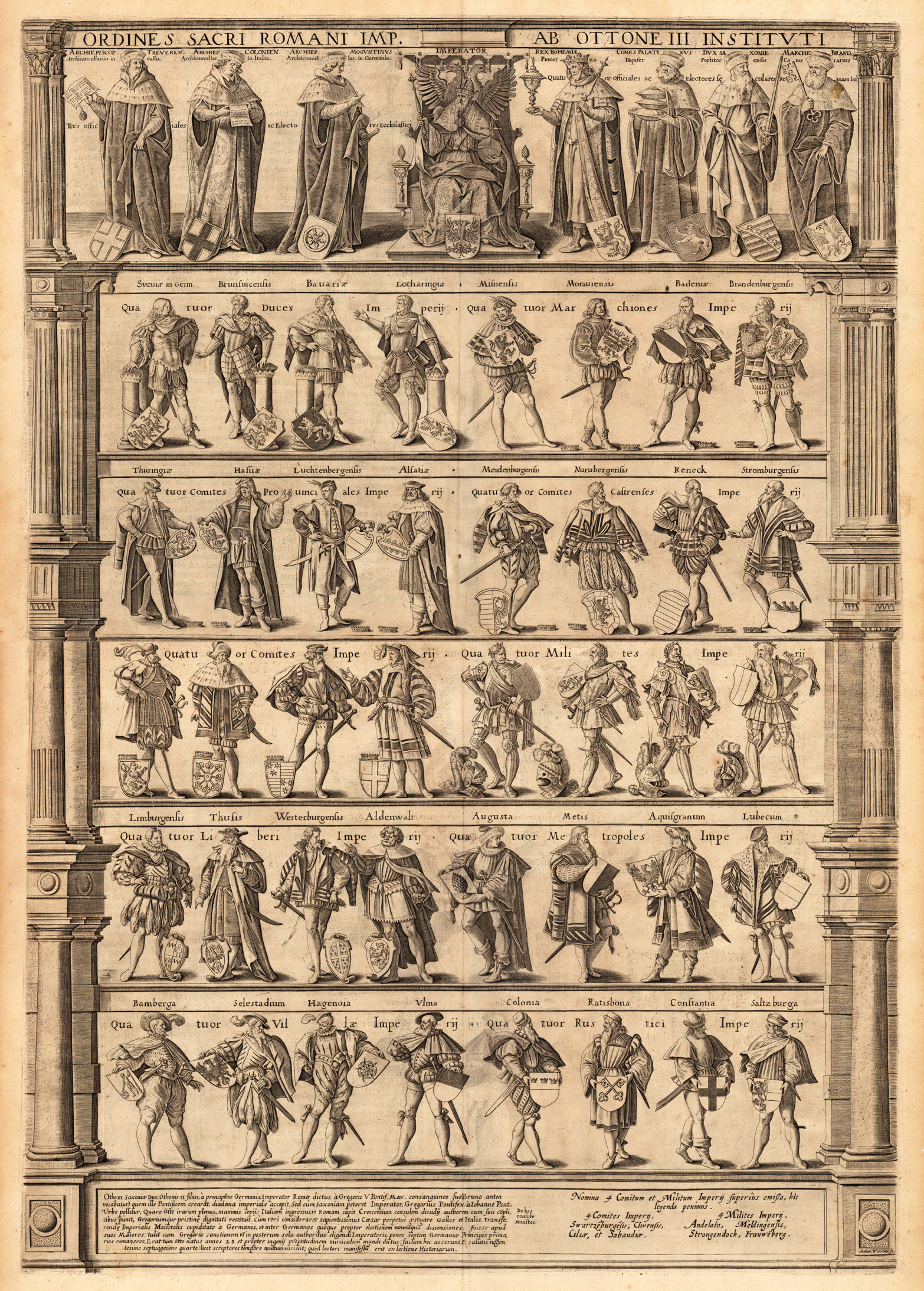
Original copper engraving, published 1624 in a Latin text edition of the famous historical atlas 'Parergon' by Abraham Ortelius. Printed from two plates. Latin text edition. Uncolored example in two sheets as published. Highly decorative engraving, published from two double pages showing the dignitaries of the Holy Roman Empire. This engraving was published from 1593 for the first time in the atlas by Gerard de Jode. The plate was later acquired by Vrients and was then from 1603 onwards included in Ortelius's 'Theatrum' and the 'Parergon'. Our example was published 1624 in a Latin text edition of the Parergon. 'They represent the dignitaries entitled to choose German Emperors, as instituted to end the turmoil and quarreling that occurred after the death of Charles the Great, by Otto IV and the Pope. This plate shows left of the Emperor the highest ranking officials, three ecclesiastical and four lay dignitaries. The second rank consists of four dukes and four marquesses, the third of 8 earls.' (Broe. 201) Ortelius was born on 14 April 1527 in the city of Antwerp, which was then in the Habsburg Netherlands (modern-day Belgium). The Orthellius family were originally from Augsburg, a Free imperial city of the Holy Roman Empire. In 1535, the family had fallen under suspicion of Protestantism. Following the death of Ortelius's father, his uncle Jacobus van Meteren returned from religious exile in England to take care of Ortelius. Abraham remained close to his cousin Emanuel van Meteren, who would later move to London. In 1575 he was appointed geographer to the king of Spain, Philip II, on the recommendation of Arias Montanus, who vouched for his orthodoxy. He travelled extensively in Europe and is specifically known to have traveled throughout the Seventeen Provinces; in southern, western, northern, and eastern Germany (e.g., 1560, 1575–1576); France (1559–1560); England and Ireland (1576); and Italy (1578, and perhaps twice or thrice between 1550 and 1558). Beginning as a map-engraver, in 1547 he entered the Antwerp Guild of Saint Luke as an illuminator of maps. He supplemented his income trading in books, prints, and maps, and his journeys included yearly visits to the Frankfurt book and print fair, where he met Gerardus Mercator in 1554. In 1560, however, when travelling with Mercator to Trier, Lorraine, and Poitiers, he seems to have been attracted, largely by Mercator's influence, towards the career of a scientific geographer. (Wikipedia)
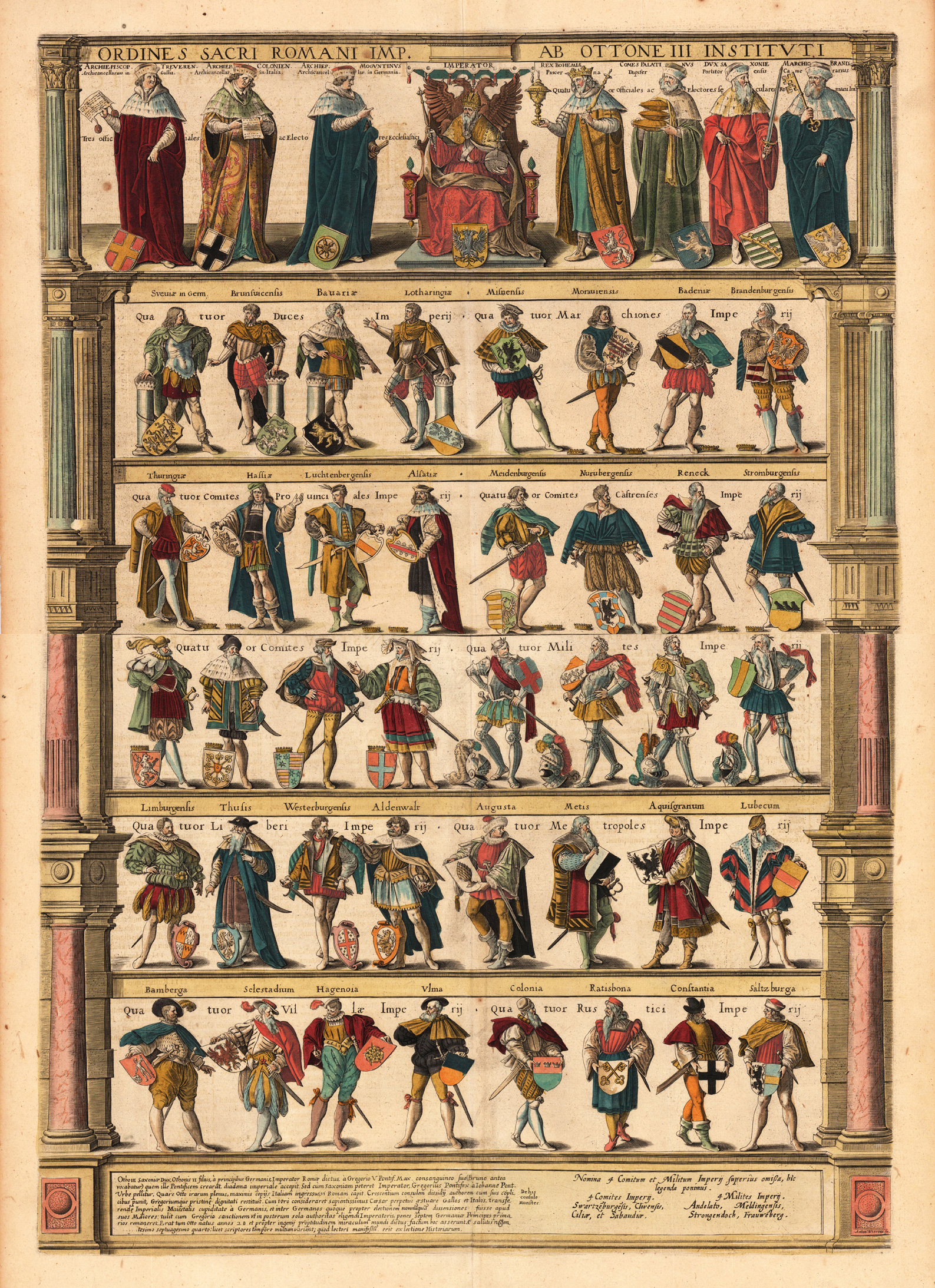
Original antique copper engraving, published 1624 in a Latin text edition of the famous historical atlas 'Parergon' by Abraham Ortelius. Printed from two plates. Hand colored example in two sheets. Highly decorative engraving, published from two double pages showing the dignitaries of the Holy Roman Empire. This engraving was published from 1593 for the first time in the atlas by Gerard de Jode. The plate was later acquired by Vrients and was then from 1603 onwards included in Ortelius's 'Theatrum' and the 'Parergon'. Our example was published 1622 in a Latin text edition of the Parergon. With wide margins in excellent condition. 'They represent the dignitaries entitled to choose German Emperors, as instituted to end the turmoil and quarreling that occurred after the death of Charles the Great, by Otto IV and the Pope. This plate shows left of the Emperor the highest ranking officials, three ecclesiastical and four lay dignitaries. The second rank consists of four dukes and four marquesses, the third of 8 earls.' (Broe. 201) Ortelius was born on 14 April 1527 in the city of Antwerp, which was then in the Habsburg Netherlands (modern-day Belgium). The Orthellius family were originally from Augsburg, a Free imperial city of the Holy Roman Empire. In 1535, the family had fallen under suspicion of Protestantism. Following the death of Ortelius's father, his uncle Jacobus van Meteren returned from religious exile in England to take care of Ortelius. Abraham remained close to his cousin Emanuel van Meteren, who would later move to London. In 1575 he was appointed geographer to the king of Spain, Philip II, on the recommendation of Arias Montanus, who vouched for his orthodoxy. He travelled extensively in Europe and is specifically known to have traveled throughout the Seventeen Provinces; in southern, western, northern, and eastern Germany (e.g., 1560, 1575–1576); France (1559–1560); England and Ireland (1576); and Italy (1578, and perhaps twice or thrice between 1550 and 1558). Beginning as a map-engraver, in 1547 he entered the Antwerp Guild of Saint Luke as an illuminator of maps. He supplemented his income trading in books, prints, and maps, and his journeys included yearly visits to the Frankfurt book and print fair, where he met Gerardus Mercator in 1554. In 1560, however, when travelling with Mercator to Trier, Lorraine, and Poitiers, he seems to have been attracted, largely by Mercator's influence, towards the career of a scientific geographer. (Wikipedia)
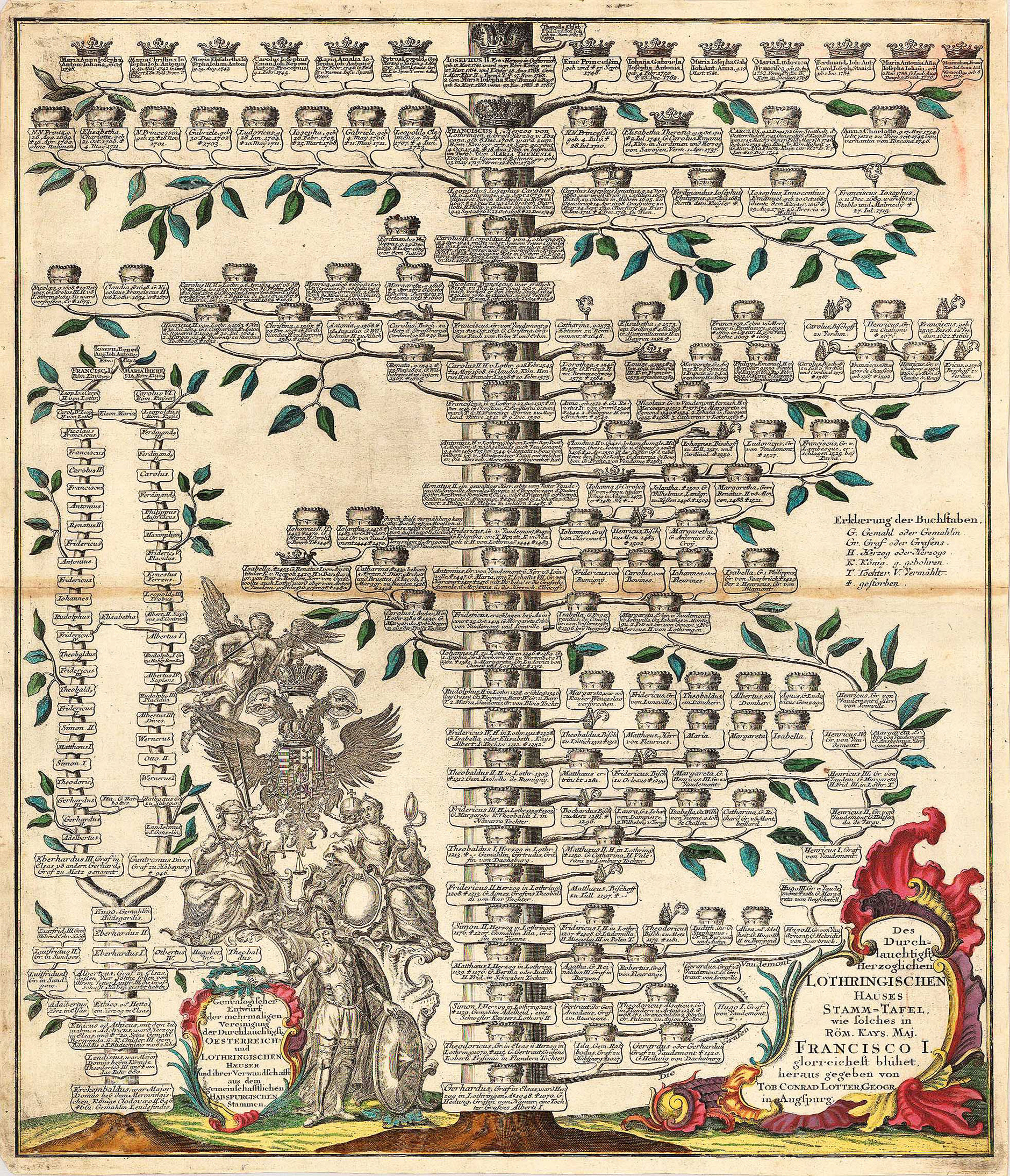
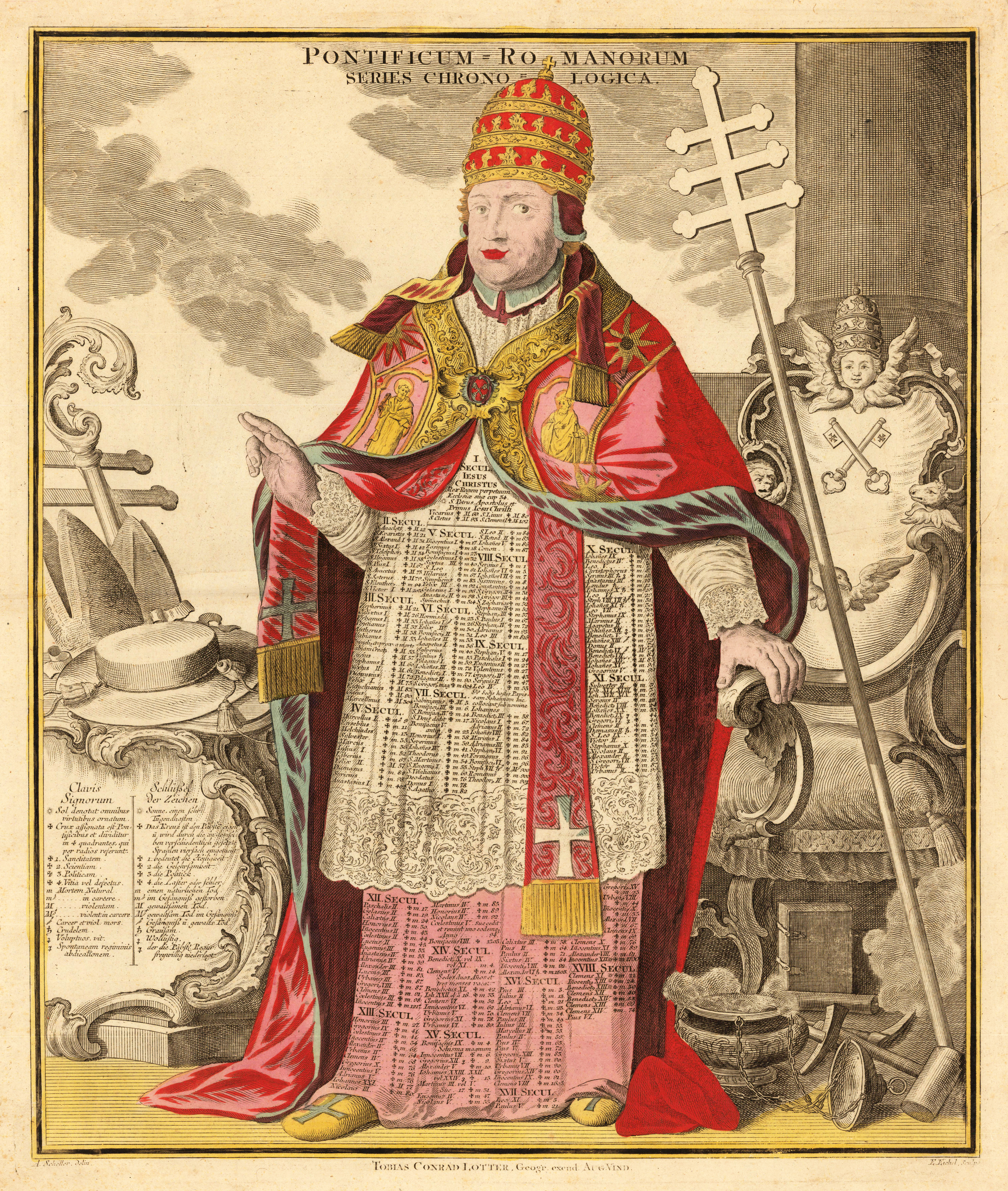
Copper engraving, decorative hand colored in wash when published. This fine engraving was first published by Matthaeus Seutter in Augsburg. Tobias Conrad Lotter was married in 1740 to the oldest daughter of M. Seutter, after Seutter's death in 1757 the printing house passed over to him. From 1757/58 he changed all Seutter imprints to his name T.C. Lotter.
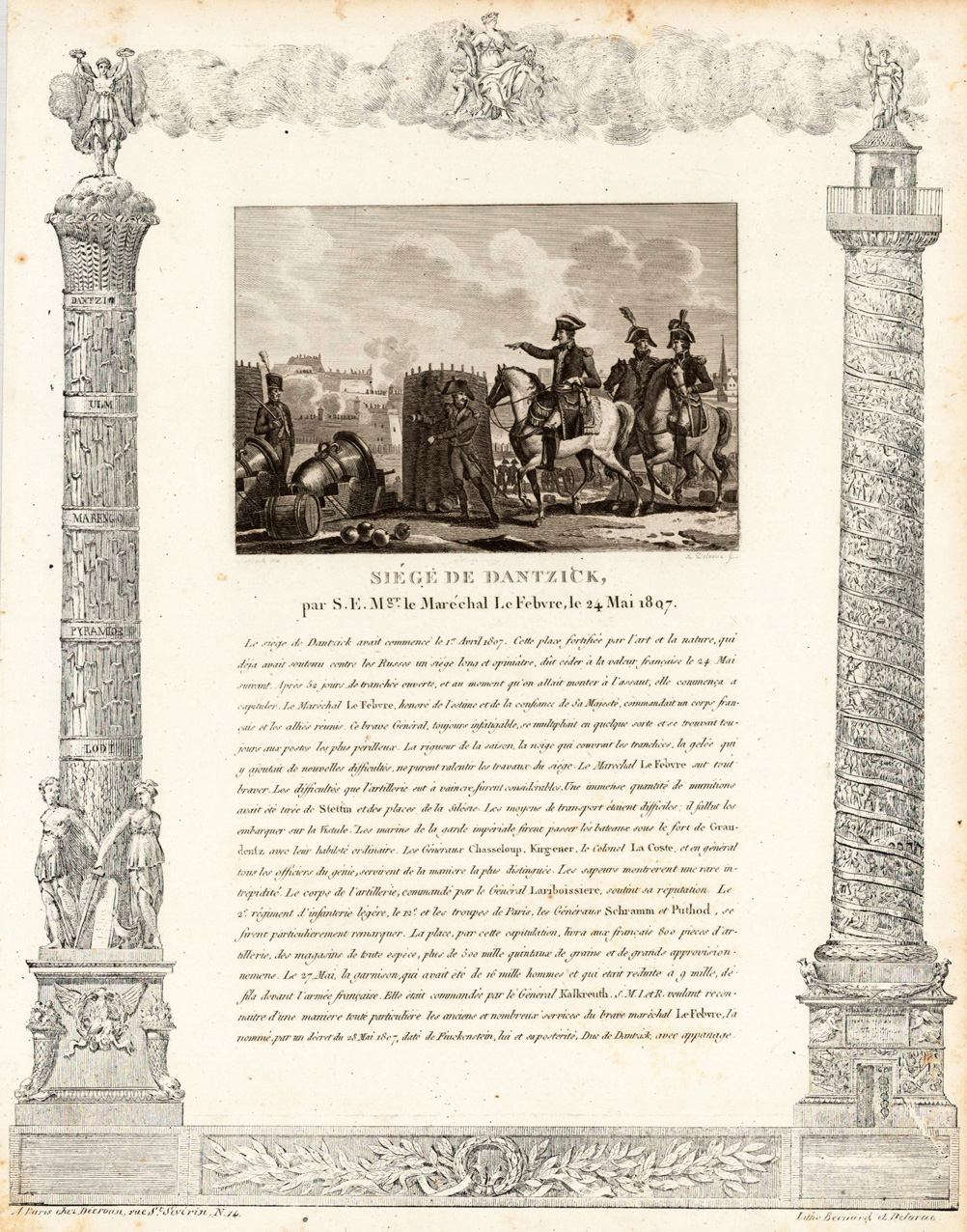
Original lithograph published in Ternisien d' Haudricourt's ,Fastes de la Nation Francaise'. The scene depicts the French marshall François-Joseph Lefebvre during the siege of Dantzig.
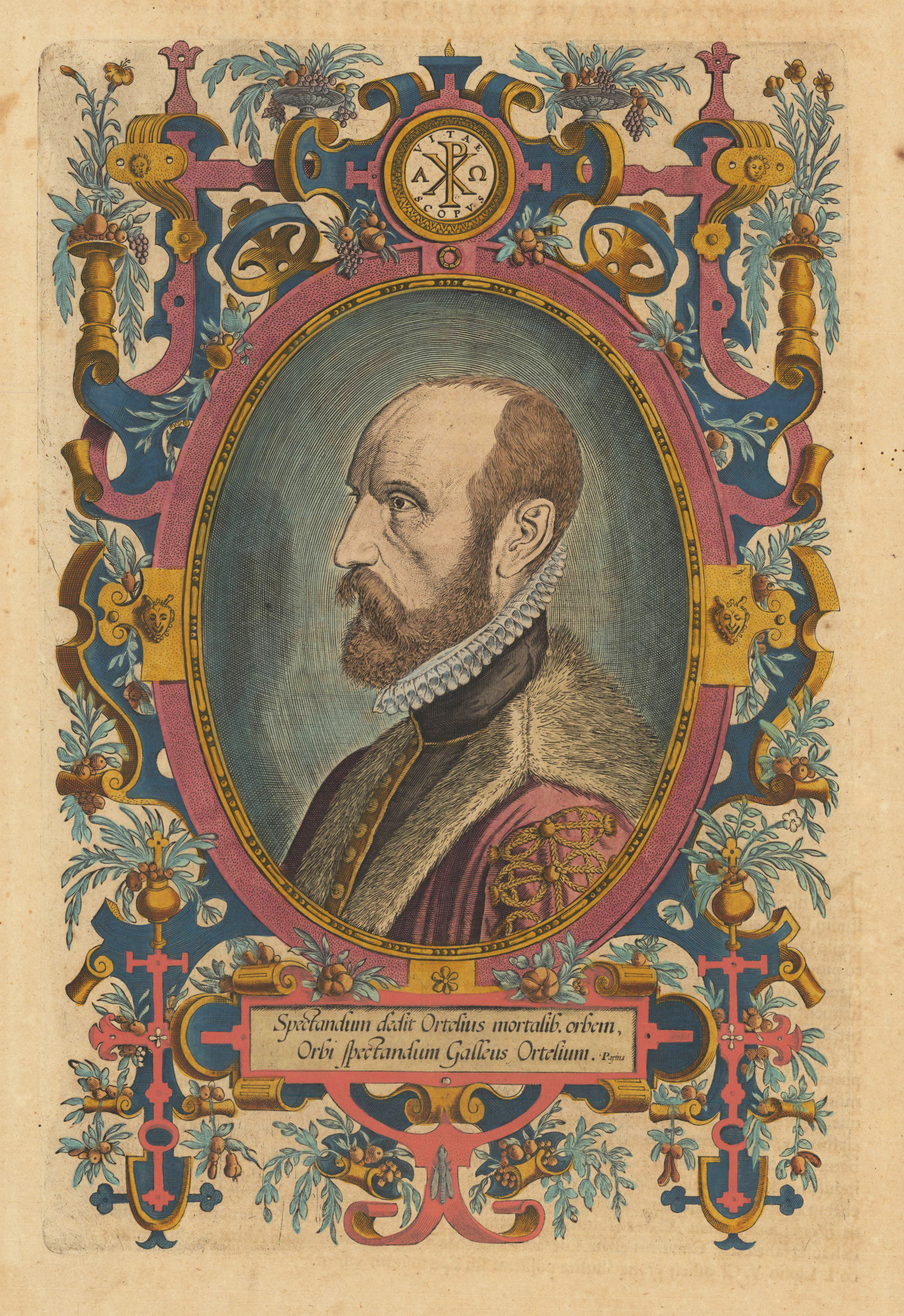
Original antique copper engraving, later hand colored. Latin text edition. This is the beautiful hand colored portrait of Abraham Ortelius as Frontispiece to his 'Theatrum Orbis'. Engraved by Phillipe Galle. Ortelius was born on 14 April 1527 in the city of Antwerp, which was then in the Habsburg Netherlands (modern-day Belgium). The Orthellius family were originally from Augsburg, a Free imperial city of the Holy Roman Empire. In 1535, the family had fallen under suspicion of Protestantism. Following the death of Ortelius's father, his uncle Jacobus van Meteren returned from religious exile in England to take care of Ortelius. Abraham remained close to his cousin Emanuel van Meteren, who would later move to London. In 1575 he was appointed geographer to the king of Spain, Philip II, on the recommendation of Arias Montanus, who vouched for his orthodoxy. He travelled extensively in Europe and is specifically known to have traveled throughout the Seventeen Provinces; in southern, western, northern, and eastern Germany (e.g., 1560, 1575–1576); France (1559–1560); England and Ireland (1576); and Italy (1578, and perhaps twice or thrice between 1550 and 1558). Beginning as a map-engraver, in 1547 he entered the Antwerp Guild of Saint Luke as an illuminator of maps. He supplemented his income trading in books, prints, and maps, and his journeys included yearly visits to the Frankfurt book and print fair, where he met Gerardus Mercator in 1554. In 1560, however, when travelling with Mercator to Trier, Lorraine, and Poitiers, he seems to have been attracted, largely by Mercator's influence, towards the career of a scientific geographer. (Wikipedia)