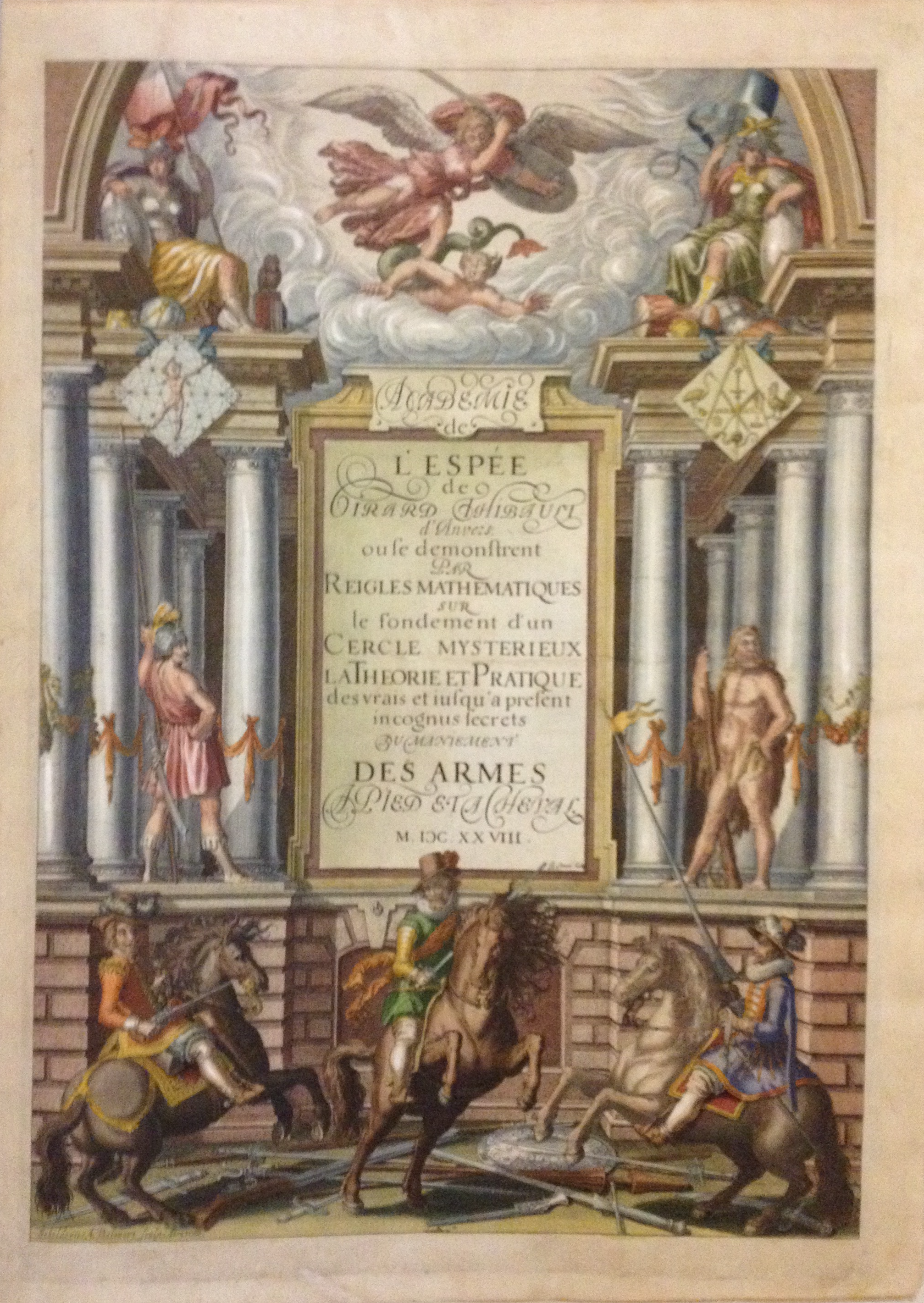
Engraved title and portrait, nine full page engraved plates with coats of arms and 46 (45 of them are double page) fine engraved plates. All these engravings are exceptional finely hand colored throughout by a later hand. 2 unnumbered pages, 276 separate paginated pages; the decorative and beautiful binding in brown modern marbled calf; the covers with their inner and outer edges richly stamped and gilt, spine also gilt and bound in 6 compartments. Imperial folio. The 'Academie de l'Espée' is overall the most famous fencing book with highly decorative fine engraved plates ever published. It was printed and published by the brothers B. & A. Elzevir in Leiden 1628. This enormous book is illustrated with an engraved title, one portrait, 9 plates of coats of arms and 46 (of which 45 are double page) fine engraved plates of fencing scenes by the famous Dutch engravers Crispin de Pass, J. Gilli, Wilhelm J. Delff, Crispian Quebon and others. All plates in this book (including the title, portrait and coat of arms) are finely hand colored by a later hand. The hand coloring is executed in absolute accuracy and delicate throughout. The fine engraved details of the various fencing scenes are hand colored with much care and stand out one of a kind in their beauty. 'This splendid equipped masterwork of typography is a curiosity as a manual of the art of fencing, which tries to overcall the meshed rules of the Spanish fencing school. Its worth for the history of the art of fencing is based on that, that it shows hundreds scenes of fencing pairs, which are missing illustrations in the Spanish fencing books of that period' (translated from the German reference Lipperheide 2960).
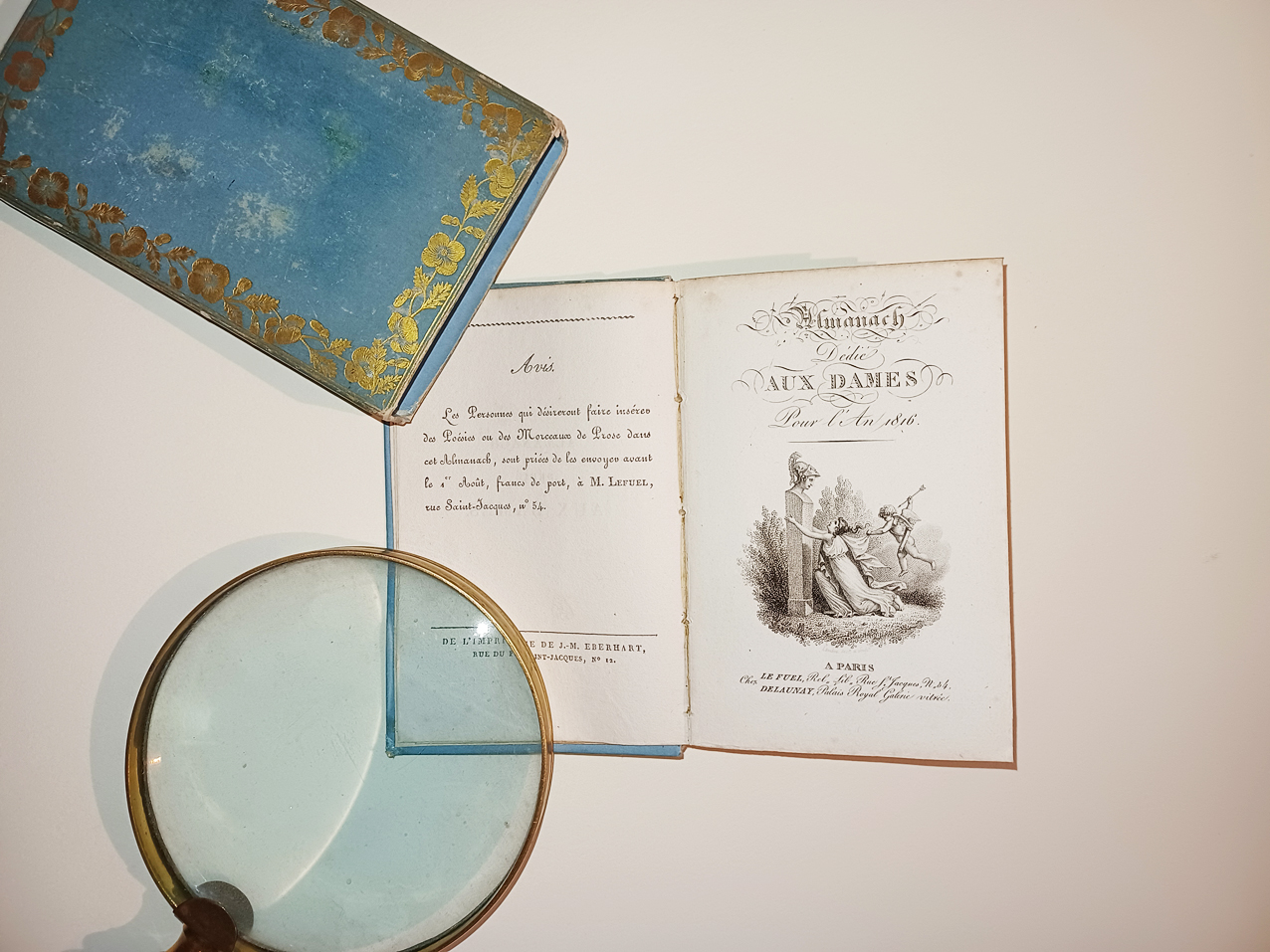
Charming almanac with illustrated calendar for 1816. Small book with engraved title and 6 engraved plates by De Villiers after various artists; some marginal foxing, light creases to a few corners. Binding: blue moiré silk, gilded frames, same slipcase, gilt edges. (Publisher box.).
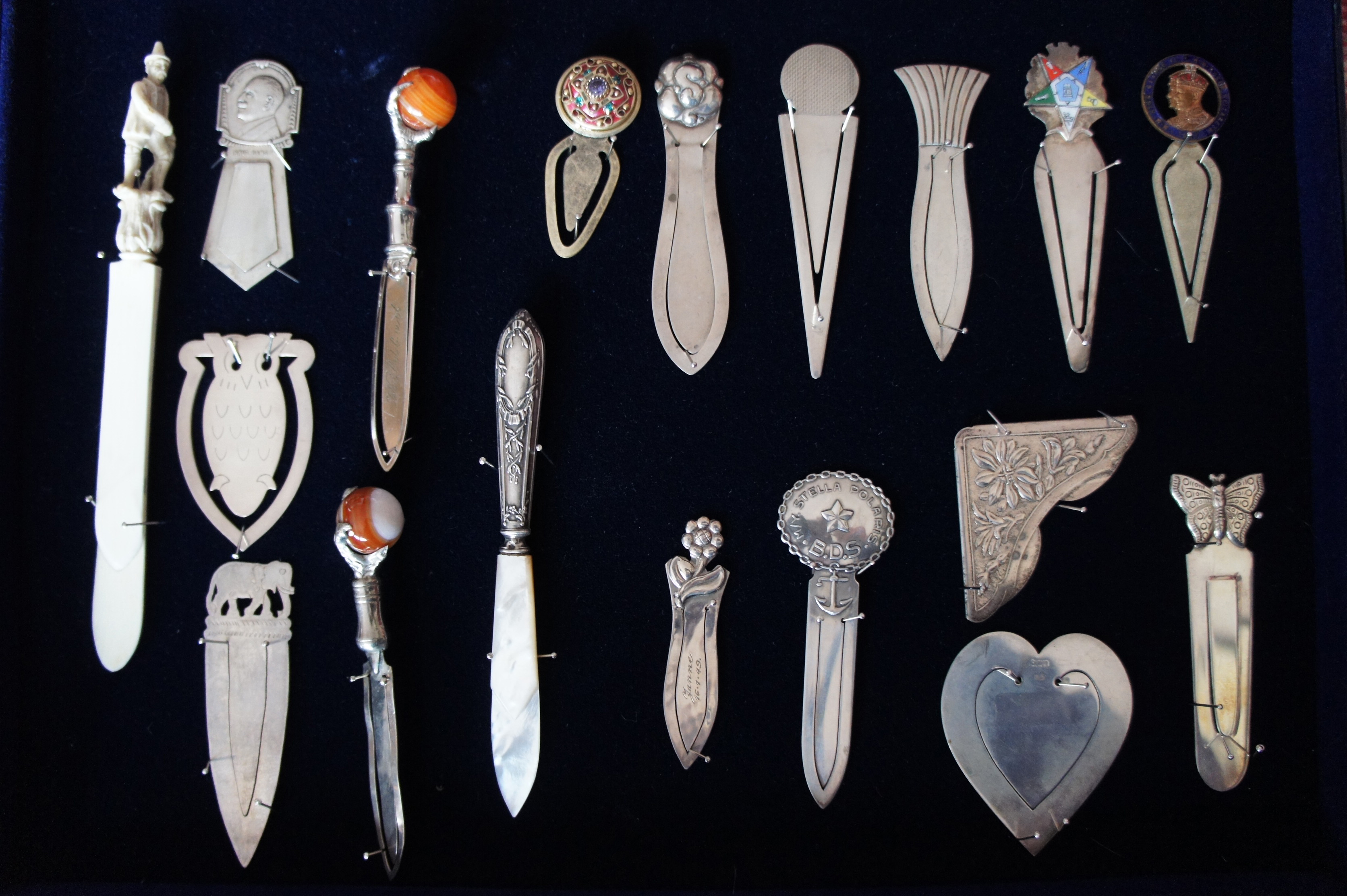
An impressive extensive collection of c. 320 bookmarks from the early 1620s towards the end of the 20th century. The collection comprises a fascinating abundeance of different material, shapes, styles and topics. It starts in the early baroque period in around 1620 with very rare bookmarks in the shape of small hearts. Further it comprises flower embroideries, representative icons of metal (ca. 145) many of them in silver, partly with handles of wood, bone, mother-of-pearl, covered with enamel or gems, then in contrast the stripes of paper or light cardboard., ,
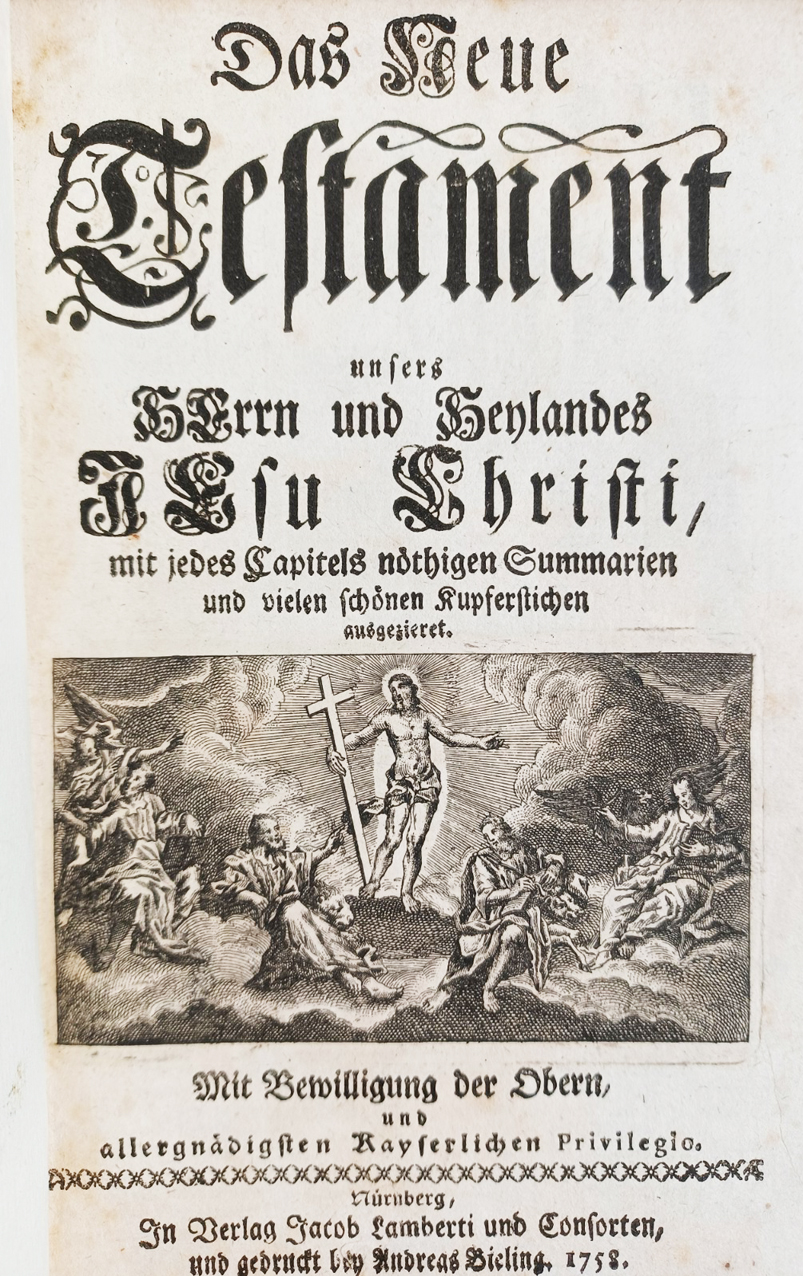
348 pp. New Testament; 118 pp. Catholic Catechism. 64 copper engravings in text.
Brown leather binding with gold embossed spine title "Holy Scripture - New Test." and leaf tendril pattern. Small blemish on the upper spine of the book. Otherwise in very good condition. 64 copper engravings in text. A classic New Testament bound with a Catholic catechism, mid-18th century. Illustrated with 60 finely engraved engravings in the text. Full leather binding of the time.
Christen (1700-1756), classical philologist, art historian and archaeologist, conducted extensive research in the areas of gemstones and coins, reliefs and painting.
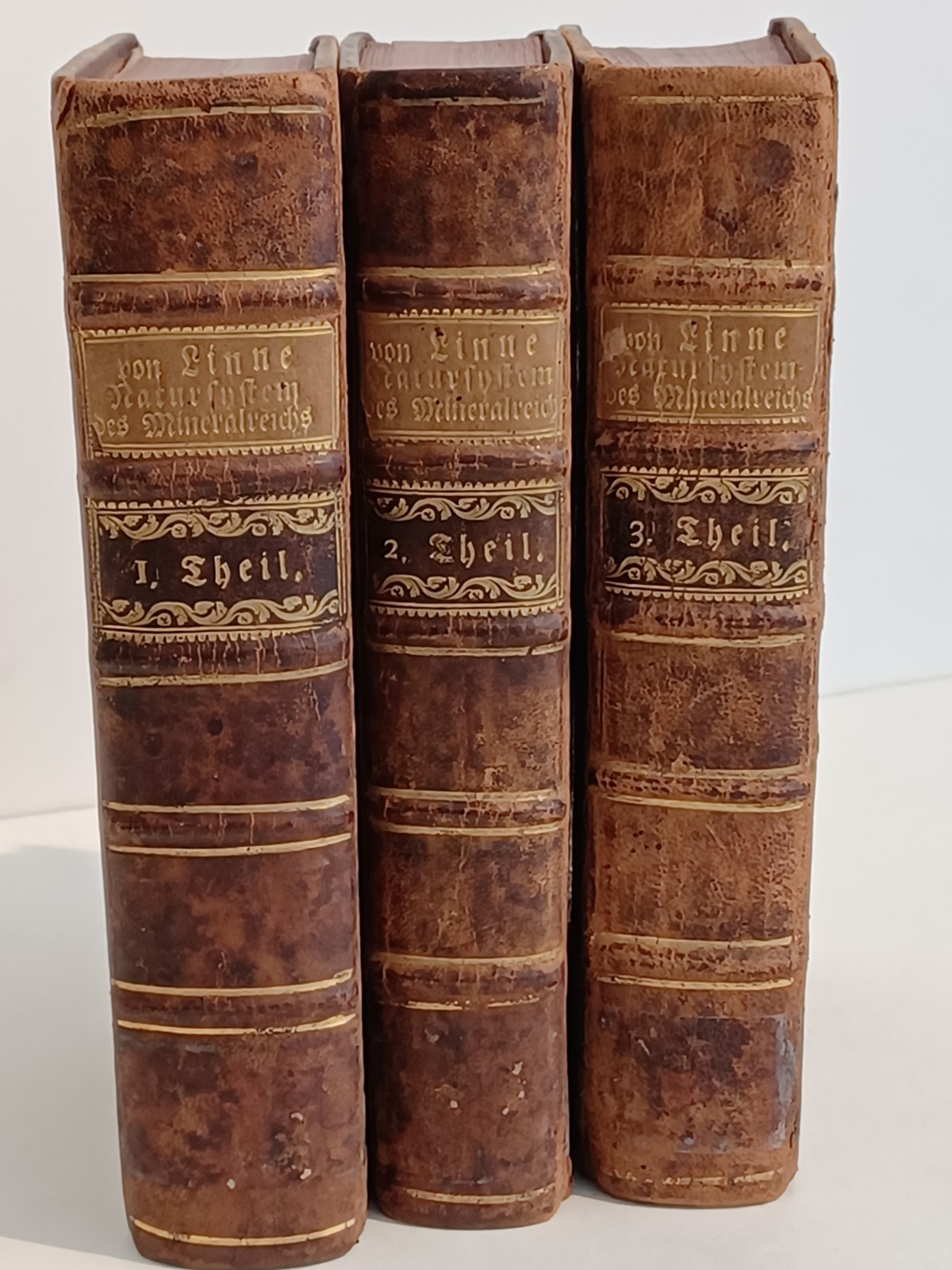
3 vol. (4) 8vo (195 x 120mm). 2 leaves, 652 pp., with 5 engraved folded plates; 8 leaves, 496 pp., 4 leaves, with 9 folded plates; 9 leaves, 486 pp. 2 leaves, with 13 folded plates. Johann Friedrich Gmelin (8 August 1748 – 1 November 1804) was a German naturalist, botanist, entomologist, herpetologist, and malacologist. Gmelin was born as the eldest son of Philipp Friedrich Gmelin in 1748 in Tübingen. He studied medicine under his father at University of Tübingen and graduated with an MD in 1768, with a thesis entitled: Irritabilitatem vegetabilium, in singulis plantarum partibus exploratam ulterioribusque experimentis confirmatam, defended under the presidency of Ferdinand Christoph Oetinger, whom he thanks with the words Patrono et praeceptore in aeternum pie devenerando, pro summis in medicina obtinendis honoribus. In 1769, Gmelin became an adjunct professor of medicine at University of Tübingen. In 1773, he became professor of philosophy and adjunct professor of medicine at University of Göttingen. He was promoted to full professor of medicine and professor of chemistry, botany, and mineralogy in 1778. He died in 1804 in Göttingen. Johann Friedrich Gmelin when young became an "apostle" of Carl Linnaeus, probably when Linnaeus was working in the Netherlands, and undertook a plant-collecting expedition to "Persia" on his behalf. Later in life he published several textbooks in the fields of chemistry, pharmaceutical science, mineralogy, and botany. He also edited and published the 13th edition of Systema Naturae by Carl Linnaeus from 1788 to 1793. This contained descriptions and scientific names of many new species, including birds that had earlier been catalogued without a scientific name by John Latham in his A General Synopsis of Birds. Gmelin's publication is cited as the authority for over 290 bird species and also a number of butterfly species.
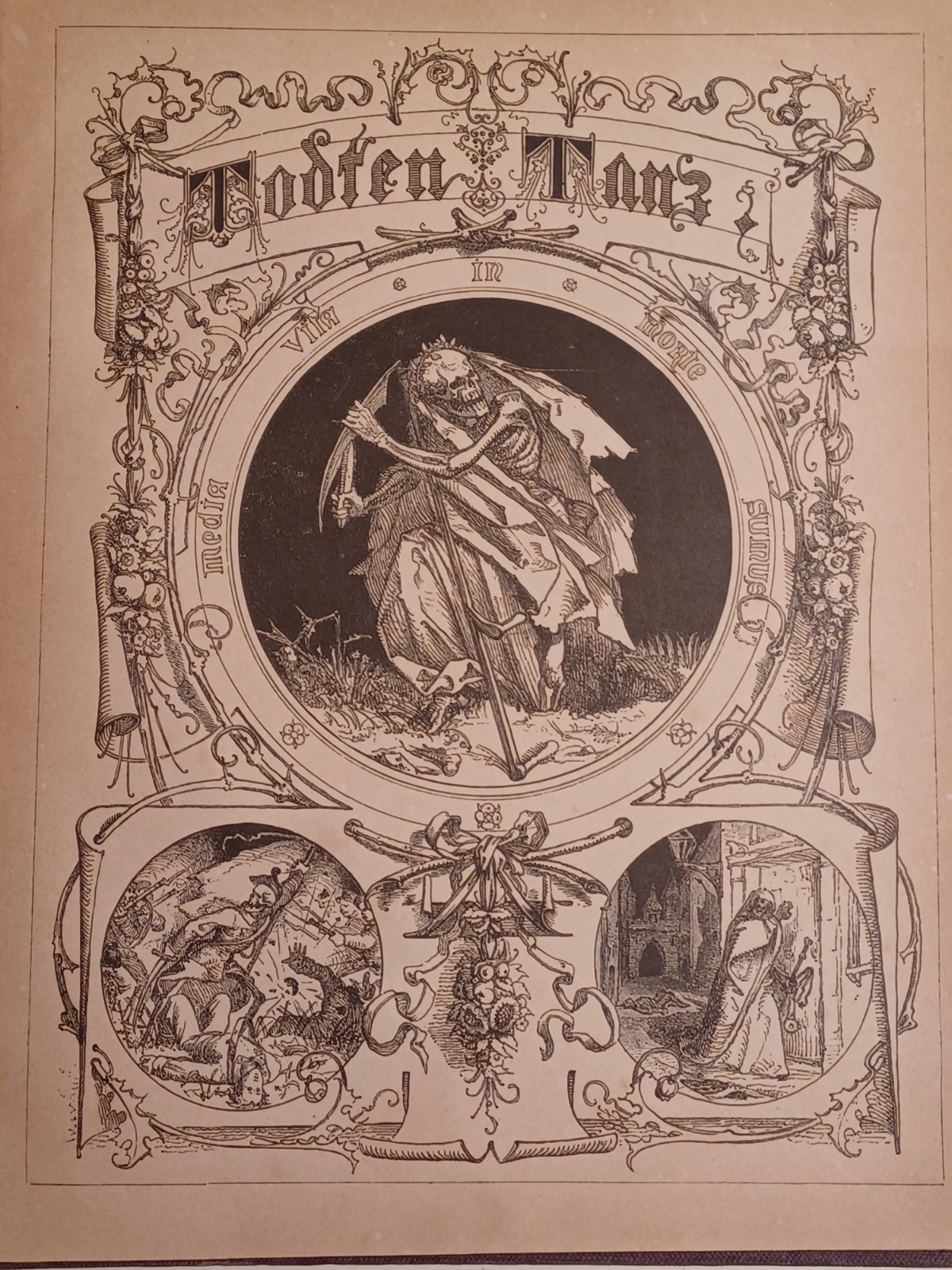
With title and 25 woodcuts in the text, as well as 25 woodcut initials by Ferdinand Barth. 4to. Original canvas of the time, with old ownership inscription 'Marie Edle von Humbourg'. Barth Ferdinand (* November 11, 1842, Partenkirchen, + ibid. in 1892), history painter and arts and crafts draftsman. "Gave early tests of his talent as a carver and wood sculptor, sought his salvation as such in Nuremberg, attended the art school there, which Kreling brought to great prosperity, then, completely penniless, left to his own devices, continued his studies with Ludwig Voltz and Jos. Knabl in Munich where he threw himself into painting at the Piloty school and brilliantly demonstrated his rich talent for colour. Kaspar Braun, who recognized Barth's original talent early on, employed him with drawings for the "Flying Sheets" and the "Munich picture sheets". For the Verlag von Braun & Schneider created a series of magnificent drawings from the life of the Landsknecht and in 25 woodcut sheets under the title "The Work of Death" this modern Dance of Death (1865) made up of completely new motifs."
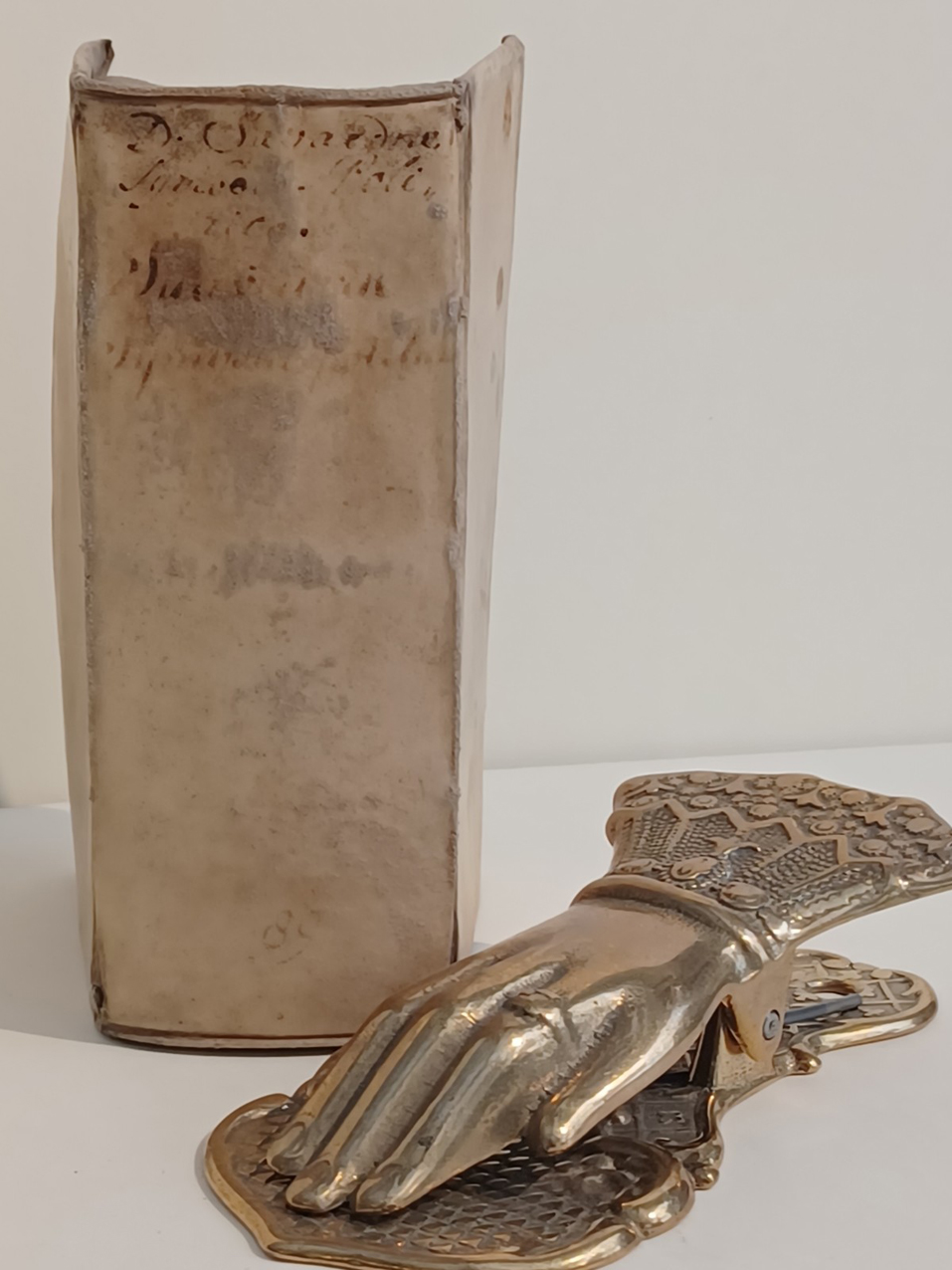
4to. Contem. vellum, slightly soiled. Very rare extensively annotated later edition of the first emblem book. 80 p., 1001 p., 3 unnum.; illustrated with engraved frontispiece, 212 woodcuts emblems and a large printer's mark at the end. Printed in two columns. With old owner mark: crowned stamp with monogram of Princess Nadjeda Scherbatow.
With illustr. Copper title, 42 num. Copper plates and 3 n.n. Copper plates with interior views. Engraved by Johann August Corvinus and Carl Remshart based on drawings by Matthias Diesel. Transverse folio. (approx. 29 x 42 cm). Half parchment of the period with colored paper cover, 46 sheets. The third (and final) part of Diesel's table work on palace and garden architecture. It contains views of the buildings and gardens of the Munich Residence (plates 1-10) as well as the palace and gardens of Nymphenburg (11-25), Fürstenried (26-28) and Schleißheim (29-32) built under Elector Maximilian Emanuel incl. Lustheim (33-34). Also a view of Hohenburg Castle (35), built on behalf of Count Ferdinand Joseph von Herwarth. Tables 36-42 show ideal designs or floor plans of model facilities. The 3 interior views after the title page: 1. Court chapel, on an organ gallery, with dedicated dedication to Maria Amalia of Austria. 2. Marian Hall of the "Citizens' Hall Church". 3. Tournament house in the residence. - "The historical value of D.'s work is that it provides the first German models of the new French garden style; the engravings of the third volume are extremely important as the only contemporary views of Max Emanuel's buildings and parks" (Thieme Becker). Diesel (1675-1752) was an engineer at the court and pleasure gardens in Munich from 1718 and was able to complete his training in pleasure and flower gardening as well as the creation of water features in France between 1706 and 1710.
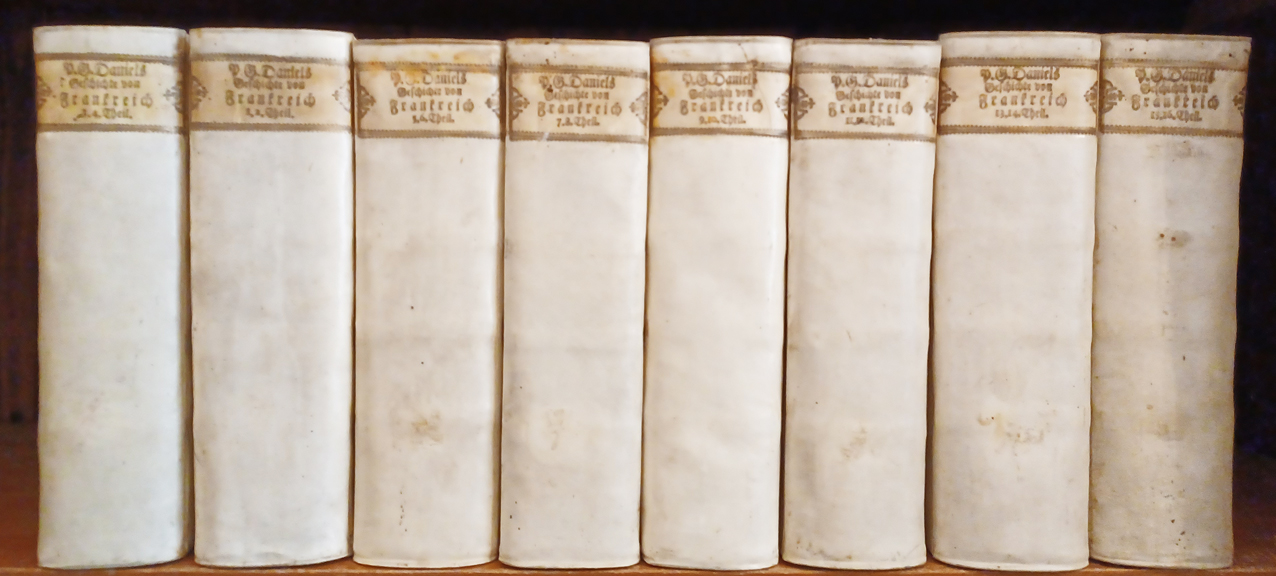
16 parts in 8 volumes in parchment bindings of the period, with spine titles embossed in gold. 1st. volume: First part. Foundation of the French Monarchy. 4 unnum. Bll. 443 pp. Illustrated with allegoric frontspiz, engraved vignette on title, 3 folded engraved maps, several engraved vignettes in text, 3 full page engravings and engraved coins in the printed text. Second part from the years 716 to 877. With engraved frontispiz, several engraved vignetts and coins and one full page illustration. 664 pp., 4 unum. Bll. 2nd volume: Third part from the years 877 to 1180. 1 unnum. p., 543 numm. pp.; with engraved frontispiz, several engraved vignettes and some coins in text. Fourth part from the years 1181 to 1285. With engraved frontispiz and two vignettes in text. 1 unnum. Bl., 544 numm. pp. 3rd volume: Fifth part from the years 1286 to 1380. Engraved frontispiz with coins, vignette on printed title, three vignettes in text. 1 unnum. p., 567 numm. pp.; Sixth part from the years 1380 to 1461. Engraved frontispiz with coins, vignette on printed title, two engraved vignettes in text. 646 numm. pp.; 4th volume: Seventh part from the years 1461 to 1509. Engraved frontispiz with coins, vignette on printed title, several vignettes with coins in text. 580 numm. pp.; Eighth part from the years 1510 to 1547. Engraved frontispiz with coins, vignette on printed title, one engraved vignette in text. 596 numm. pp.; 5th volume: Ninth part from the years 1547 to 1574. Engraved frontispiz with coins, vignette on printed title, four engraved vignettes in text, 1 folded plan depicting the siege of Metz, 612 numm. pp.; tenth part from the years 1574 to 1589. Engraved frontispiz, vignette on printed title, one engraved vignette in text; 2 unnum. pp., 468 numm. pp.; 6th volume: Eleventh part from the years 1589 to 1610. Engraved frontispiz, vignette on printed title, one engraved vignette in text and one page with engraved coins in text; 648 num. pp.; Twelfth part from the years 1610 to 1630. Engraved frontispiz, vignette on printed title, one engraved vignette with coins in text; 4 unnum. pp., 540 numm. pp.; 7th volume: Thirteenth part from the years 1630 to 1637. Engraved vignette on printed title; 594 num. pp.; Fourteenth part from the years 1637 to 1643. Engraved vignette on printed title; 1 large folded map of France, engraved after Sr. Robert; 596 num. pp.; 8th volume: Fifteenth part from the years 1643 to 1715. Including a newly prepared map of France (missbound into part 14). Engraved vignette on printed title; one engraved vignette with coins in text; 552 num. pp.; Sixteenth part, which contains the general register for the whole work. Printer's mark on printed title, 514 pp. register, 1 unnum. page (errata). Gabriel Daniel, born February 8, 1649 in Rouen and died June 23, 1728 in Paris is a French Jesuit historiographer. Father Daniel, who joined the Jesuits in 1667, is an author of works on history, philosophy and religion. The only two works that have made Father Daniel famous are his French Militia and his Histoire de France. This last work, appearing in 1713, 3 folio vols (reprinted with great improvements, 1755-1760, 16 vols. in-4°), of which he gave an abrégé in 1724, 9 vols. in-12 was heavily criticized. The Earl Boulainvilliers said it was almost impossible for a Jesuit to write the history of France well. They are not the only ones who have prevented Father Daniel from writing well, the talent of insolvency has damaged his work as much as Jesuit opinions.
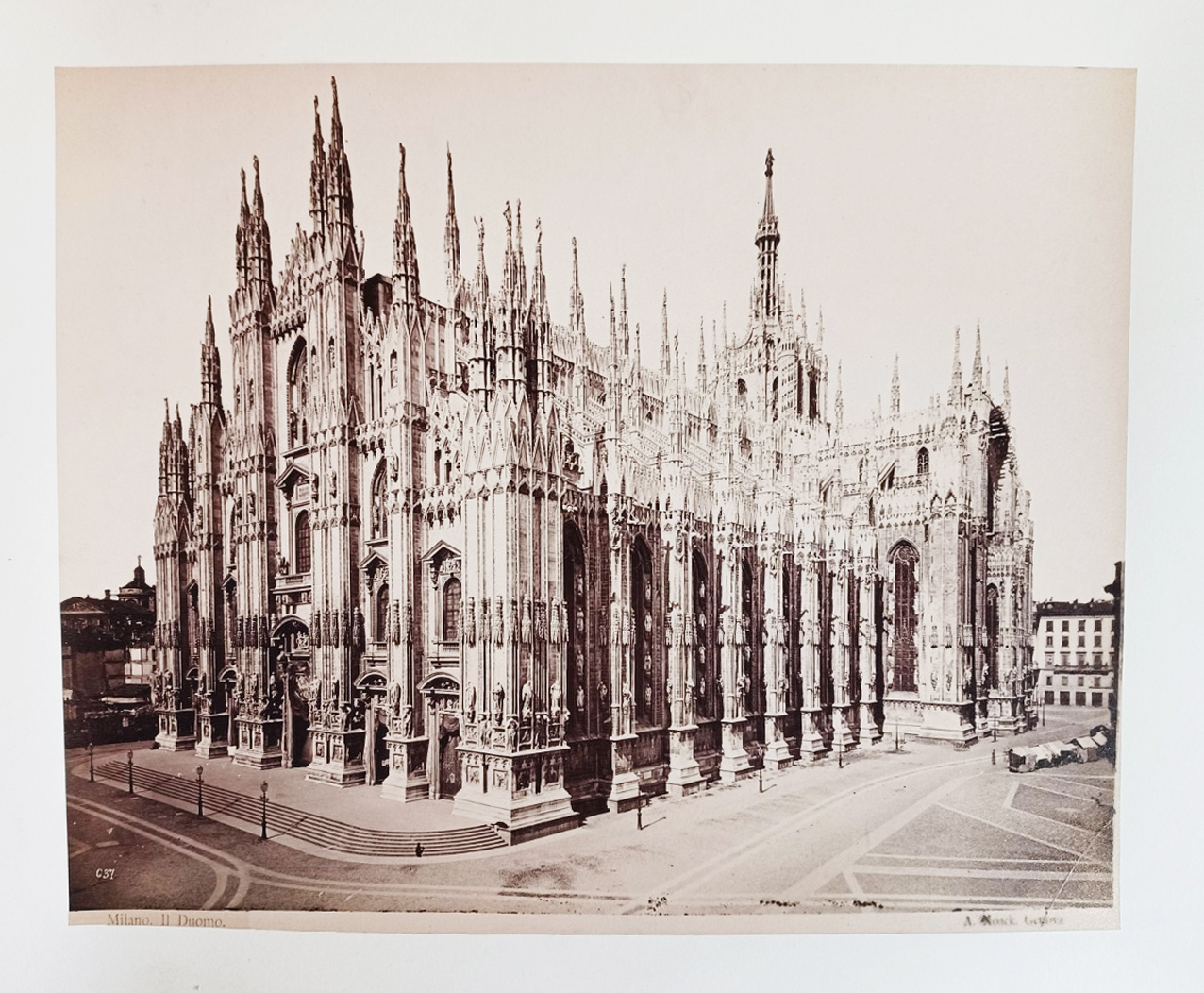
Half leather binding, linen covers, with title on the front cover. Travel photo album with 52 albumen prints of different locations such as Heidelberg, Vierwaldstädter Lake, Lago maggiore, Riviera, Genua. The photographs show views of Lucerne et le Pilate, Panorama de Lucerene, the Alps, Lago Maggiore, Milano, San Remo, Monto Carlo and more. Some prints are dated around the year 1880. The imprints vary from scenic views, to cities, lakes and buildings, both inside and outside views. On the book cover is the following imprint: Heidelberg, Vierwaldstädter See, Lago maggiore, Riviera, Genua. The album imprints are by Schroeder & Cie, Zurich, Alfred Noack, G.J. Phot.
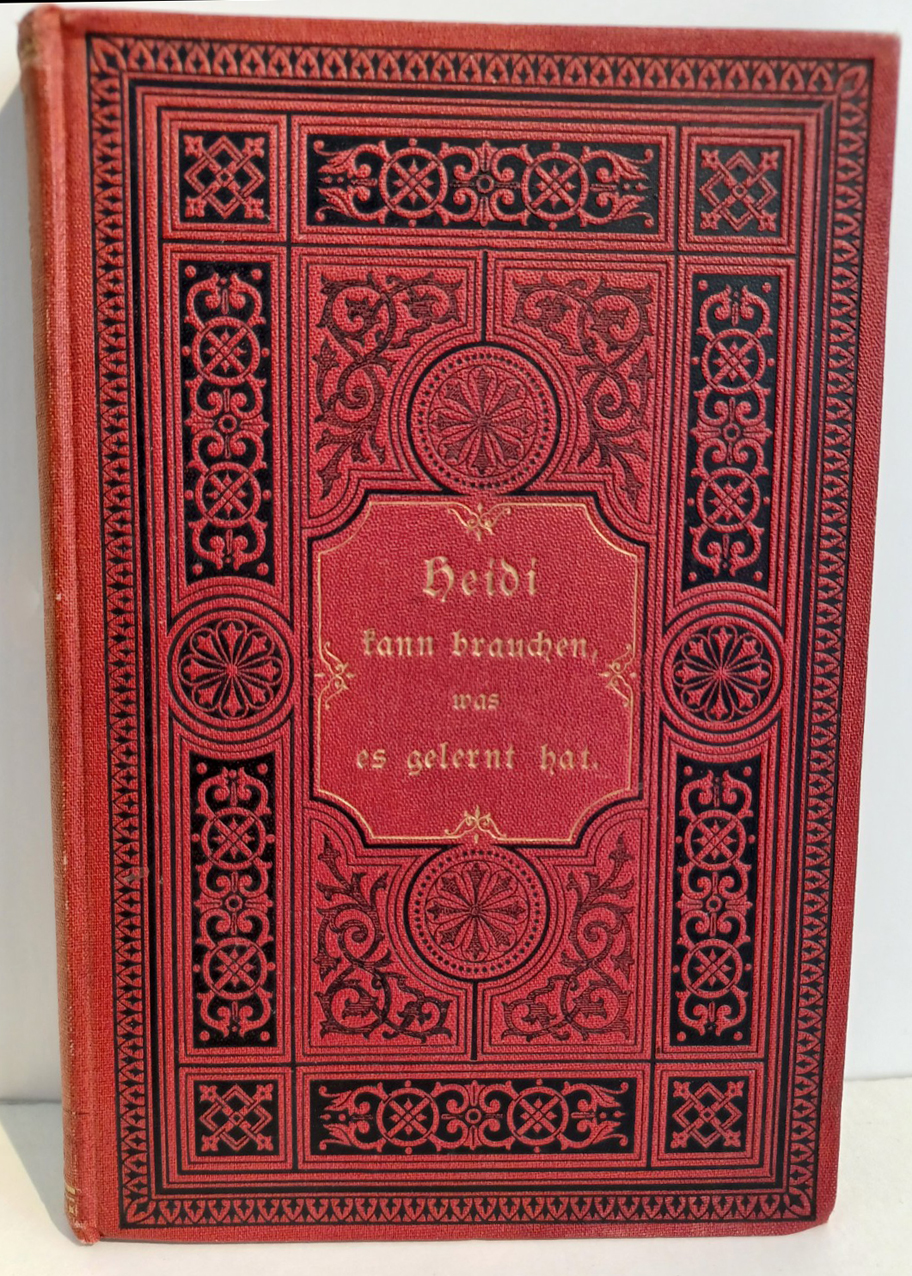
2 leaves, 178 pp. 8vo. Orig. red cloth, black ornamental decoration, gilt lettering on front cover and spine. First edition of the second Heidi book. Johanna Spyri (1827-1901) created with "Heidi" the most important Swiss contribution to world children's literature after the "Swiss Robinson" by J. R. Wyss. Her classic saw countless editions and translations.- Old ms. name on title, very well-preserved considering its popularity, a clean and nice copy. Johanna Louise Spyri (12 June 1827 – 7 July 1901) was a Swiss author of novels, notably children's stories, and is best known for her book Heidi. Born in Hirzel, a rural area in the canton of Zurich, Switzerland, as a child she spent several summers near Chur in Graubünden, the setting she later would use in her novels. In 1852, Johanna Heusser married Bernhard Spyri. Bernhard was a lawyer. Whilst living in the city of Zürich she began to write about life in the country. Her first story, A Leaf on Vrony's Grave, which deals with a woman's life of domestic violence, was published in 1880; the following year further stories for both adults and children appeared, among them the novel Heidi, which she wrote in four weeks. Heidi tells the story of an orphan girl who lives with her grandfather in the Swiss Alps, and is famous for its vivid portrayal of the landscape. Her husband and her only child, both named Bernhard, both died in 1884. Alone, she devoted herself to charitable causes and wrote over fifty more stories before her death in 1901. She was interred in the family plot at the Sihlfeld-A Cemetery in Zürich. An icon in Switzerland, Spyri's portrait was placed on a postage stamp in 1951 and on a 20 CHF commemorative coin in 2009.
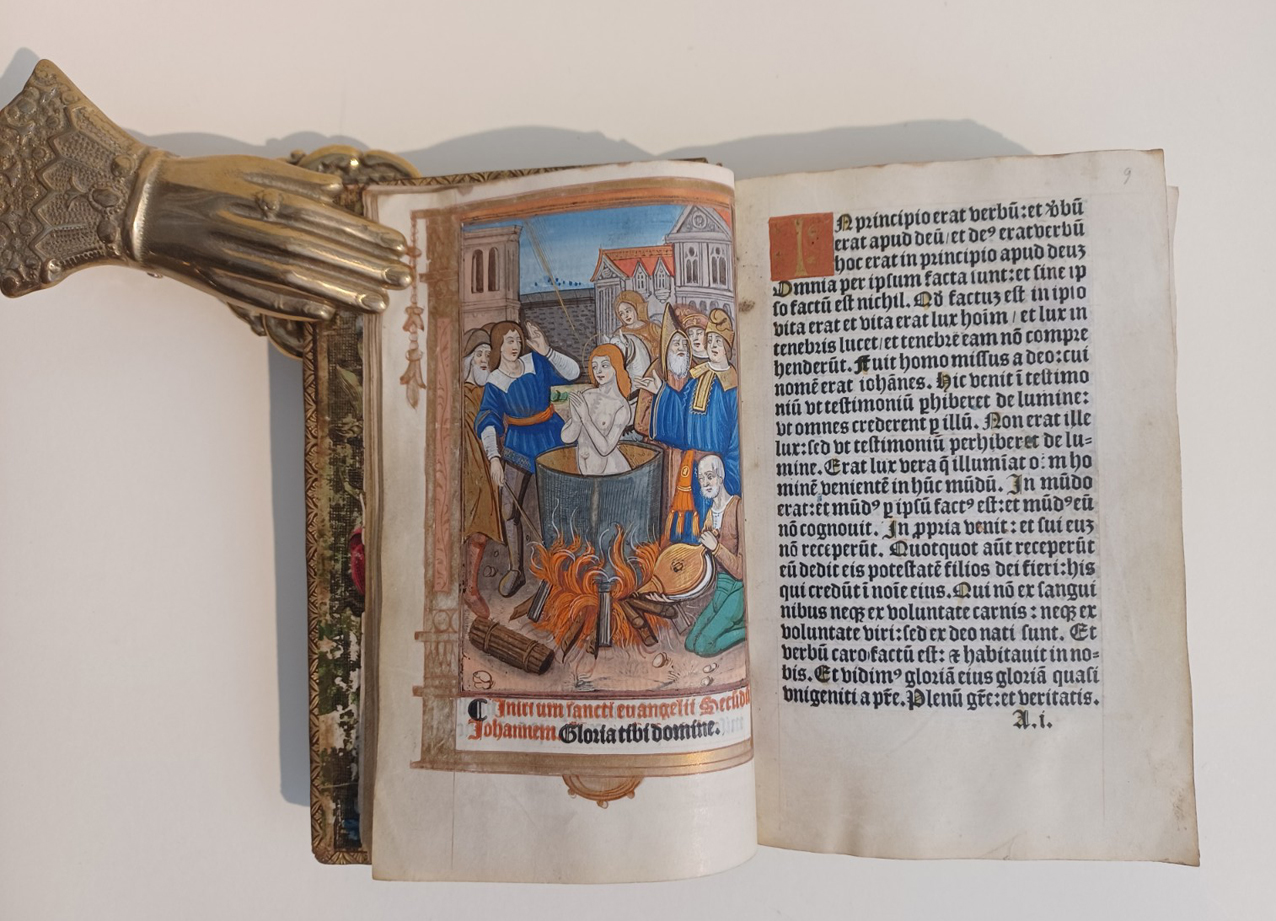
Printed on vellum in red and black. 135 (of 136) sheets. Printed in Latin and French. Single-column text mostly 24 or 25 lines. Gothic type. Illustrated with a finely illuminated title page, 13 (of 14) full-page finely colored metalcuts illuminated in gold. The full-page description of the ministry of souls is missing. All initials and line fillers are finely painted in gold on a red or blue background. The book of hours contains: title page, verso an almanac for 13 years (1518-1530), a calendar on six pages, seven prayers of Saint Gregory, sections on the Gospel of John, the Gospel of Luke and the Gospels of Mark and Matthew, the Passion of Christ according to John, the prayers to the Virgin Mary, prayers to the Hours of the Cross and the Holy Spirit, other prayers to the Blessed Virgin Mary. Seven Penitential Psalms and Litany. The ministry of souls follows, as well as other short prayers involving commemorations of the Trinity, the Father, the Son and the Holy Spirit. In the last part there follow various prayers to the Blessed Virgin, including the 'O intermerata' and various petitions to other saints, such as St. Sebastian, St. Anthony, St. Anne, St. Catherine, St. Mary Magdalene, St Stefan and various others. French leather strap with rich gilt spine and gilt edges. The edges of the lid decorated with 3 gold embossed fillet lines all around on four sides. As well as surrounding inner and outer edge gilding in a diamond pattern. The inner covers and backs of the endpapers are equipped with floral patterned gold colored paper. Decorative leather binding, slightly rubbed, a few smaller older worm holes visible in the upper and lower part of the spine (without any damage to the parchment leaves).
2 vol. small 4to. Full calf, spine in five compartments, gilt and richly decorated. XVI, 687 pp.; 568 pp. A classical text in Latin and Greek about the aphorisms of Hippocrates with various annotations in Latin and Greek language. In lieu of an abstract M.D. Dickson W. Richards provides here is a brief excerpt of the content translated into English: Life is short, the art long, opportunity fleeting, experiment treacherous, judgment difficult. This quintet of epigrams, as everyone knows, forms the first part of the First Aphorism of Hippocrates. It sets forth, as a background for the teaching of the practice of medicine, the difficulties and the hazards which the physician must face. The beginning is as impressive as it is famous—the gently fatalistic contrast between life and "art," stated with simplicity and clearness.
Folio. With woodcut vignette on title and folded engraved map. 2 leaves, 541 pp., 19 leaves (the first blank). Illustrated with a folding large world map engraved after Abraham Ortelius. The map shows a large unexplored 'Terra Australis...' and shows South America with westward bulge. The map is decorative ornated similar to Abraham Ortelius, with ships and sea-monsters. It is present in a very good impression on paper with good margins. A small rust-hole in 'Nova Guinea', the right fold with minor browning or soiling, the fold as well with a small marginal upper split (with on loss of the image) on the upper margin.
8vo. Title printed in red and black with large initial,H' in red. The,Hortolus anime illustrated weith a total of 75 woodcut illustrations by the swiss artist Urs Graf (1485-1527) and the German artist Hans Baldung Grien (1484-1545). Vellum binding of the period with manuscrript, lacking the ribbons, spine worn and with abrasions and losses. Complete with all 75 woodcut illustrations, however lacking the last numbered page (16) of the first part of the book. The woodcuts overall in good impressions, text partially cut through the binding. 15 (16) num. Bll., 97 numm. Bll., 1 unnm. Bl. Illustrated with 1 large fullpage woodcut,beate Mariae viginis', 73 small woodcuts in text and one fullpage printer's device woodcut at the last unnumbered leaf. Hans Baldung (* 1484 or 1485 in Schwäbisch Gmünd; † September 1545 in Strasbourg), also called Hans Baldung Grien after his favorite color green, was a German painter, draftsman and engraver at the time of Albrecht Dürer, who also made numerous designs for woodcuts and made stained glass. He is one of the outstanding artists of the Renaissance in German-speaking countries. In 1503, Hans Baldung went to Nuremberg to continue his studies under Albrecht Dürer. Here he was given the nickname "Grien", according to legend "the Green", because he liked to wear green clothing and generally preferred the green color; in this way they wanted to distinguish him from the other journeymen in the workshop with the names Hans, Hans Schäufelein and Hans Süss von Kulmbach. He became Dürer's most important employee and ran his workshop during Dürer's absence. In the spring of 1509, Baldung returned to Strasbourg and acquired citizenship there. In 1510 he was accepted as a master craftsman by the "zur Steltz" guild and opened his own workshop. He achieved high social standing and prosperity in Strasbourg. From 1533 to 1534 he held the office of alderman in his guild and in 1545, the year of his death, even became a councilman. Urs Graf (c. 1485 in Solothurn, Switzerland – possibly before 13 October 1528) was a Swiss Renaissance goldsmith, painter and printmaker (of woodcuts, etchings and engravings), as well as a Swiss mercenary. He only produced two etchings, one of which dates from 1513 – the earliest known etching for which a date has been established. However, his woodcuts are considered of greater significance, particularly as he is attributed with the invention of the white-line woodcut technique, where white lines create the image on a black background. He also produced a few engravings, including copies of works by Martin Schongauer and Albrecht Dürer. He produced innovative drawings intended as finished works of art rather than just studies. Graf learned goldsmithing first from his father, Hugo Graf, then from a goldsmith in Zürich. He continued to work as a goldsmith and a few pieces survive. He initially earned money as a designer of woodcut book illustrations and by assisting a stained glass painter. In 1512, he bought citizenship in Basel and became a member of the goldsmiths' guild. He quickly came into conflict with the law for abusing his wife and consorting with prostitutes, culminating in accusations of attempted murder which caused him to flee the city in 1518. He was allowed to return to Basel the following year, where he continued working, but after 1527 his life becomes unclear. Given his frequent employment as a soldier of fortune it is possible he was present at the sack of Rome. Christiane Andersson noted that, "When and where he died are unknown: his wife remarried in October 1528 but an autograph drawing is dated 1529". Like many Swiss men of his day, Graf was known to have worked as a mercenary for considerable periods. His artistic output, arising from the tradition of Albrecht Dürer and Hans Baldung, includes a wide range of subjects, depicting social, erotic, military, political, and criminal images (e.g., Two Prostitutes Beating a Monk), as well as strong religious feelings which emerge in some works.
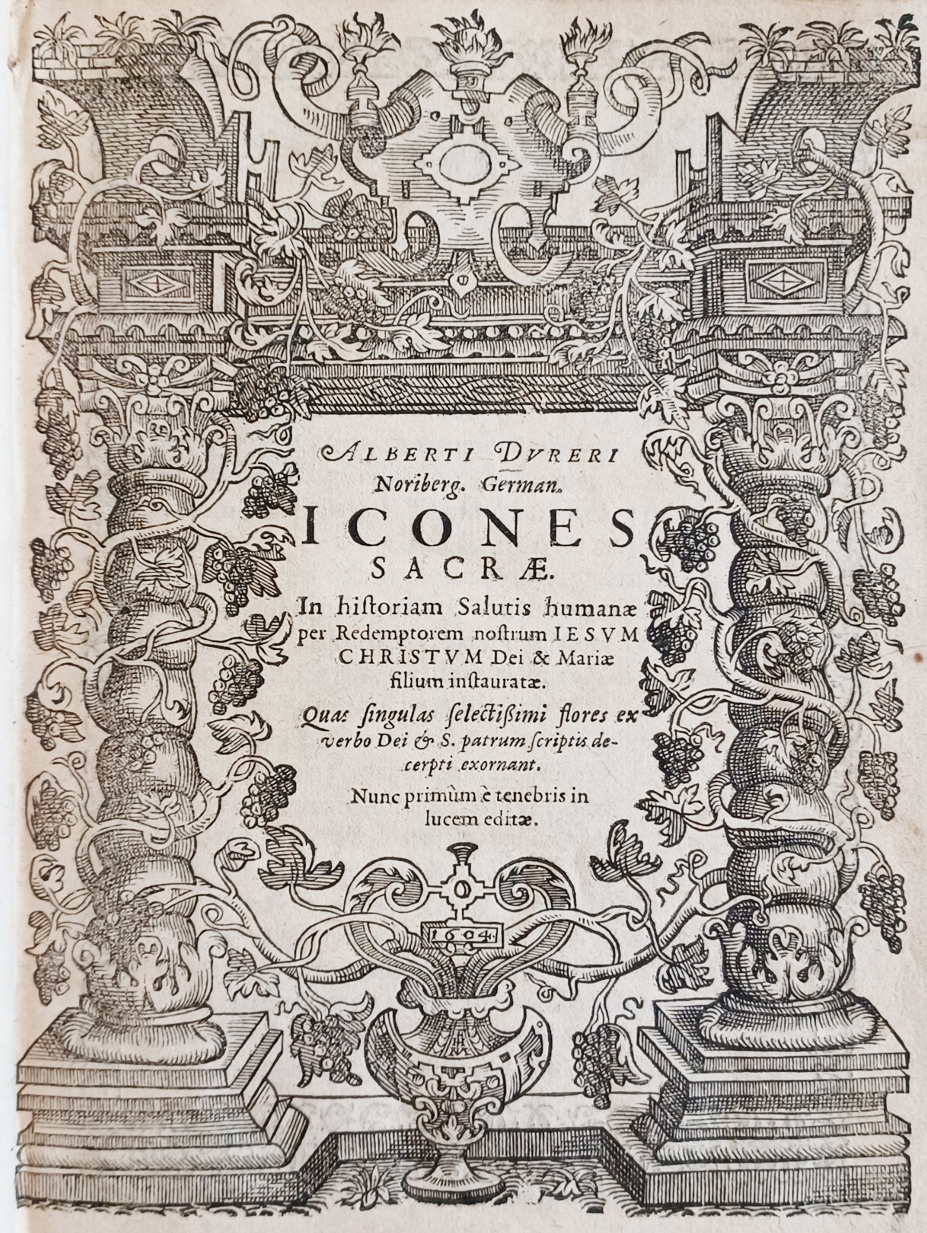
Title within ornate architectural border and 38 woodcuts in the text within a border of type ornaments, text and illustrations printed on the versos only, rectos blank save for the border. A-K1-4, L1-2. Complete. Book edition, 1604, published under the wrong title, of the bookseller G.L. Froben from Hamburg. The series 'Sündenfall und Erlösung des Menschengeschlechtes' by Albrecht Altdorfer was first published 1513 in form of single woodcuts, sometimes as a series in an album or a book. When the Froben-edition was published 1604, 38 of the 40 wood blocks had been left. This edition was provided with borders and sentences from the bible and the fathers of church. The binding with small abrasions on the covers and at the edges. The spine worn and with some abrasions and minor mendings. Leaves F3 & G2, with small, carefully deposited tear at the lower right corners, in the white margin (not touching the border). Good copy, the woodcuts in good impressions and preponderately clearly printed.
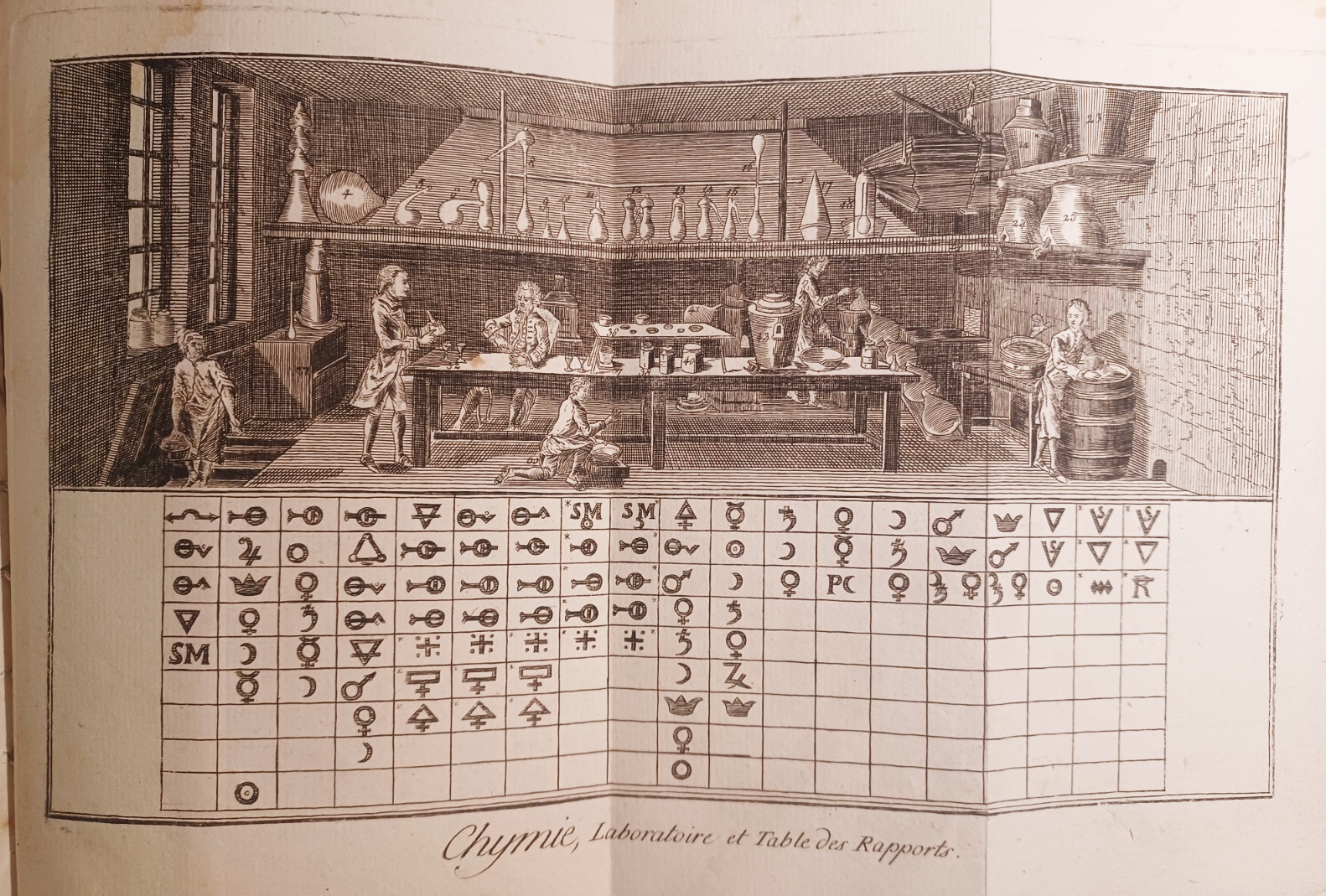
24 engraved plates with chemical characters, chemistry laboratory utensils and the crystallization of salts. The folded plate at the end of the book shows the chemical laboratory above the table of reports.

![100 Meister Exlibris [Portfolio]](https://bergbook-sw6.1drop.dev/media/71/15/4b/1713265151/24755_1grwxgsxvcu9ds.jpg "24755_1gRwxgSxVCU9dS")
![Emblemata cum commentariis Claudii Minois I.C. Francisci Sanctii Brocensis & notis Laurentii Pignorii Patavini [ed. Joannes Thuilius].](https://bergbook-sw6.1drop.dev/media/c6/aa/71/1713264928/14617_2.jpg "14617_2")