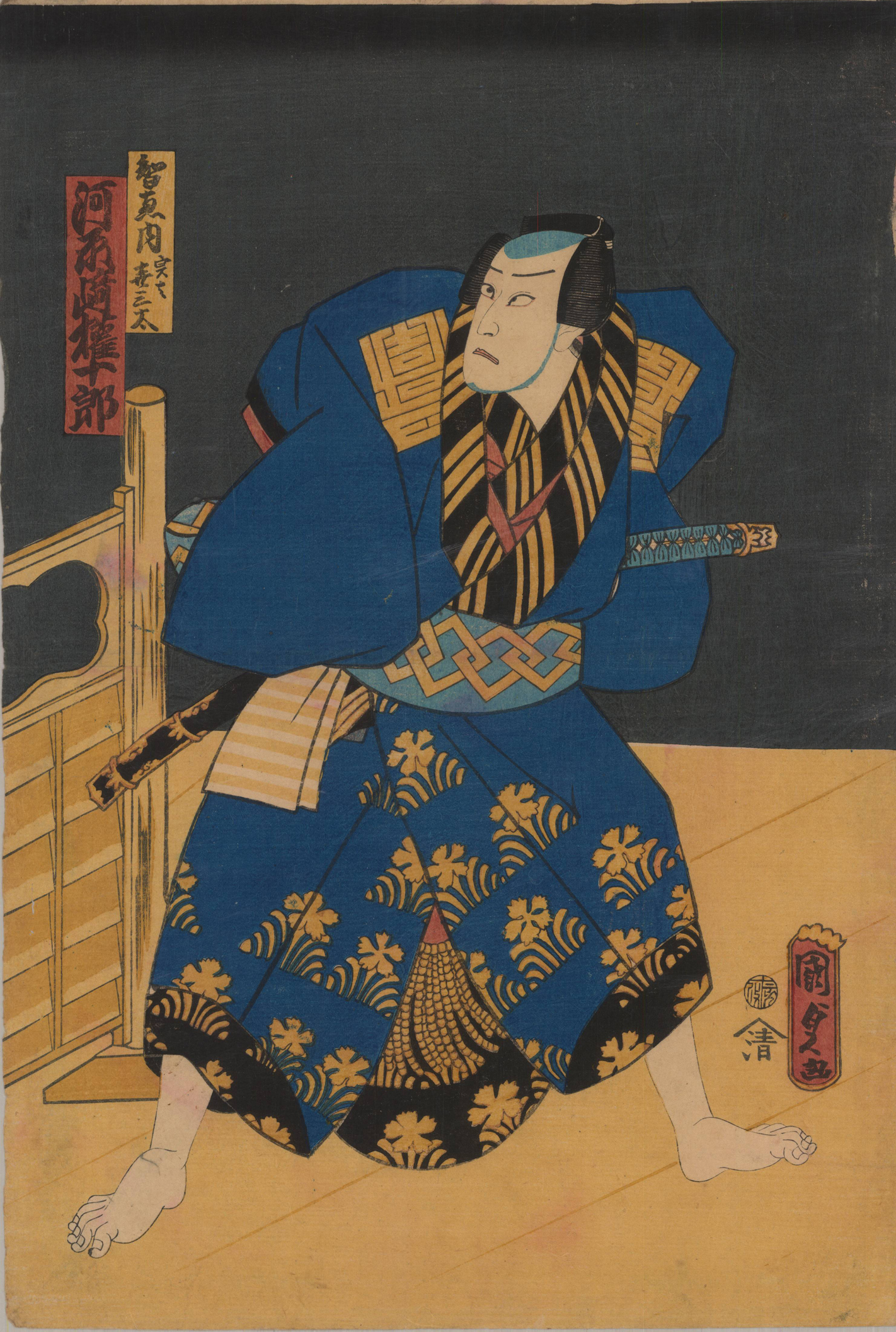
Original japanese woodcut in colors, printed and published ca. 1850-1880. The scene depicts the portrait of a samurai with his sword. Utagawa Kunisada II. (jap. 歌川 国貞 二代; * 1823; † 20. Juli 1880 Edo), also known as Utagawa Toyokuni IV. (歌川 豊国 四代), was a master of the japanese color woodcut and the japanes painting in the ukiyo-e style, who lived and worked in Edo:
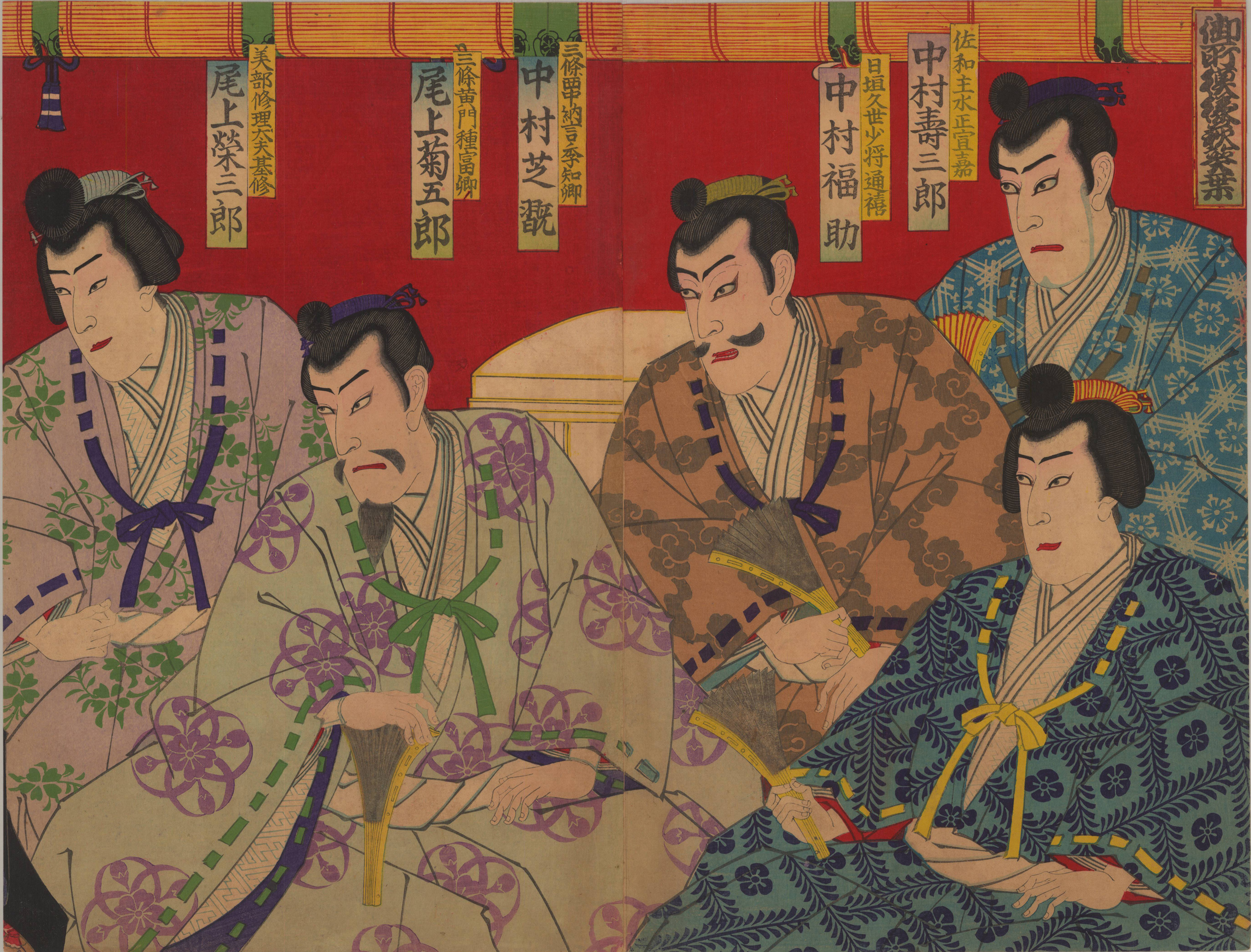
Original japanese woodcut in colors, printed and published ca. 1885-1900. The scene depicts portraits of five kabuki actors in a double ōban format. Toyohara Kunichika (1835–1900) was a prominent Japanese woodblock print artist during the ukiyo-e period. He was particularly known for his kabuki actor prints and yakusha-e, which depicted actors from kabuki theater. Kunichika's works are recognized for their vibrant colors, intricate details, and dynamic compositions.
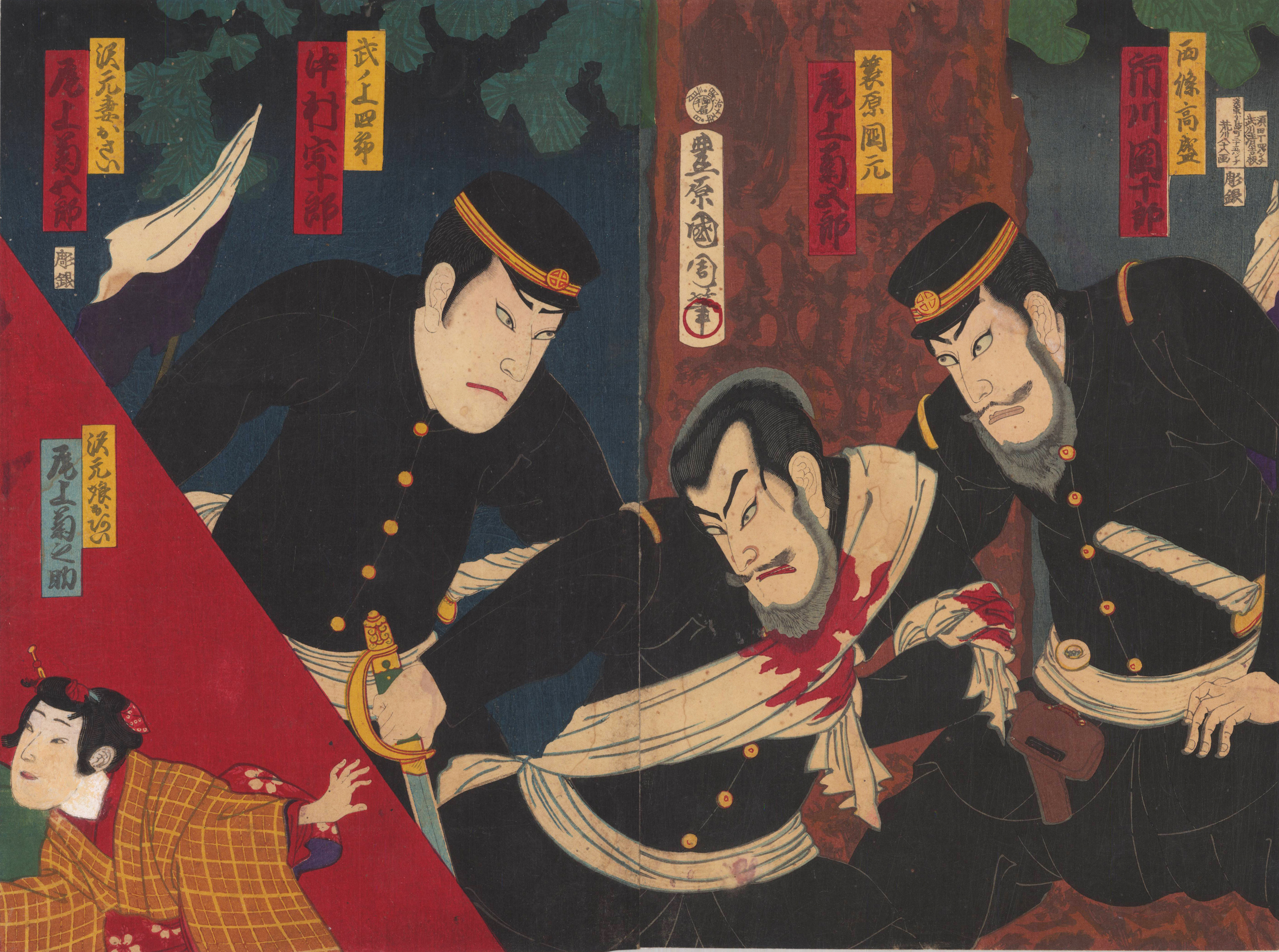
Original antiker japanischer Farbholzschnitt. Dargestellt werden drei Schauspieler. In der linken unteren Ecke eine Geisha auf rotem Hintergrund. Die farbenprächtige Darstellung mit zahlreichen japanischen Schriftzeichen. Toyohara Kunichika (japanisch 豊原 国周, eigentlicher Name: Arakawa Yasohachi (荒川 八十八), geb. 30. Juni 1835 in Edo; gest. 1. Juli 1900) führte die Künstlernamen Beiō (米翁), Hōshunrō (豊春楼), Ichiōsai (一鶯斎), Kachōrō (華蝶楼), Shima Sanjin (志満山人) und Sōgenshi (豊玄子). Er war ein japanischer Maler im Ukiyoe-Stil während der Meiji-Zeit und gehörte, zusammen mit Tsukioka Yoshitoshi und Kobayashi Kiyochika, zu den „Drei Herausragenden [Künstlern]" (三傑, Sanketsu) ihrer Stilrichtung am Ende des 19. Jahrhunderts.
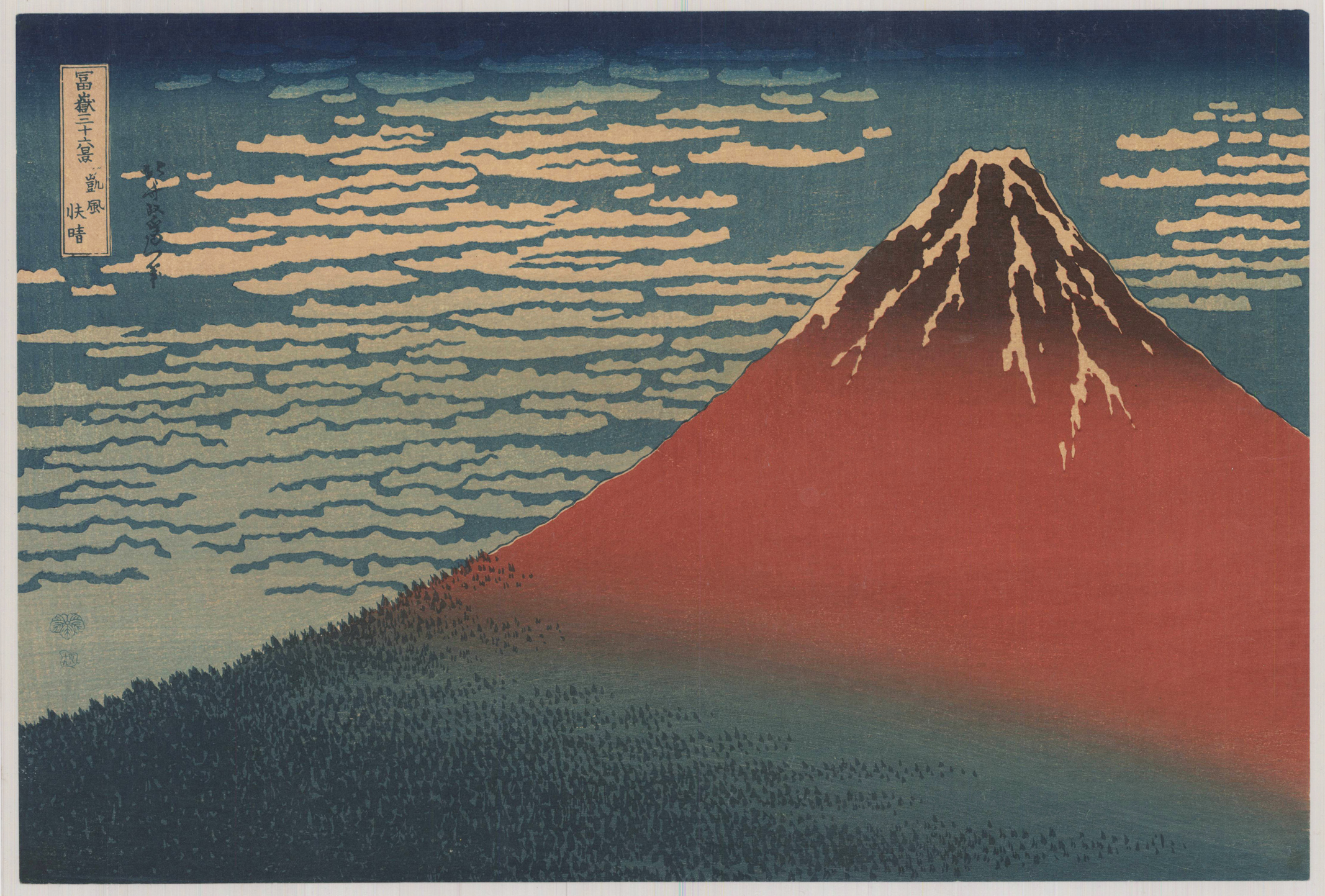
Woodblock print (nishiki-e); ink and color on paper. Fine Wind Clear Weather (Gaifû kaisei), auch bekannt als „roter Fuji", aus der Folge „Sechsunddreißzig Ansichten des Berges Fuji" (Fugaku sanjûrokkei). Japanischer Farbholzschnitt, wohl Nachschnitt um 1910 nach Katsushika Hokusai, links unten mit schwer bestimmbaren Verlegerwappen "tsuta" (Efeu)
Original woodcut, signed and numberd 37/80. Biographical data: 1961 Born in Suzhou, China. 1979 Joins the Suzhou 'Taohuawu' woodcut print school and becomes member of Jiangsu province print research institute. 1983 'Jianxiaxing' exhibition in Italy. 1985 Participation in the exhbition: 1987 'Autumn in Suzhou 1989 -Chinese Watercolor Prints-' 1990 Winner of the exhibition for the world environment day.
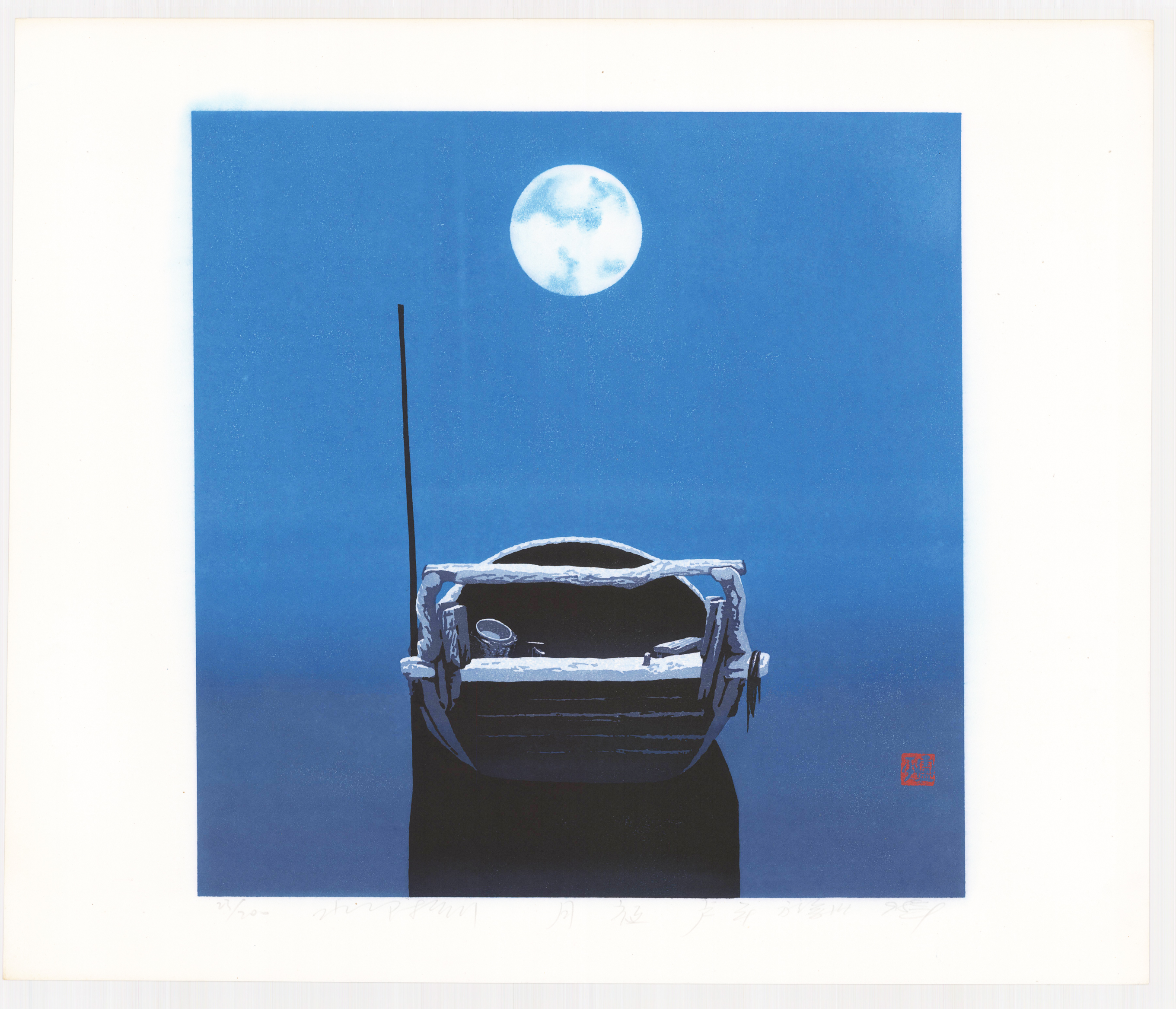
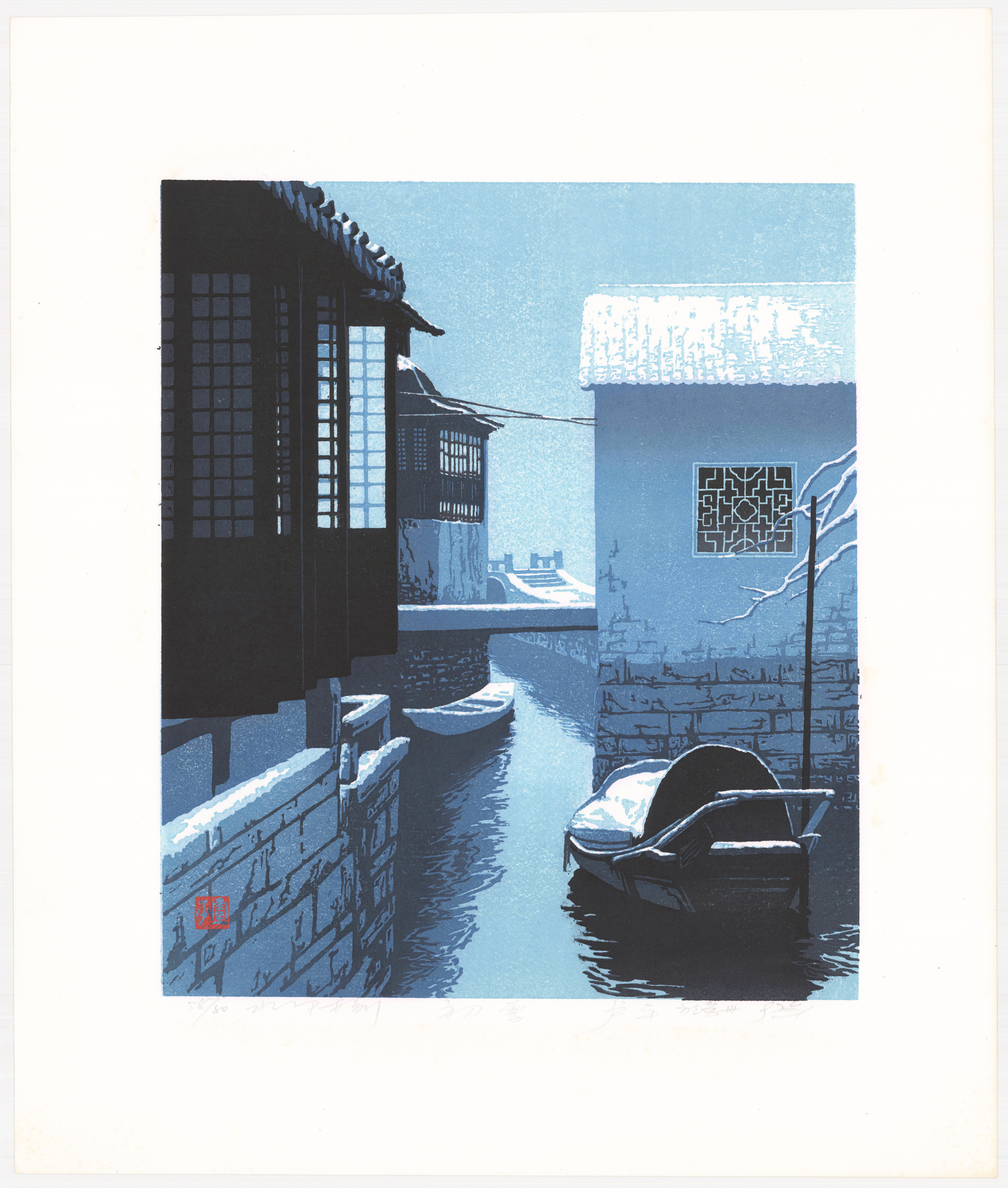
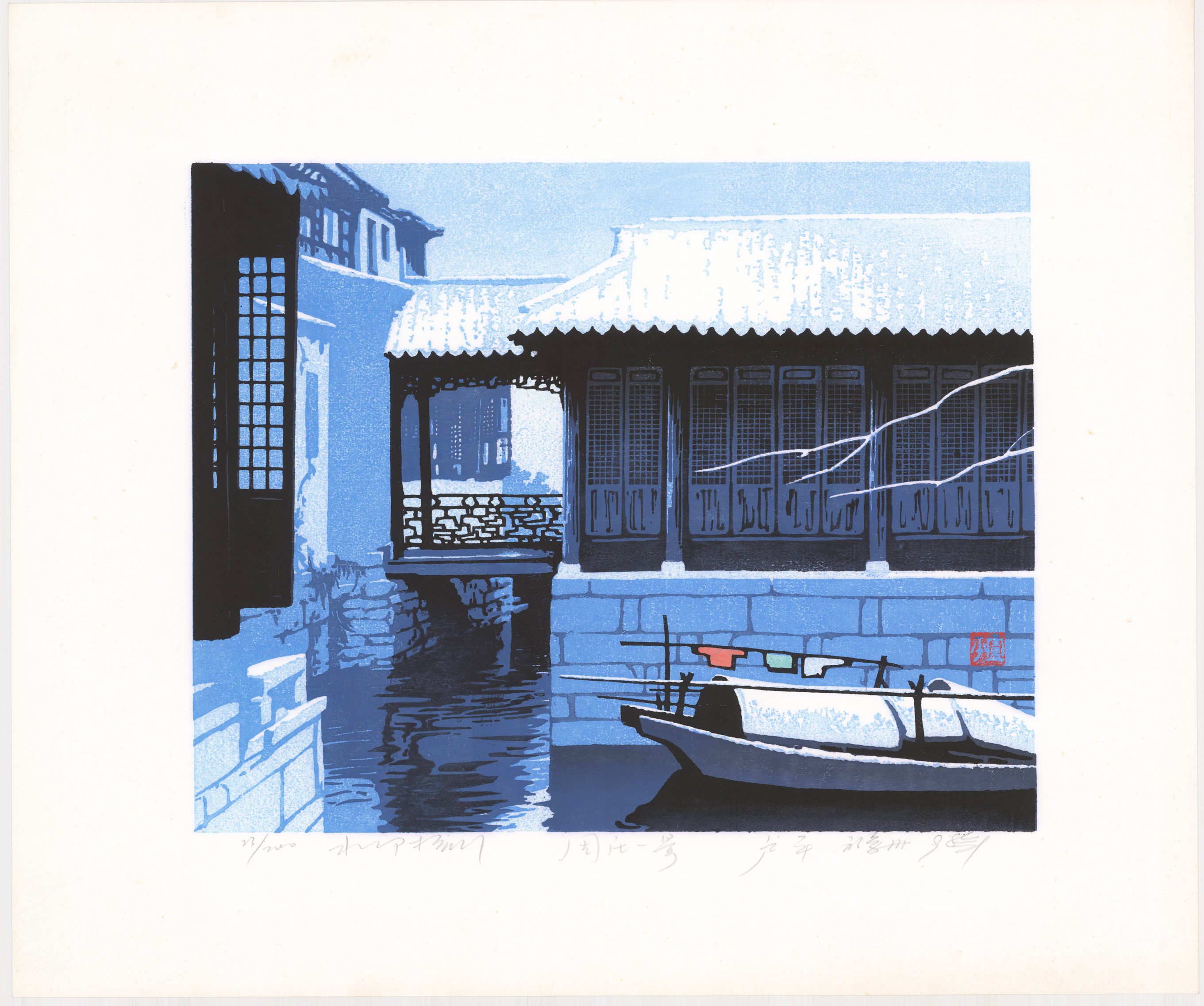
Original woodblock print in colors, signed and numberd 23/200. Lo Ping was born 1961 in Suzhou in China. He is a Chinese artist, who is known for woodcut printmaking, and he gained international recognition for his work by the early 1980s. He exhibited in various countries, including the USA, Canada, Japan, Italy, His art has resonated with a global audience. Many of Lu Ping's works depict the canals and bridges of Suzhou, his hometown, which indicates a strong connection between his art and his personal background. Artists often draw inspiration from their surroundings, and in Lu Ping's case, the elements of Suzhou's landscape, such as its canals and bridges, seem to play a significant role in shaping his artistic expression.
Original woodblock print in colors, signed and numberd 23/200. Lo Ping was born 1961 in Suzhou in China. He is a Chinese artist, who is known for woodcut printmaking, and he gained international recognition for his work by the early 1980s. He exhibited in various countries, including the USA, Canada, Japan, Italy, His art has resonated with a global audience. Many of Lu Ping's works depict the canals and bridges of Suzhou, his hometown, which indicates a strong connection between his art and his personal background. Artists often draw inspiration from their surroundings, and in Lu Ping's case, the elements of Suzhou's landscape, such as its canals and bridges, seem to play a significant role in shaping his artistic expression.
Original woodblock print in colors, signed and numberd 23/200. Lo Ping was born 1961 in Suzhou in China. He is a Chinese artist, who is known for woodcut printmaking, and he gained international recognition for his work by the early 1980s. He exhibited in various countries, including the USA, Canada, Japan, Italy, His art has resonated with a global audience. Many of Lu Ping's works depict the canals and bridges of Suzhou, his hometown, which indicates a strong connection between his art and his personal background. Artists often draw inspiration from their surroundings, and in Lu Ping's case, the elements of Suzhou's landscape, such as its canals and bridges, seem to play a significant role in shaping his artistic expression.