
Your results
3
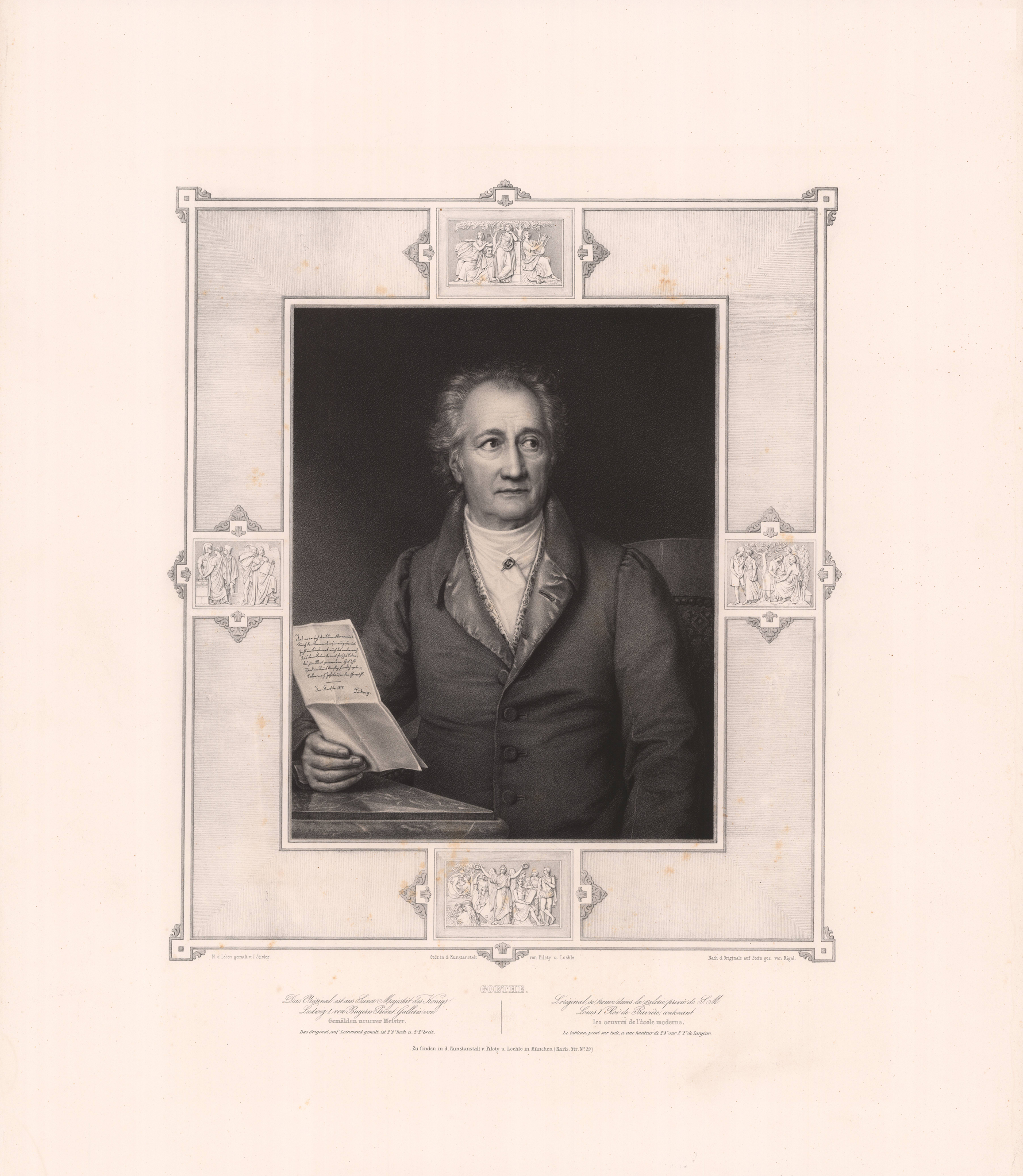
Goethe
€240.00*
Original antike Lithographie, unkoloriert. Nach einem Gemälde von Josef Karl Stieler. Portrait von Johann Wolfgang von Goethe. In der rechten Hand hält er einen Brief von König Ludwig, datiert 1818. Umrandet von breiter Bordüre mit allegorischer Darstellung auf allen vier Seiten.
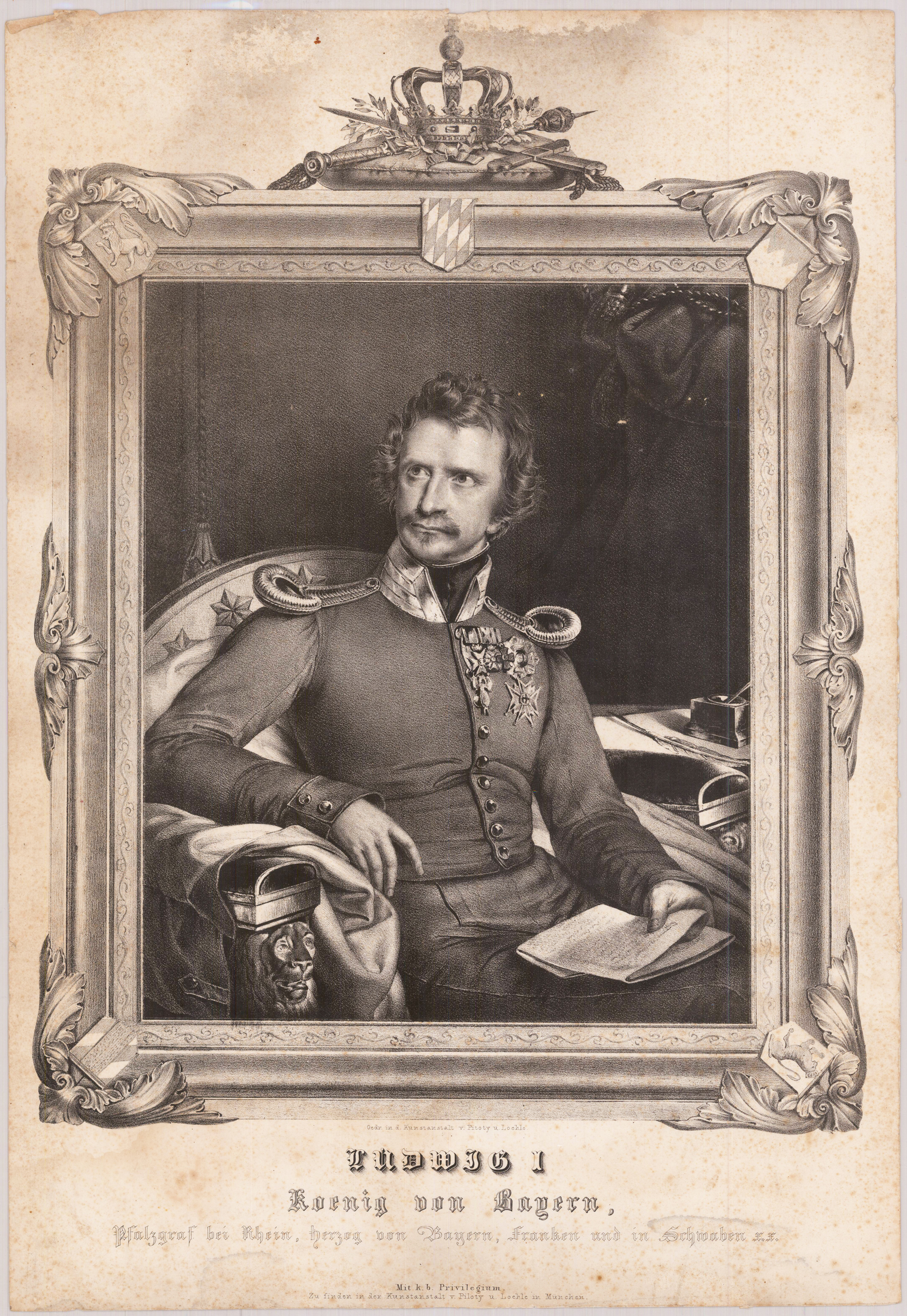
Ludwig I. König von Bayern, Pfalzgraf bei Rhein, Erzherzog von Bayern, Franken und Schwaben
€345.00*
Original Lithographie, unkoloriert. Darstellung von König Ludwig I. auf seinem Thron. Umrandet mit gestochenem dekorativen Bilderrahmen mit den Wappen von Bayern und seiner Herzogthümer. Darüber auf einem Kissen die Krone, ein Schwert und ein Zepter. Ludwig I., geboren als Ludwig Karl August (* 25. August 1786 in Straßburg; † 29. Februar 1868 in Nizza), war König des Königreiches Bayern aus dem Geschlecht der Wittelsbacher. Er folgte seinem Vater Maximilian I. nach dessen Tod im Jahre 1825 auf den bayerischen Thron und dankte im Revolutionsjahr 1848 nach seiner Affäre mit Lola Montez zugunsten seines Sohnes Maximilian II. ab. Seine Hochzeit begründete das Oktoberfest, zahlreiche Kunstsammlungen und klassizistische Bauten sind mit seinem Namen verknüpft, ebenso wie die Hinwendung Bayerns zu Griechenland, die erste deutsche Eisenbahn aber auch das Hambacher Fest.
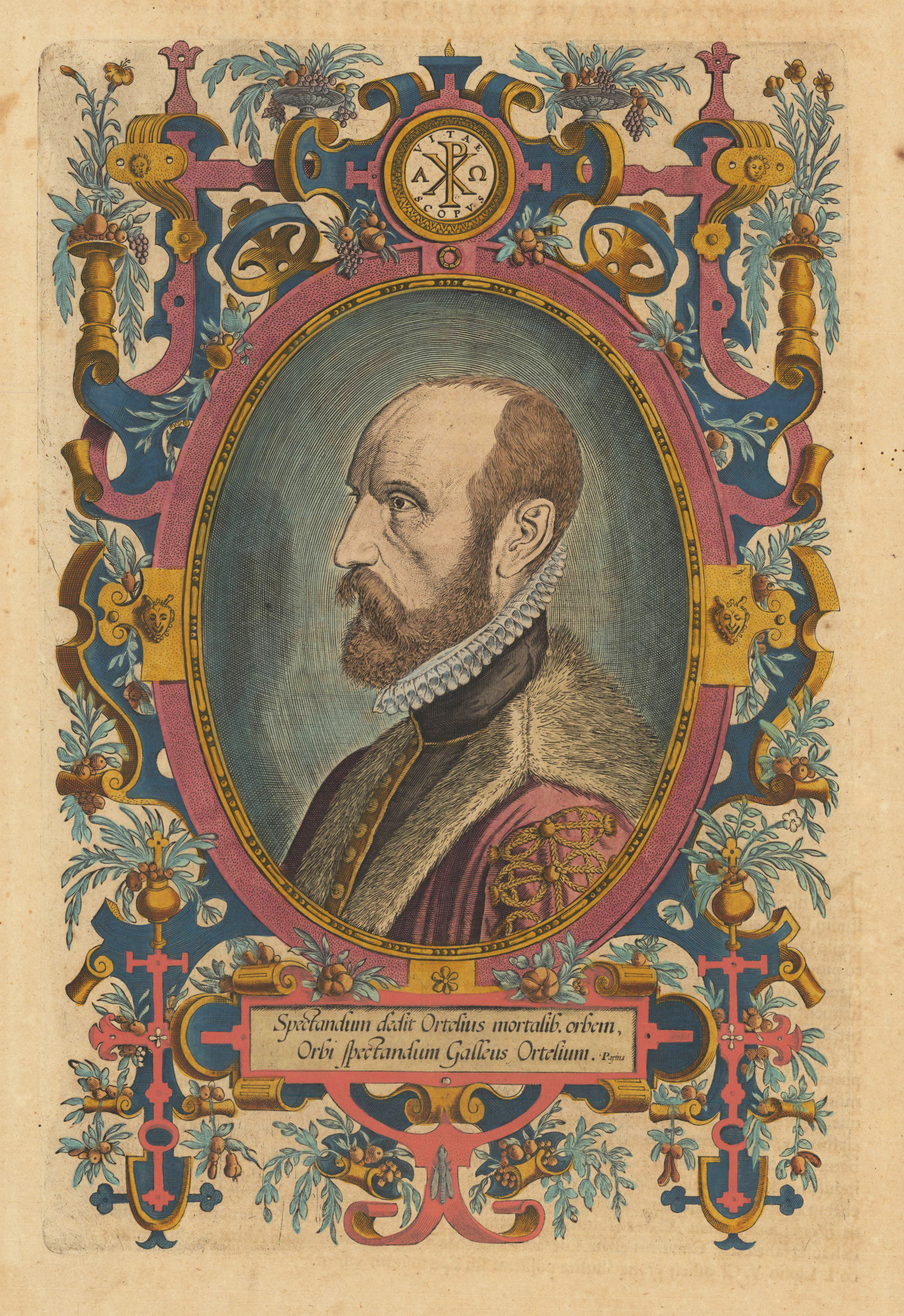
Spectandum dedit Ortelius mortalib. orbem, Orbi spectandum Galleus Ortelium. Payins
€495.00*
Original antique copper engraving, later hand colored. Latin text edition. This is the beautiful hand colored portrait of Abraham Ortelius as Frontispiece to his 'Theatrum Orbis'. Engraved by Phillipe Galle. Ortelius was born on 14 April 1527 in the city of Antwerp, which was then in the Habsburg Netherlands (modern-day Belgium). The Orthellius family were originally from Augsburg, a Free imperial city of the Holy Roman Empire. In 1535, the family had fallen under suspicion of Protestantism. Following the death of Ortelius's father, his uncle Jacobus van Meteren returned from religious exile in England to take care of Ortelius. Abraham remained close to his cousin Emanuel van Meteren, who would later move to London. In 1575 he was appointed geographer to the king of Spain, Philip II, on the recommendation of Arias Montanus, who vouched for his orthodoxy. He travelled extensively in Europe and is specifically known to have traveled throughout the Seventeen Provinces; in southern, western, northern, and eastern Germany (e.g., 1560, 1575–1576); France (1559–1560); England and Ireland (1576); and Italy (1578, and perhaps twice or thrice between 1550 and 1558). Beginning as a map-engraver, in 1547 he entered the Antwerp Guild of Saint Luke as an illuminator of maps. He supplemented his income trading in books, prints, and maps, and his journeys included yearly visits to the Frankfurt book and print fair, where he met Gerardus Mercator in 1554. In 1560, however, when travelling with Mercator to Trier, Lorraine, and Poitiers, he seems to have been attracted, largely by Mercator's influence, towards the career of a scientific geographer. (Wikipedia)