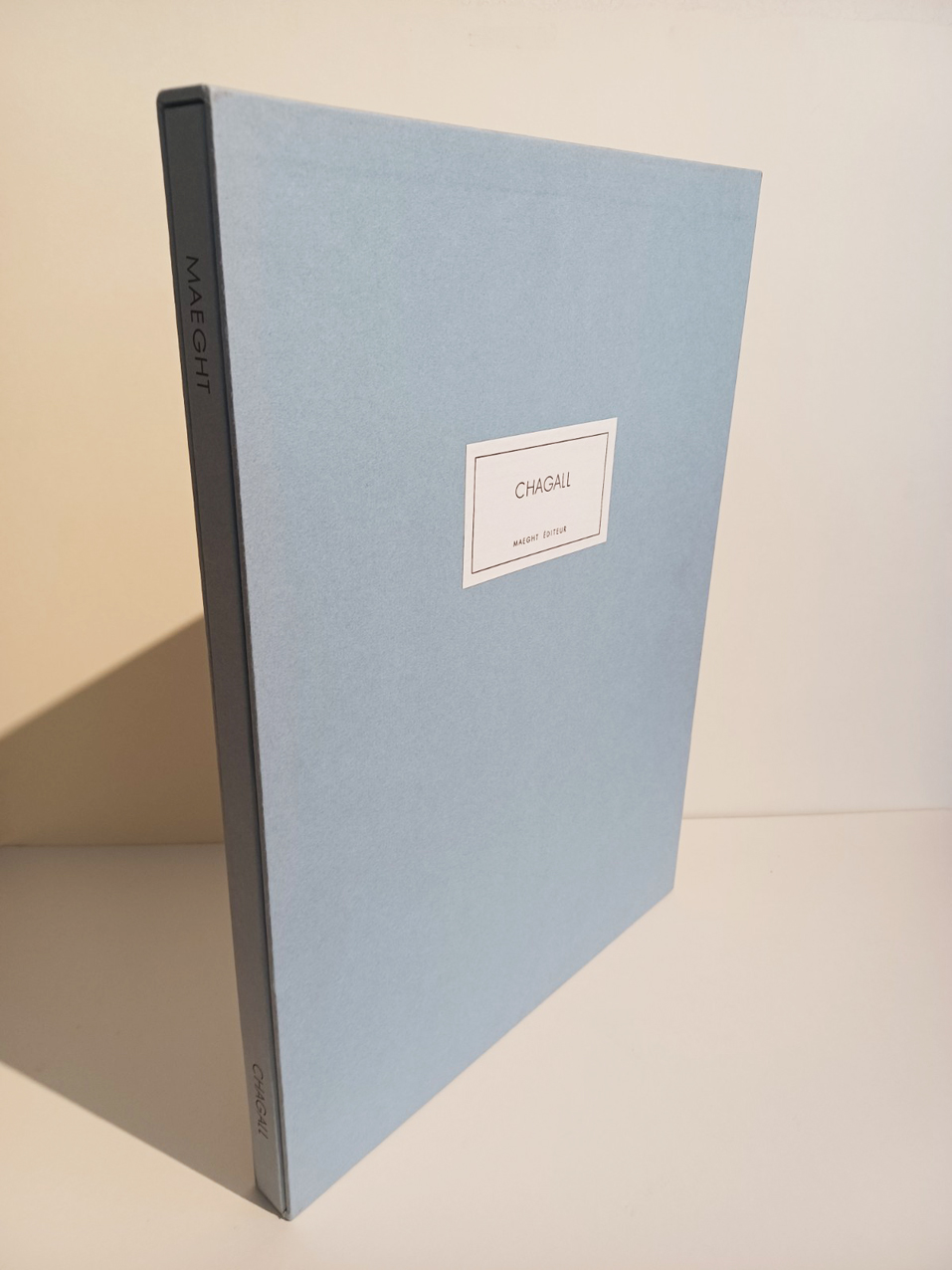
Deluxe edition on,vélin d'arches' paper, numbered 109/150. Cover and one double-page color lithograph with an additional 14 images mostly in color. Printed to by Mourlot under the direction of Charles Sorlier. Marc Chagall (born Moishe Shagal; 6 July [O.S. 24 June] 1887 – 28 March 1985) was a Belarusian-French artist. An early modernist, he was associated with several major artistic styles and created works in a wide range of artistic formats, including painting, drawings, book illustrations, stained glass, stage sets, ceramics, tapestries and fine art prints. Born in modern-day Belarus, then part of the Russian Empire, he was of Belarusian Jewish origin. Before World War I, he travelled between Saint Petersburg, Paris, and Berlin. During this period he created his own mixture and style of modern art based on his idea of Eastern Europe and Jewish folk culture. He spent the wartime years in Belarus, becoming one of the country's most distinguished artists and a member of the modernist avant-garde, founding the Vitebsk Arts College before leaving again for Paris in 1923. Art critic Robert Hughes referred to Chagall as "the quintessential Jewish artist of the twentieth century". According to art historian Michael J. Lewis, Chagall was considered to be "the last survivor of the first generation of European modernists". For decades, he "had also been respected as the world's pre-eminent Jewish artist". Using the medium of stained glass, he produced windows for the cathedrals of Reims and Metz as well as the Fraumünster in Zürich, windows for the UN and the Art Institute of Chicago and the Jerusalem Windows in Israel. He also did large-scale paintings, including part of the ceiling of the Paris Opéra. He had two basic reputations, writes Lewis: as a pioneer of modernism and as a major Jewish artist. He experienced modernism's "golden age" in Paris, where "he synthesized the art forms of Cubism, Symbolism, and Fauvism, and the influence of Fauvism gave rise to Surrealism". Yet throughout these phases of his style "he remained most emphatically a Jewish artist, whose work was one long dreamy reverie of life in his native village of Vitebsk." "When Matisse dies," Pablo Picasso remarked in the 1950s, "Chagall will be the only painter left who understands what colour really is". (Wikipedia)
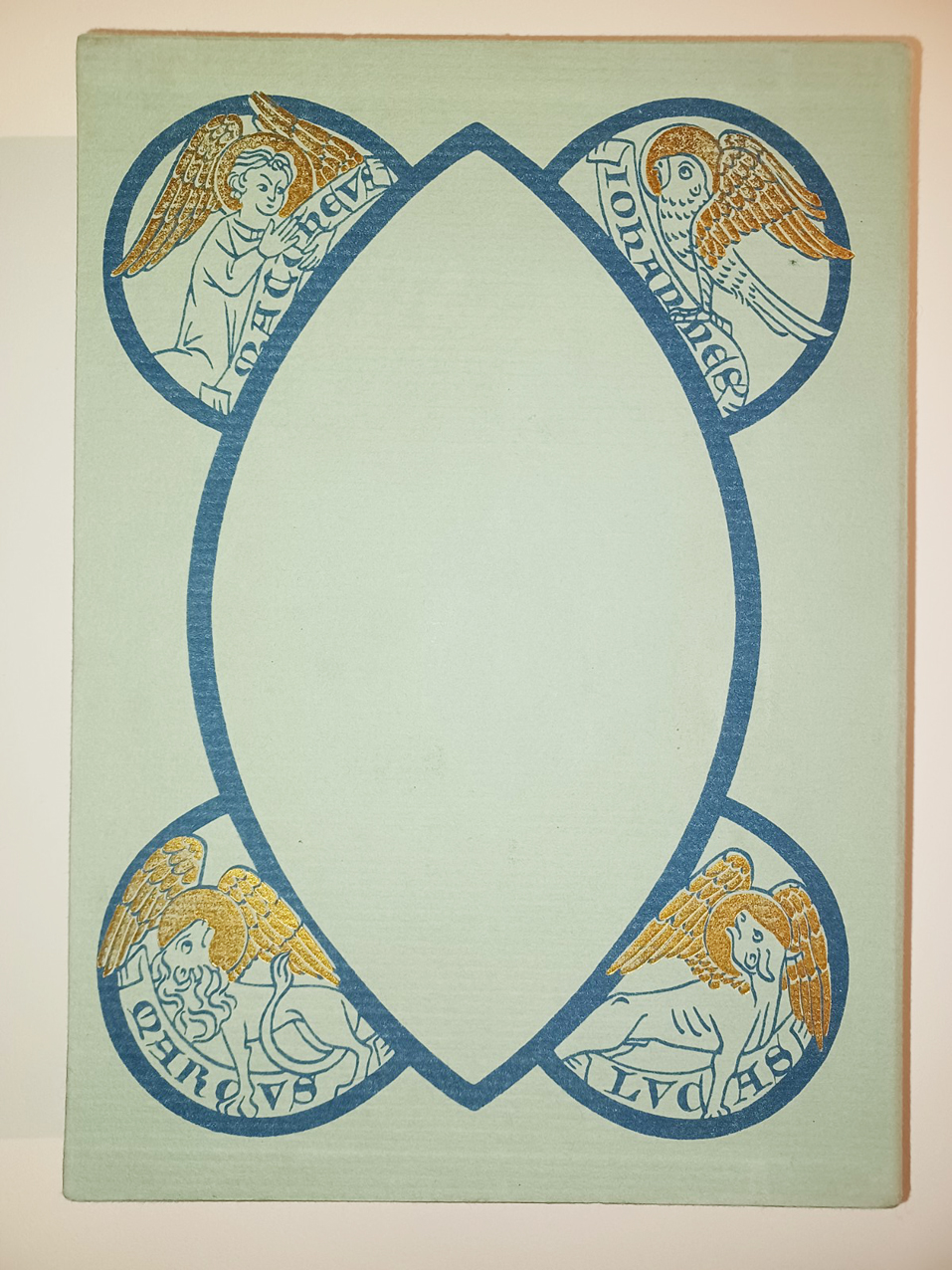
118 pages. 72 brightly colored miniatures richly decorated with gold and silver. Origin: between 1310 and 1325 in Metz. The text does not follow the New Testament book itself, but an allegorical commentary whose author remains unknown. It is probably a learned cleric from a Metz monastery who wrote the text in an East French vernacular of the type then in use in Lorraine. The portrayal of John in the Apocalypse is unique. The great wealth of variation, the numerous decorative elements, as well as the lovingly designed details, for example in the form of small animals in the initial decoration, as in the fine hallmarks of the gold background of some miniatures, which only become apparent to the viewer on closer inspection, make this manuscript a pearl of Gothic book art. Facsimile + Commentary. The book of Revelation, better known in medieval times as the Apocalypse, is one of the most enigmatic and fascinating books in the Bible and provided illuminators and miniaturists with wonderful opportunities to express their artistic talents. The fantastic images of these often terrifying events produced some of the greatest works of medieval art, including this magnificent masterpiece of Gothic illumination. 72 colorful miniatures with magnificent backgrounds made of shimmering gold leaf or elaborate patterns illustrate the wondrous events. It is also unusual that the work was not written in Latin but in the medieval Lorraine dialect for a presumably secular client in Metz. This is not only an exemplary document of Gothic illumination and the widespread genre of manuscripts of the Apocalypse, but also a work of art in its own right. Lorraine Apocalypse The Li apocalypse que S. Jehans vit, written in Lorraine in the first half of the 14th century, is one of the most beautiful manuscripts in the collections of the Saxon State Library in Dresden. Written in medieval Lorraine dialect and commissioned by a wealthy and demanding Metz patron, the manuscript elaborately depicts the events of the book of Revelation, also known as the Apocalypse. The prophetic text of St. John was one of the most influential texts of medieval philosophy and theology and remains one of the most fascinating biblical texts today. The text in this manuscript is written so precisely that one might think it was printed. It is structured with the help of elegant initials consisting of primary colors with gold leaf and flowering tendrils. 72 colorful miniatures illustrate the events. These often have carefully patterned backgrounds and are further refined by the liberal use of gold leaf but also silver, including numerous burnished gold backgrounds in the Byzantine style. The figures have **expressive faces, natural postures and are dressed in flowing robes with a realistic drape. All of these elements come together to make this Gothic work a fine example of medieval manuscript art.
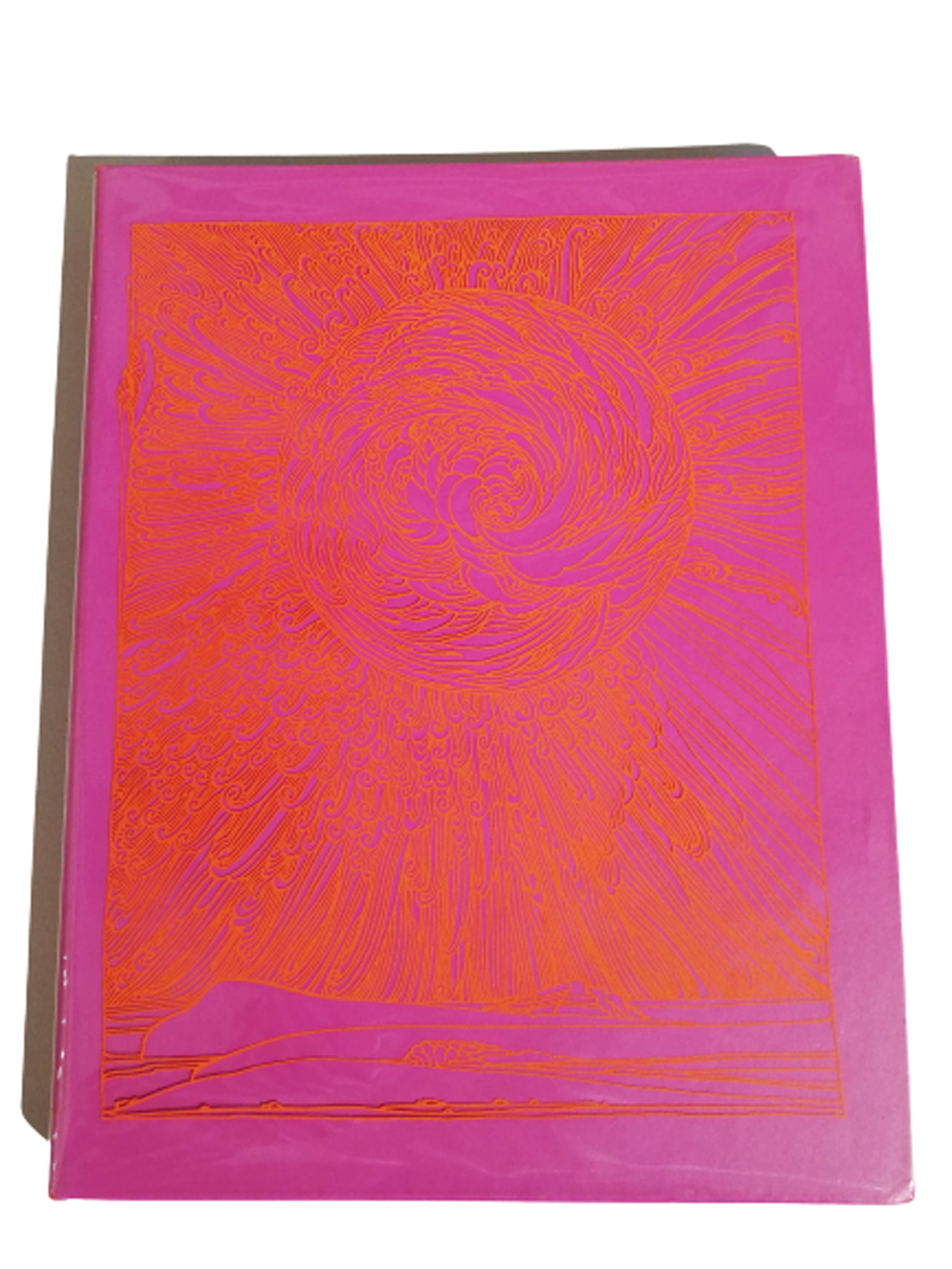
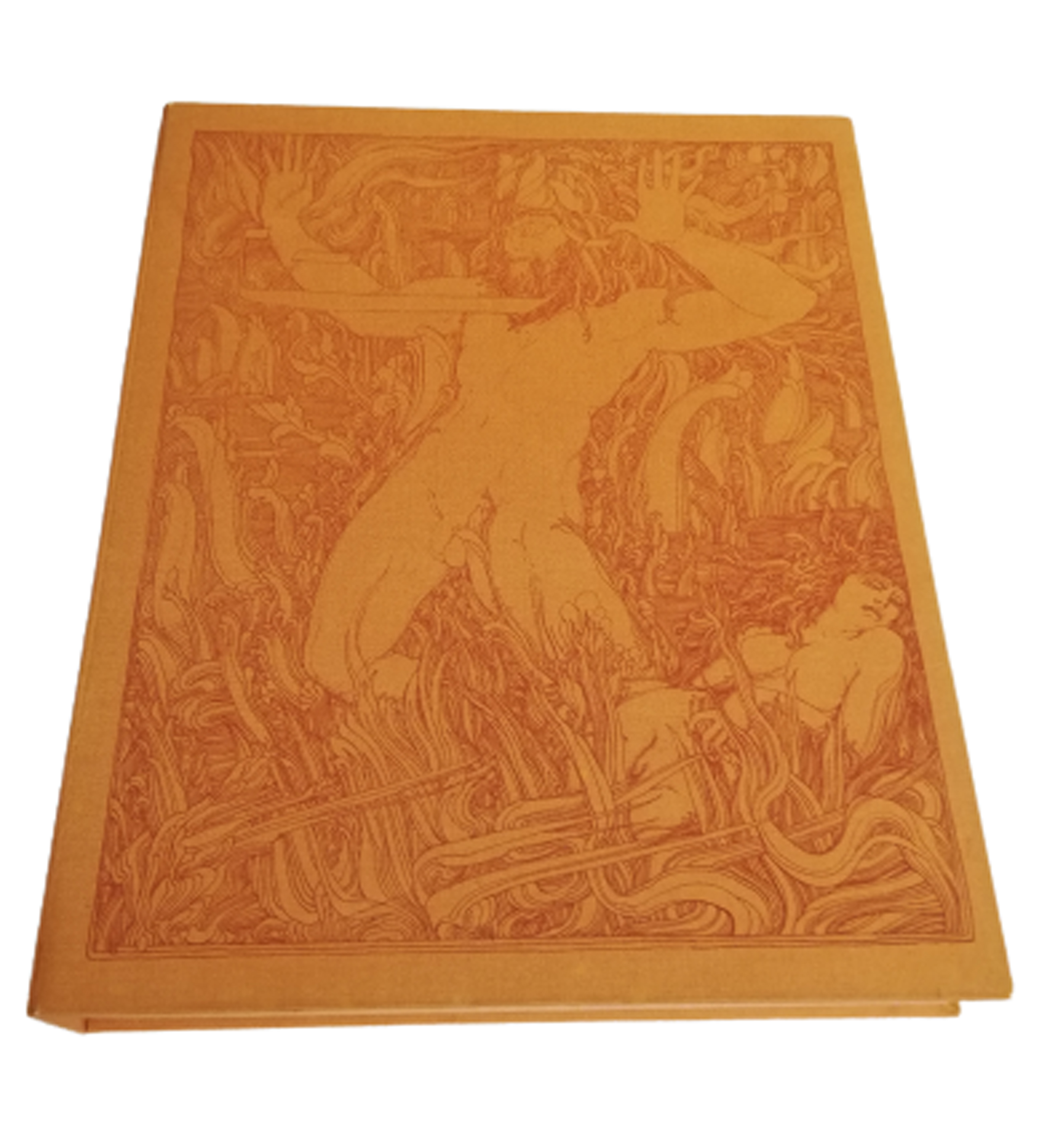
One of 60 numbered copies (no. 36) of the deluxe edition bound in green morocco haused in the original publisher's box (spine and cover gilt). Illustrated with an additional separate suite of the 9 signed original etchings by Ernst Fuchs. In total 18 signed etchings accompany the work. The symbolism of the dream was typeset after the first edition of 1814, but taking account of corrections of misprints later made by the author. The imprint also signed and numbered by the artist. Foreword by G.R. Heyer. 212 pages.
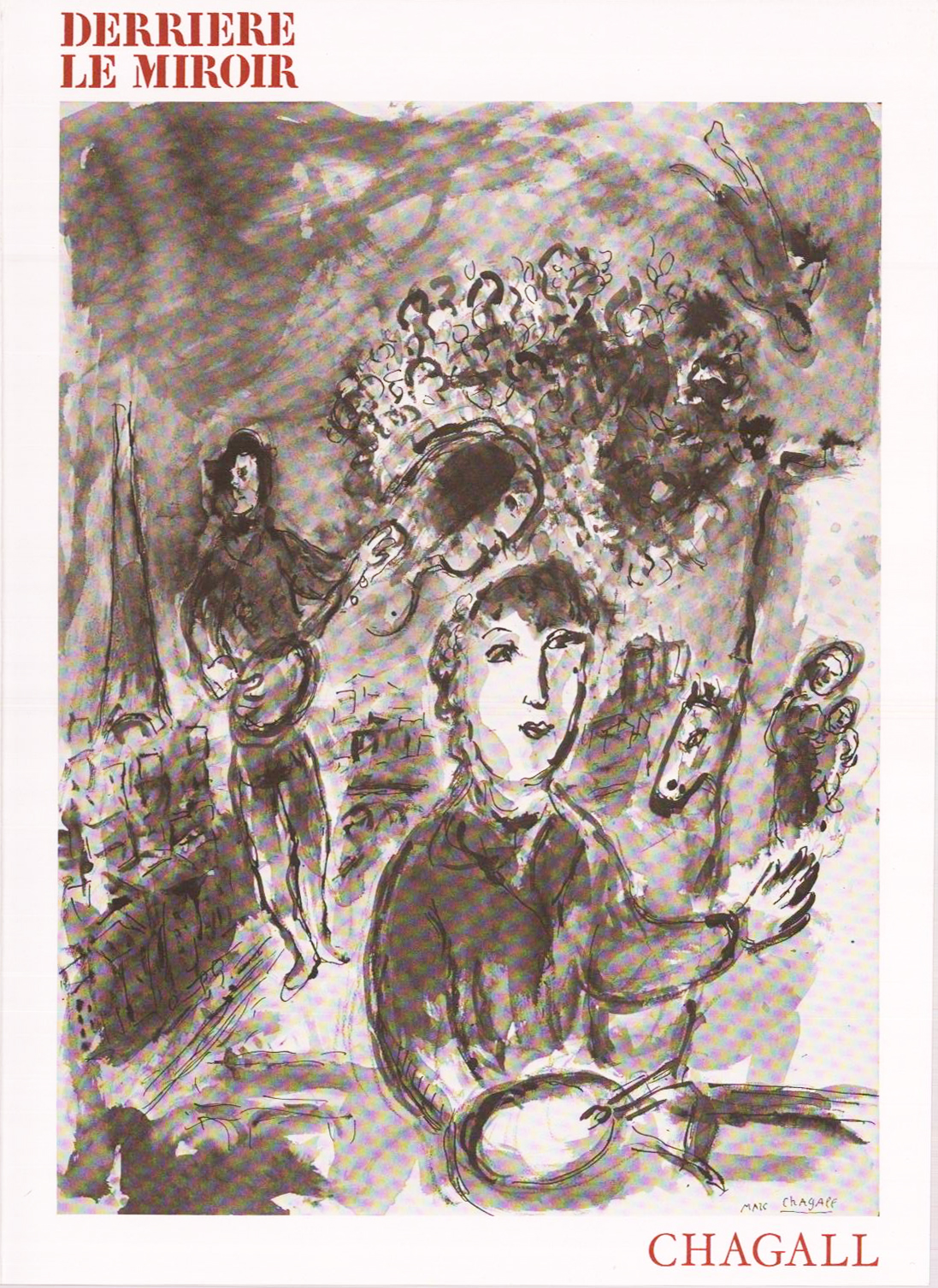
The exhibition catalogue consists of 26 pages with descriptive text of Marc Chagall's works for the exhibition at Maeght Édituer in Paris, October 1977. It is illustrated with black and white and color reproductions & 1 doublepage folded original lithograph,Das blaue Dorf - Mourlot 917' (printed on the full doublepage sheet: 38,0 x 54,8 cm). This issue of Derriere le Miroir was published in the unnumbered regular edition of 15.000 copies.
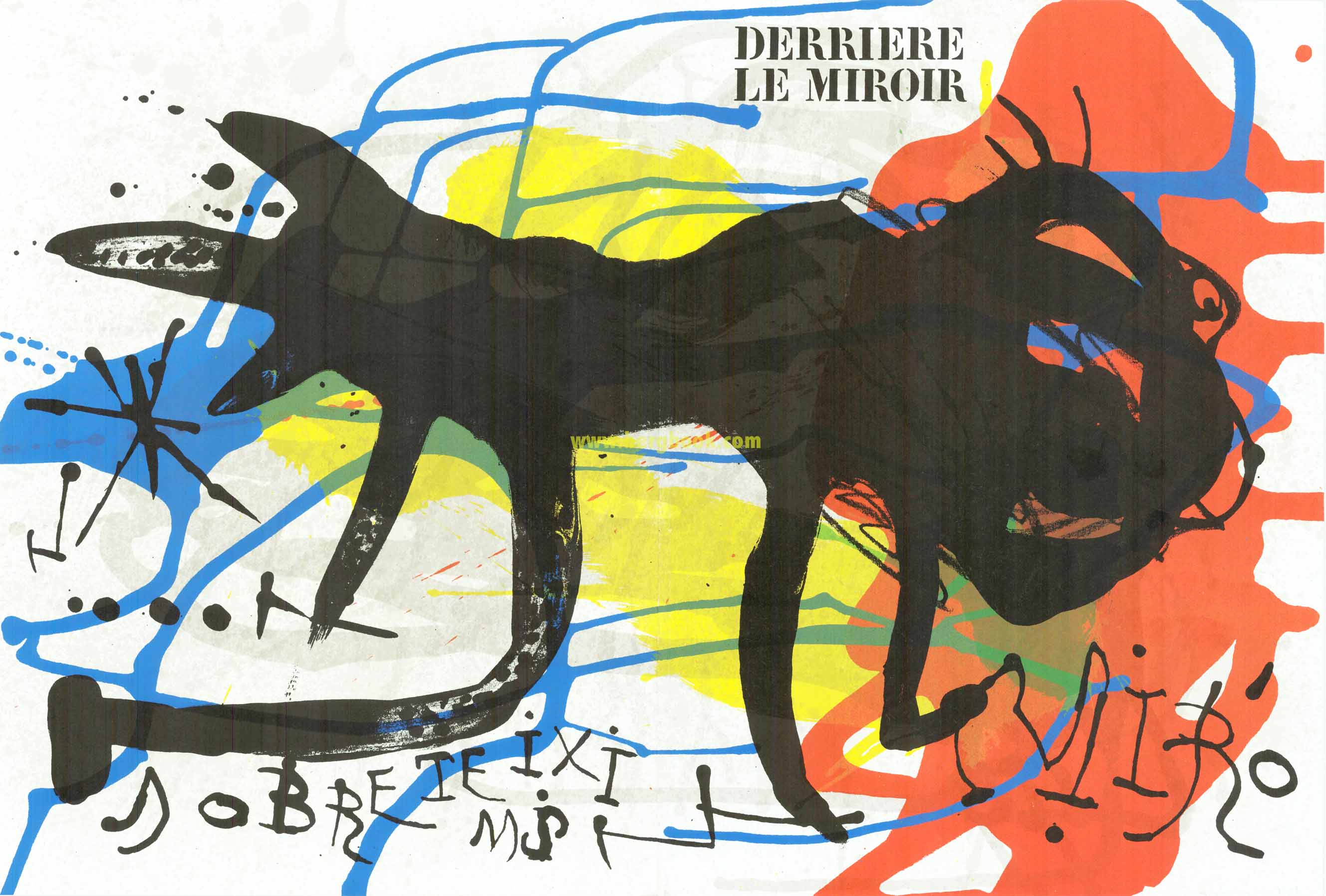
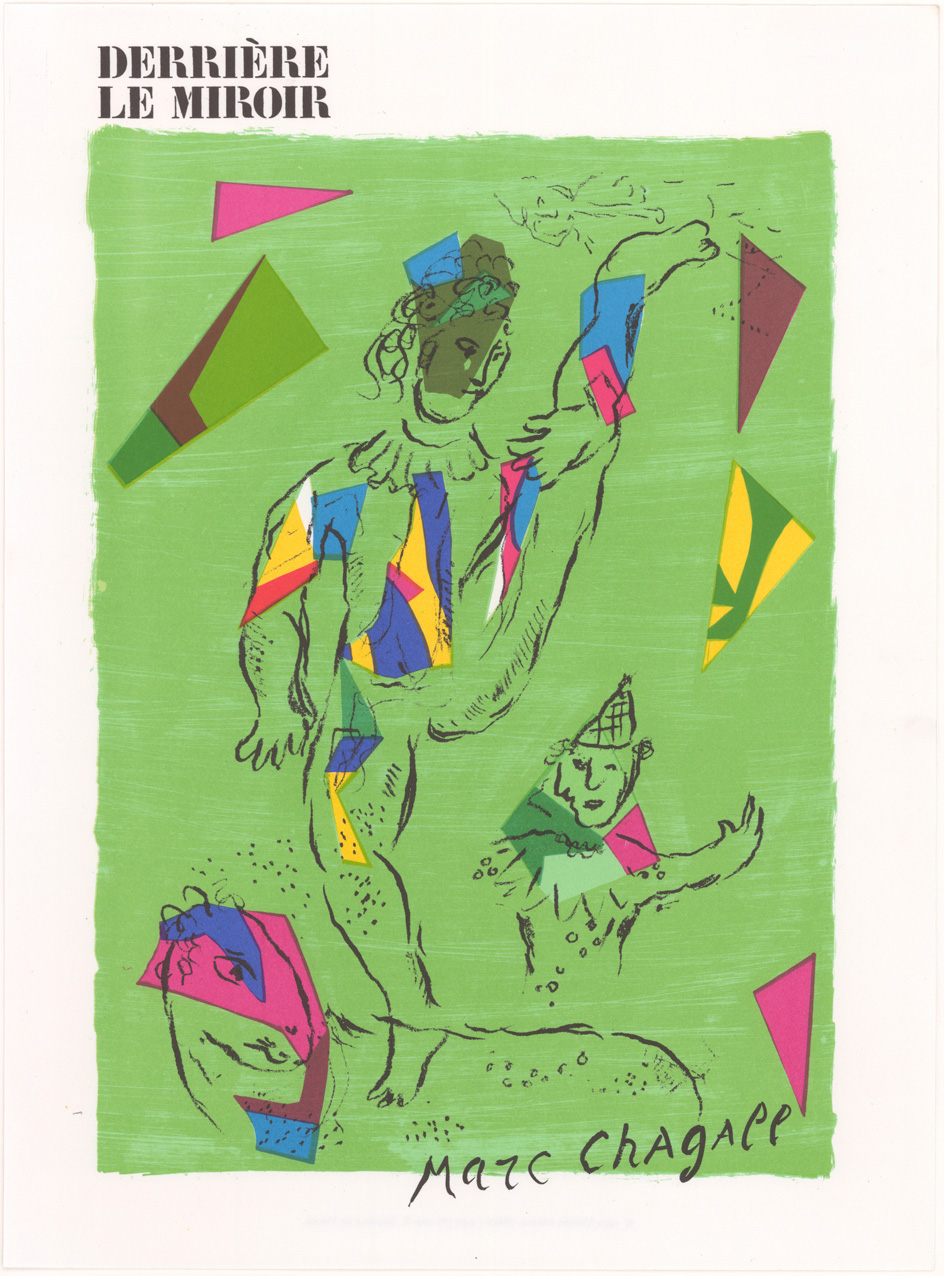
The exhibition catalogue consists of 32 pages with descriptive text of Marc Chagall´s works for this exhibition at Maeght Édituer in Paris, October 1979. It is illustrated with two original color lithographs by Marc Chagall. An original color lithograph as frontispiz: The green acrobat - Der grüne Akrobat (Mourlot 946) & 1 doublepage folded original lithograph, Sun with Red Horse - Sonne mit rotem Pferd' (Mourlot 945) printed on the full doublepage sheet: 38,0 x 54,8 cm). This issue of Derriere le Miroir was published in the unnumbered regular edition of 20,000 copies.
Illustrated book with 5 (2 folded several times) sign. Orig. Etchings by Ernst Fuchs and other illustrations, some in colour. 192 p., original imitation leather with illustrated original cellophane cover and also illustrated original linen slipcase. No. 163/200 numbered copies of the luxury edition. This contains the three-part original etching 'Eva Triptych' (work number 116/I) with Ernst Fuchs' personal signature, 3 further original etchings on rolled Indian paper with Ernst Fuchs' personal signature (work numbers 113, 114 and 115) and flyleaf. Ernst Fuchs was an Austrian painter who was born in Vienna in 1930. Ernst Fuchs (1930 Vienna, lives and works in Vienna). Austrian painter, architect, graphic artist and musician, founder and most important representative of the Vienna School of Fantastic Realism. From 1942 he took drawing lessons from the painter and restorer Alois Schiemann. 1946-50 studied at the Academy of Fine Arts in Vienna with Robin Andersen and Albert Gütersloh. 1949 first solo exhibition in Paris. From 1950 he lived in Paris. Travels to America, Italy, Spain and England until 1956. In 1957 he spent a longer period at the Dormition Monastery on Mount Zion in Israel, where he devoted himself to icon painting. 1962 return to Vienna, where he received a professorship. Together with Wolfgang Hutter, Arik Brauer, Rudolf Hausner and Anton Lehmden he founded the Vienna School of Fantastic Realism. In 1972 he acquired the Otto Wagner Villa, which today houses the Ernst Fuchs Museum and serves as an event venue. 1988-2011 the artist lived in Monaco. Themes in his work are (Christian) religion and sex. Fuchs is known for his Christian art. He died in 2015 at the age of 85. He had 16 children with 7 wives.
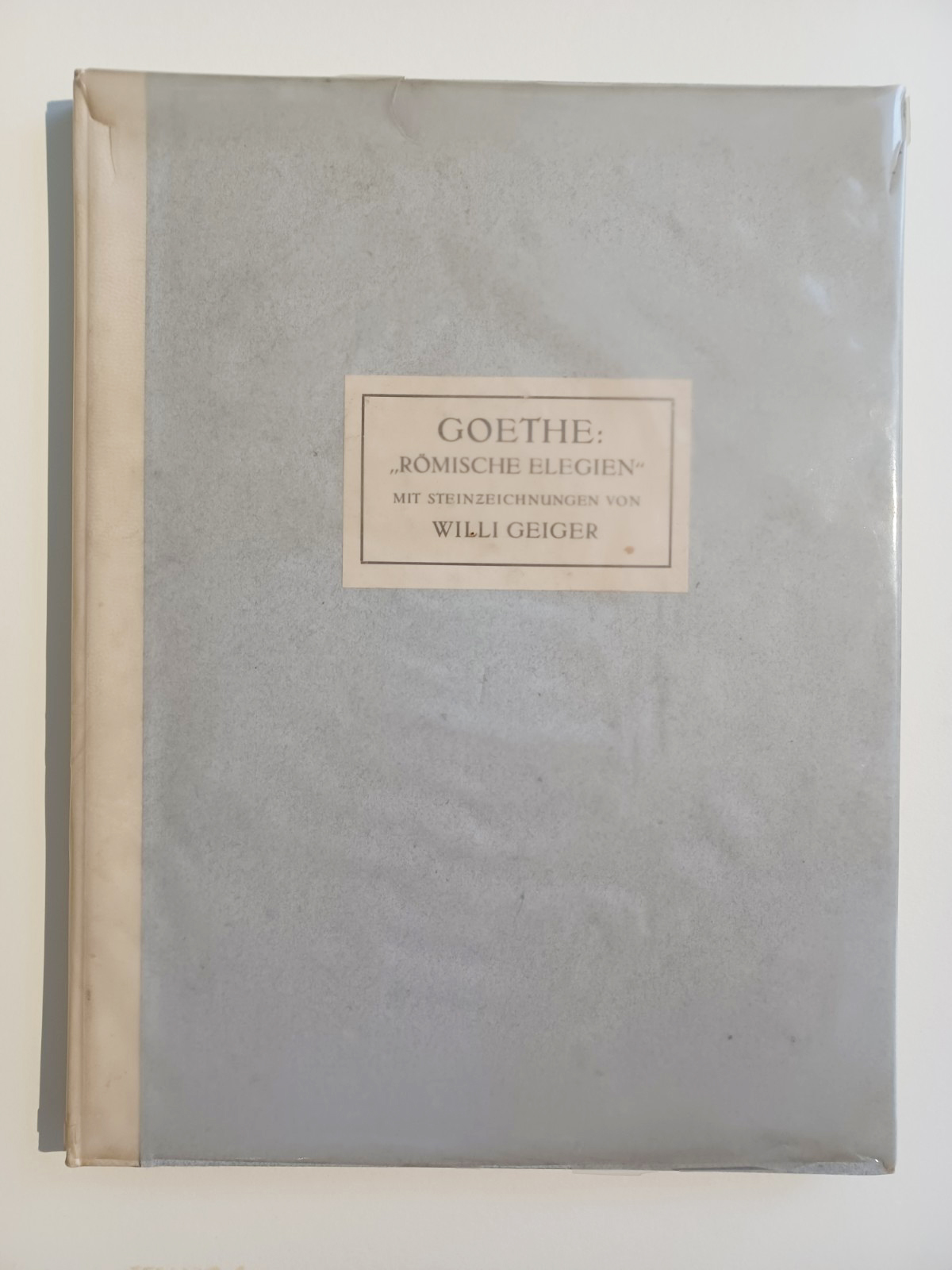
Book with 14 lithographs signed by Willi Geiger in the deluxe edition. Wide-margined press print on untrimmed laid paper. Edited by H. Kluger, printed by C. Wolf & Sohn, each Munich. - The rare illustration work was created while Geiger was teaching at the Staatl. Academy of Arts and Book Trade in Leipzig (1928-1933). At the beginning with the printed dedication 'For my friend Walter Gagg. Willie Geiger'. The work, which was self-published by the artist, was created while he was teaching at the Leipzig Academy, where Goethe himself was one of the most illustrious students. Published in 100 numbered copies. Bound here in the preferred configuration in original half parchment. 56 pages orig. with cover title. Willi Geiger (born August 27, 1878 in Schönbrunn near Landshut, Lower Bavaria; died February 11, 1971 in Munich) was a German painter, graphic artist, bookplate artist of Expressionism and an early member of the German Association of Artists. Willi Geiger was born in Landshut in 1878 as the son of a teacher. From 1898 to 1899 he attended the Munich School of Applied Arts and then the Technical University, where he passed his state examination as a drawing teacher. From 1903 Willi Geiger studied with Franz von Stuck and Peter Halm at the Munich Academy, e.g. together with Hans Purrmann and Albert Weisgerber. In 1907, Willi Geiger designed a whole series of black and white art postcards with Munich sights as a motif, e.g. B. At Max Klinger's suggestion, Willi Geiger received the Villa Romana Prize in 1910 because of his success as a graphic artist. He worked on etchings for works by Richard Dehmel, Frank Wedekind and others. Geiger lived in Berlin until 1914 and exhibited at the Cassirer and Gurlitt galleries. He then went back to Munich and became a professor at the Kunstgewerbeschule. He copied paintings by the great Spaniards Goya, Velasquez and El Greco and turned to portrait painting, the Greco study being most consciously reflected in the portrait of the composer Hans Pfitzner. After the National Socialists seized power, Geiger was dismissed from the civil service and from his teaching post at the Leipzig State Academy for Graphic Arts and Book Trade (today the Leipzig Academy for Graphics and Book Art), where he had taught since 1928. In 1937, during the Nazi action "Degenerate Art", a significant number of his works were demonstrably removed from the art collections of the city of Düsseldorf, the Museum Folkwang Essen, the Städelsches Kunstinstitut and Municipal Gallery in Frankfurt am Main, the Kunsthalle Hamburg, the Museum of Fine Arts in Leipzig, confiscated from the Kaiser Friedrich Museum in Magdeburg, the State Graphic Collection in Munich, the Municipal Gallery in Nuremberg and the Hall of Fame in Wuppertal-Barmen. Almost all were destroyed. Some went to the art dealers Bernhard A. Böhmer and Karl Buchholz for "exploitation" on the art market. The whereabouts of this work is unknown. Geiger lived a secluded life in Feldwies am Chiemsee and struggled to perfect his art of painting. In 1946, Willi Geiger resumed teaching, now at the Academy of Fine Arts in Munich. In 1948 he was made an honorary citizen of Landshut. In 1951 Willi Geiger received the Culture Prize of the City of Munich, in 1958 the Cross of Merit 1st Class of the Federal Republic of Germany, in 1963 the Schwabing Art Prize and in 1969 the Bavarian Order of Merit. The painter and sculptor Rupprecht Geiger (1908–2009) was his only child.
Original etching, signed. English-Hebrew edition of the complete graphic cycle 'Samson', with 32 ornamental drawings printed in ocher and 20 signed original etchings in the original cassette. The Hebrew text is from chapters 12, 14, 15 and 16 of the Book of Judges of the Old Testament, the English text is from the King James Version of the Bible. Loose sheets in original wrappers and in illustrated original canvas case. 1 of 100 copies of the English edition on 'Moulin Richard de Bas' laid paper. Ernst Fuchs was an Austrian painter who was born in Vienna in 1930. Ernst Fuchs (1930 Vienna, lives and works in Vienna). Austrian painter, architect, graphic artist and musician, founder and most important representative of the Vienna School of Fantastic Realism. From 1942 he took drawing lessons from the painter and restorer Alois Schiemann. 1946-50 studied at the Academy of Fine Arts in Vienna with Robin Andersen and Albert Gütersloh. 1949 first solo exhibition in Paris. From 1950 he lived in Paris. Travels to America, Italy, Spain and England until 1956. In 1957 he spent a longer period at the Dormition Monastery on Mount Zion in Israel, where he devoted himself to icon painting. 1962 return to Vienna, where he received a professorship. Together with Wolfgang Hutter, Arik Brauer, Rudolf Hausner and Anton Lehmden he founded the Vienna School of Fantastic Realism. In 1972 he acquired the Otto Wagner Villa, which today houses the Ernst Fuchs Museum and serves as an event venue. 1988-2011 the artist lived in Monaco. Themes in his work are (Christian) religion and sex. Fuchs is known for his Christian art. He died in 2015 at the age of 85. He had 16 children with 7 wives.
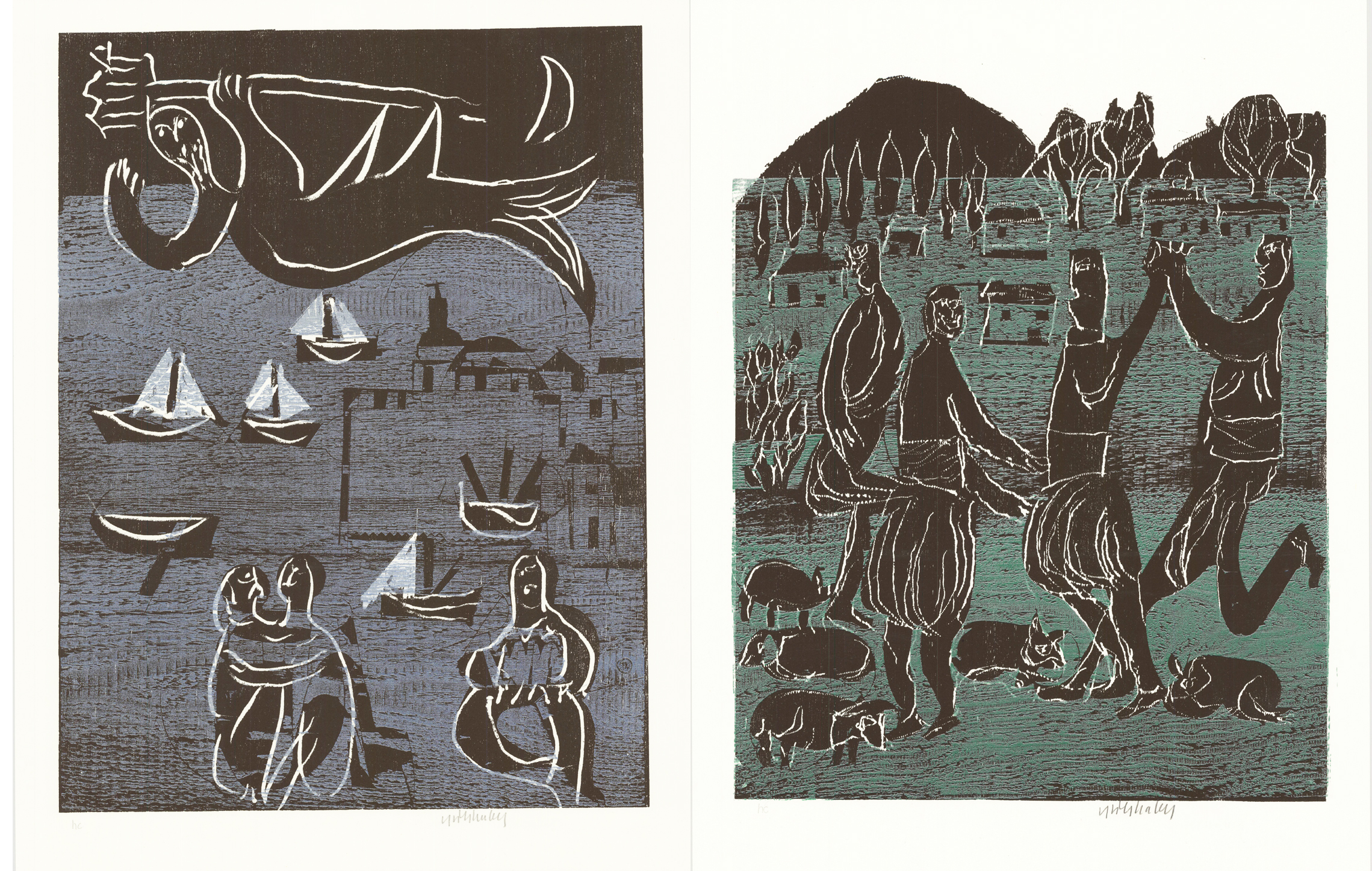
Mappenwerke Hellas I + II. Illustriert mit neun großformatigen Farbholzschnitten von HAP Grieshaber. Alle Holzschnitte signiert rechts unten Grieshaber und links unten mit h.c. (hors de commerce) bezeichnet. Dies bezeichnet, die vorweg für den Künstler außerhalb der verkauften Auflage oder die Exemplare die für den Verleger selbst gedruckt wurden. Die eigentliche Auflage betrug nur 290 nummerierte Exemplare für Subkribenten. Illustriert insgesamt mit 9 großformatigen signierten Farbholzschnitten von HAP Grieshaber, gedruckt in Farben von verschiedenen Holzstöcken. Grieshaber schuf die beiden Mappenwerke während seines Griechenlandaufenthalts in den späten 70er Jahren. Die schönen Blätter zeigen mythologische Szenen mediterrane Landschaften und griechische Götter. Die beiden Mappenwerke sind aufwendig in Leinen ausgestattet und jede Mappe mit eingearbeitetem Buch mit Texten von Magrete Hannsmann, jedes dieser beiden Bücher mit einem gefaltetem Originalholzschnitt von HAP Grieshaber. Die Mappe Hellas I beinhaltet desweiteren noch eine schöne Farbfotografie mit einem Selbstportrait Grieshabers während seines Aufenthalts in Griechenland. Tadellose Exemplare der beiden selten zusammen auffindbaren Mappenwerke mit den großformatigen Farbholzschnitten zu HAP Grieshabers Aufenthalt in Griechenland. Beide Werke noch in den original Pappverpackungen wie zur Auslieferung an die Subkribenten.
Illustrated book, 11 lithographs, original color. Hard cover. First English language edition with 11, partly double sided, lithographs. Original linen with lithographed dust jacket, belly band and transparent envelope. 253 S.