Original antique book without title page, leather binding with floral embossing. 59 etchings. "Campo Vaccine, Veduta del Colises, Ponte S. Maria, del Campidoglio, S. Agnesa, Campo Vaccina, Arco di Costantino et Coliseo, Interno Roma, S. Marco di Venezia, Dogana di Venzia, Colona Trojana, S. Ange Rome, Piazza della Rotonda, Colonne Antoniane, Palais de la Vigne du Cardinal Pie, Place Nauonne a Rome, Piaza di Mentecauallo, Piazza della Madono delle Popolo, S. Marco, Nostre Dame de Lorette, Nostre Dame de Portiuncule, S. Dominicque de Sienne, Palais du Pape, Campo Vacina, Rue du Cours, bocca della venta, Terme Diocletiane, Pont de Realte de Venize, Port de Venize, Chvette de la Trinite, Piazza di St. Marco, Piazza di St. Marco di Venezia vista verso il porto, Medisima grand Piazza di St. Marco, Gallerie Dauphine du Palais a Paris, Louvre du coste des Tuilleries, Pont Marie, Porte S. Bernard, Chasteau de Corbeil, Maison Rouge..de Seine, S. George de Venize, S. Iean et Paule de Venize, S. Victor de Marseille, Veue du Rocher de Gayette, La Maijorre de Marseille, Le Fanal de Genne, Alcune Vedute und Antica alla Vigna d Este a Tiuoli, Pallazzo di Monte Cauallo und Palazzl della Vigna di Mont alto, Pallazo di Barberini und Fontana alla Vigna d Este, Veduta della Vigna d Este und de la Vigna di Ludouici, Grotte del Giardino di Monte Dragone und Veduta de la Vigna de Medici, Fontana alla Vigna Aldobranini a Frascati und Fontana de Dragoni a Tiuoli, Profil de la Ville de S. Denis, Profil de la Ville de Poissy, Veue au naturel de la Cité d Alize, Aqueducs ou le Peuple Romain, Veue au naturel de la Saincte Baume en Prouence, de la Montagne, Loreto", Israel Silvestre (13 August 1621 in Nancy – 11 October 1691 in Paris), called the Younger to distinguish him from his father, was a prolific French draftsman, etcher and print dealer who specialized in topographical views and perspectives of famous buildings. Orphaned at an early age, he was taken in by his uncle in Paris, Israel Henriet, an etcher and print-seller, and friend of Jacques Callot. Between 1630 and 1650 Silvestre travelled widely in France, Spain and Italy, which he visited three times, and later worked up his sketches as etchings, which were sold singly and in series. His work, especially of Venetian subjects published in the 1660s, influenced eighteenth-century painters of vedute such as Luca Carlevaris and Canaletto, who adapted his compositions. In 1661 he inherited the stock of plates of his uncle, the printseller Israel Henriet, among which was a large part of the works of Callot, and many of those of Stefano della Bella. In 1662 he was appointed dessinateur et graveur du Roi and in 1673 he was appointed drawing-master to Louis, le Grand Dauphin. From 1668 he was granted workshop space in the galleries of the Louvre, where the practice of housing eminent artists and craftsmen was a tradition that was originated under Henri IV. Silvestre's atelier was large: he had at least two pupils who had separate careers as engravers, François Noblesse and Meunier. In 1670 Charles Le Brun[2] recommended him for membership in the Académie royale de peinture et de sculpture. In 1675 his son, the artist Louis de Silvestre, was born at Sceaux. At his death he left a large collection of drawings, more than a thousand engravings, and other works of art to his sons, whose own artistic tastes he had nurtured. The family collection was sold at auction in 1810. (Wikipedia)
With 7 (instead of 8) double sheet sizes. engraved. Portraits and double sheet size. Copper plaque. 21 p. - Ldr. d. Currently with rvg. and Rsch. (Capitals chipped, back joints torn and somewhat cracked, scuffed and bumped). - The double sheet size. Plaque depicting the Battle of Carberry Hill.
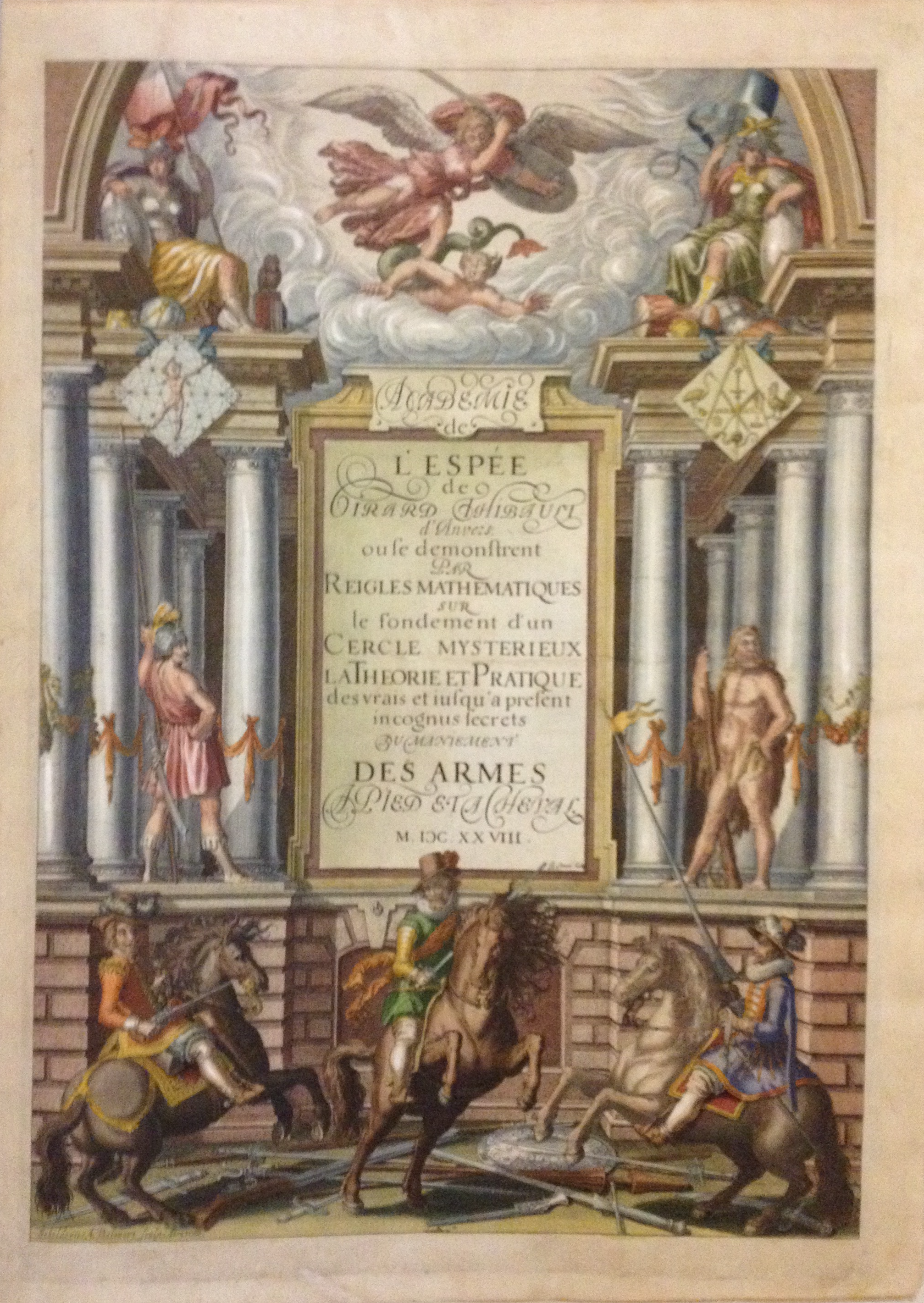
Engraved title and portrait, nine full page engraved plates with coats of arms and 46 (45 of them are double page) fine engraved plates. All these engravings are exceptional finely hand colored throughout by a later hand. 2 unnumbered pages, 276 separate paginated pages; the decorative and beautiful binding in brown modern marbled calf; the covers with their inner and outer edges richly stamped and gilt, spine also gilt and bound in 6 compartments. Imperial folio. The 'Academie de l'Espée' is overall the most famous fencing book with highly decorative fine engraved plates ever published. It was printed and published by the brothers B. & A. Elzevir in Leiden 1628. This enormous book is illustrated with an engraved title, one portrait, 9 plates of coats of arms and 46 (of which 45 are double page) fine engraved plates of fencing scenes by the famous Dutch engravers Crispin de Pass, J. Gilli, Wilhelm J. Delff, Crispian Quebon and others. All plates in this book (including the title, portrait and coat of arms) are finely hand colored by a later hand. The hand coloring is executed in absolute accuracy and delicate throughout. The fine engraved details of the various fencing scenes are hand colored with much care and stand out one of a kind in their beauty. 'This splendid equipped masterwork of typography is a curiosity as a manual of the art of fencing, which tries to overcall the meshed rules of the Spanish fencing school. Its worth for the history of the art of fencing is based on that, that it shows hundreds scenes of fencing pairs, which are missing illustrations in the Spanish fencing books of that period' (translated from the German reference Lipperheide 2960).
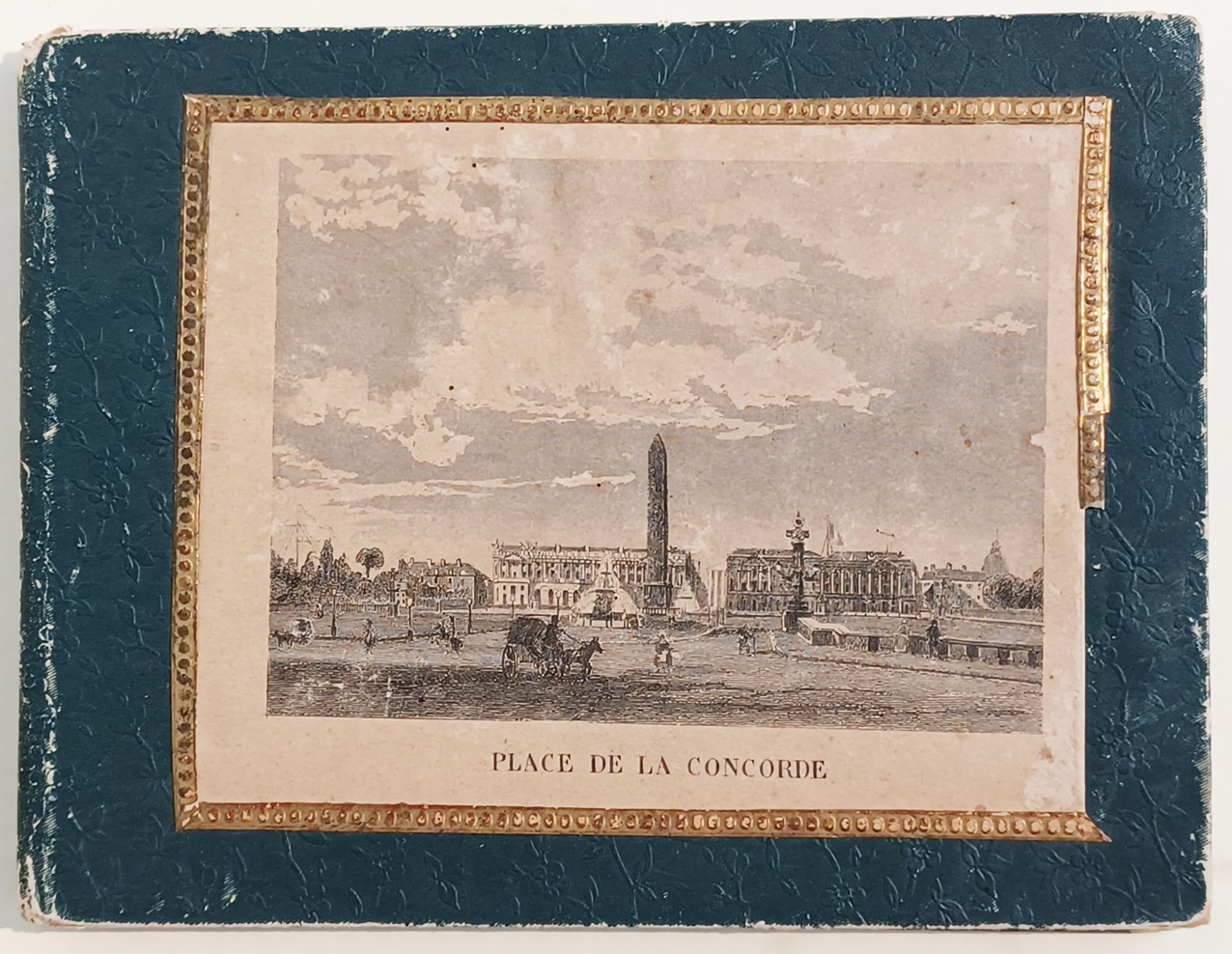
Original green paper wrappers with ornamental flower design. The front cover with one pasted down engraving of,Place de la Concorde'. Pittoresque leporello album of Paris illustrated with 30 steel engravings depicting famous monuments, buildings, churches, parks, bridges etc of Paris.
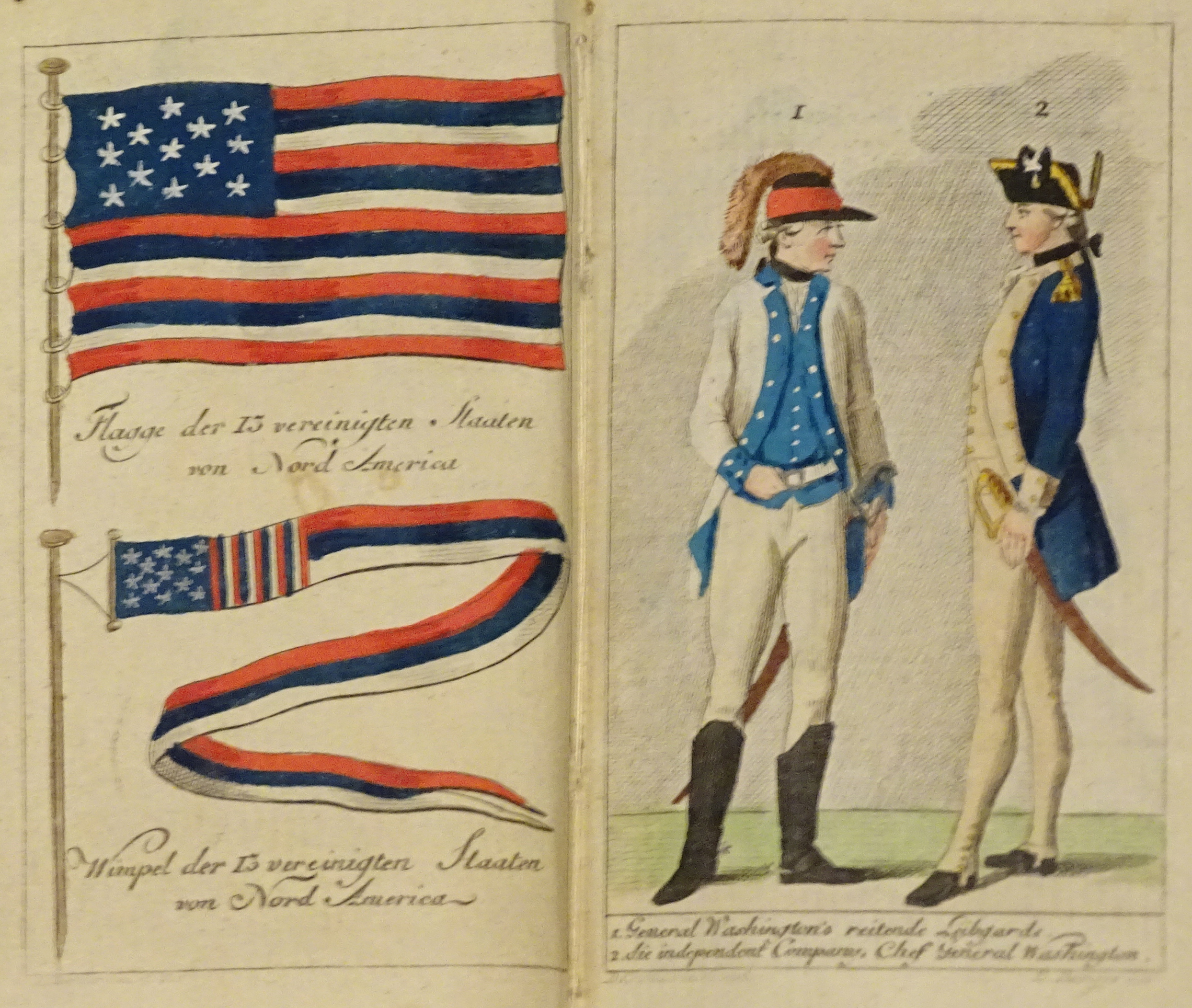
Rare historical almanach about the history of the revolution in 1784 in North America. Illustrated with seventeen fine engravings related to the revolution in 1784 in North America, designed by Daniel Chodowiecki and probably all engraved by Berger, further illustrated with a folded fine engraved hand colored map of the United States drawn by Daniel Friedrich Sotzmann after William Faden the Younger. Among the seventeen fine engravings by Chodowiecki we find one of the earliest engravings showing the flag of the United States. These fine engravings were engraved by Daniel Niklaus Chodowiecki (16 October 1726 – 7 February 1801). The almanach is also including the rare plate with the portraits of General Washington, General Gates, Dr. Franklin, Henry Laurens (President of the Continental Congress after John Hancock) and Paul Jones; among the other engravings is the scene of the ,Boston Tea Party', the protest for the ,Stamp Act' in Boston August 1764, etc. Daniel N. Chodowiecki was a Polish—and later German—painter and printmaker with Huguenot ancestry, who is most famous as an etcher. He spent most of his life in Berlin, and became the director of the Berlin Academy of Art. Marbeled soft card board covered of the period. All engravings are hand colored in the period when published. Some of the engravings of the first section of book with marginal waterstains, which affected two of the engravings slightly more. A very rare almanach describing the noteworthy news for 1784 with a history of the revolution in North America. Very rare.
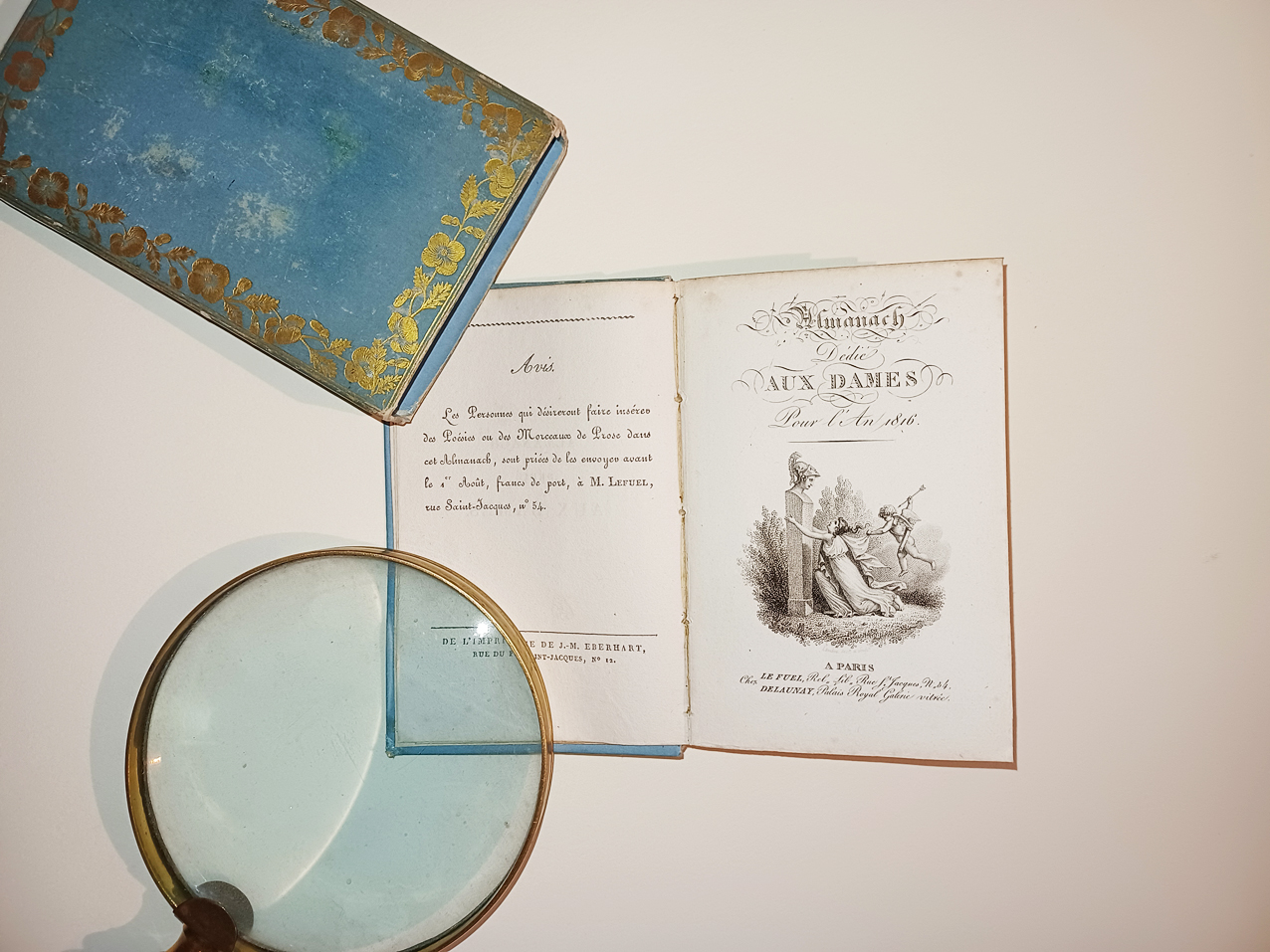
Charming almanac with illustrated calendar for 1816. Small book with engraved title and 6 engraved plates by De Villiers after various artists; some marginal foxing, light creases to a few corners. Binding: blue moiré silk, gilded frames, same slipcase, gilt edges. (Publisher box.).
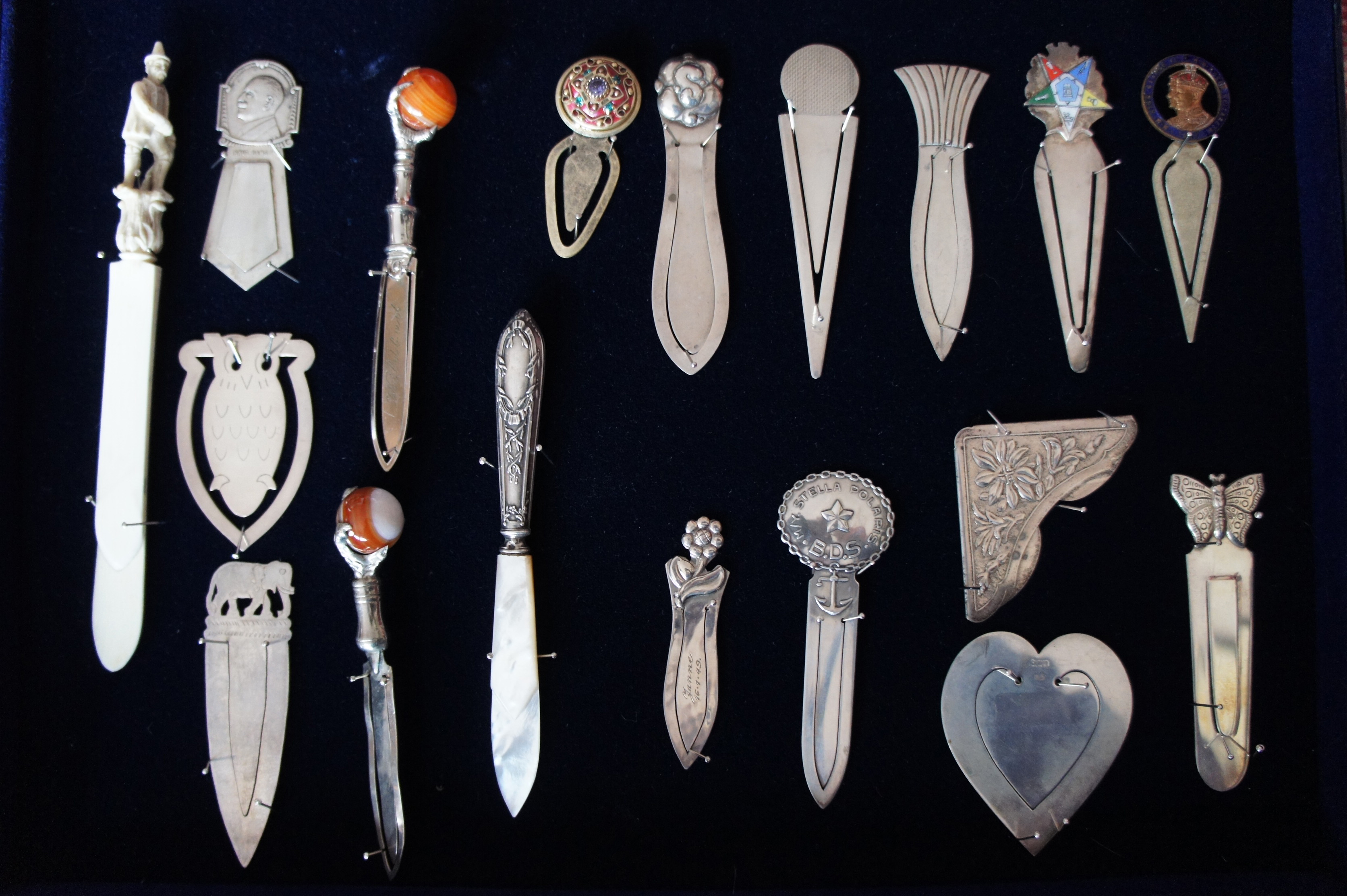
An impressive extensive collection of c. 320 bookmarks from the early 1620s towards the end of the 20th century. The collection comprises a fascinating abundeance of different material, shapes, styles and topics. It starts in the early baroque period in around 1620 with very rare bookmarks in the shape of small hearts. Further it comprises flower embroideries, representative icons of metal (ca. 145) many of them in silver, partly with handles of wood, bone, mother-of-pearl, covered with enamel or gems, then in contrast the stripes of paper or light cardboard., ,
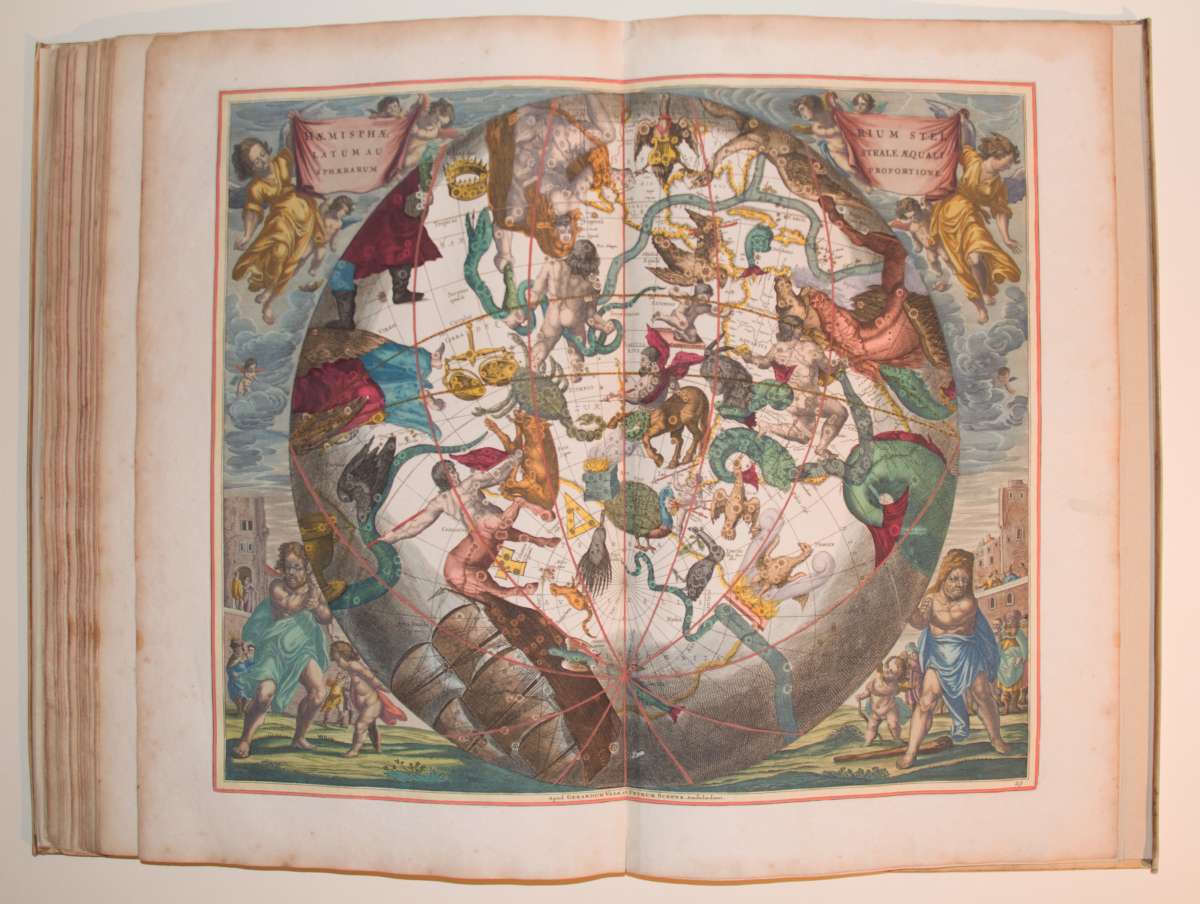
Large Folio. Printed title, engraved old colored title page, table of contents with index of the maps, illustrated with 29 fine old colored engraved celestial maps, the outer borders and some cartouches maybe at a later date colored. Vellum bindung of the period, covers richly gilt and decorated, spine renewed. The ‚Harmonia Macrocosmica...' by Andreas Cellarius is the most famous and spectacular celestial atlas published in the 17th century. It appeared in three editions: 1660, 1661 and 1708. The 1st edition 1660 was published as a supplement to the famous 'Atlas Novus...' by Joannes Janssonius in Amsterdam. At a later date the copper plates were acquired with by Gerard Valk and Petrus Schenk, map and booksellers in Amsterdam when they took over the inventory of the publishing house of Joannes Jannsonius. They reissued this famous celestial atlas 1708 in their printing house in Amsterdam. The copper plates were used unaltered apart from the addition of the imprint: 'Prostant Amstelaedami apud Petrum Schenk, et Gerardum Valk. C.P.' The Cellarius celestial atlas sold very well among their wide range of cartographic products of atlases, globes and wall maps. It was either sold individually or as a supplement to some of their famous world atlases. It contained only an allegoric title-page engraved by F. H. v. Hoven, a typographic title-page printed in black and red, one printed index table and the 29 double engraved celestial maps. In his sky atlas, Andreas Cellarius shows the often contradictory theories that prevailed at the time. In addition to Tycho Brahe and Schiller's celestial models, Andreas Cellarius also presents maps reflecting the theories of Ptolemy and also includes Copernicus as a 16th-century challenge to commemorate the venerable ancient astronomer. Cellarius' celestial atlas was also not without political motives. At that time, during his tenure, the Netherlands had been the undisputed center of scientific discovery. The Dutch cartographers had stood above all others. It is also assumed that Louis XV. tried to bring France to the forefront of science and thus catch up with political dominance. His efforts led to a major competition between France and the Netherlands. Andreas Cellarius also tried to thwart the French attempts with his extremely complex sky atlas. In some maps, Cellarius incorporated French elements into his celestial maps, such as acanthus leaves commonly seen on French furniture of the period. In this way he used decorative French pictorial elements more skilfully than they could themselves.
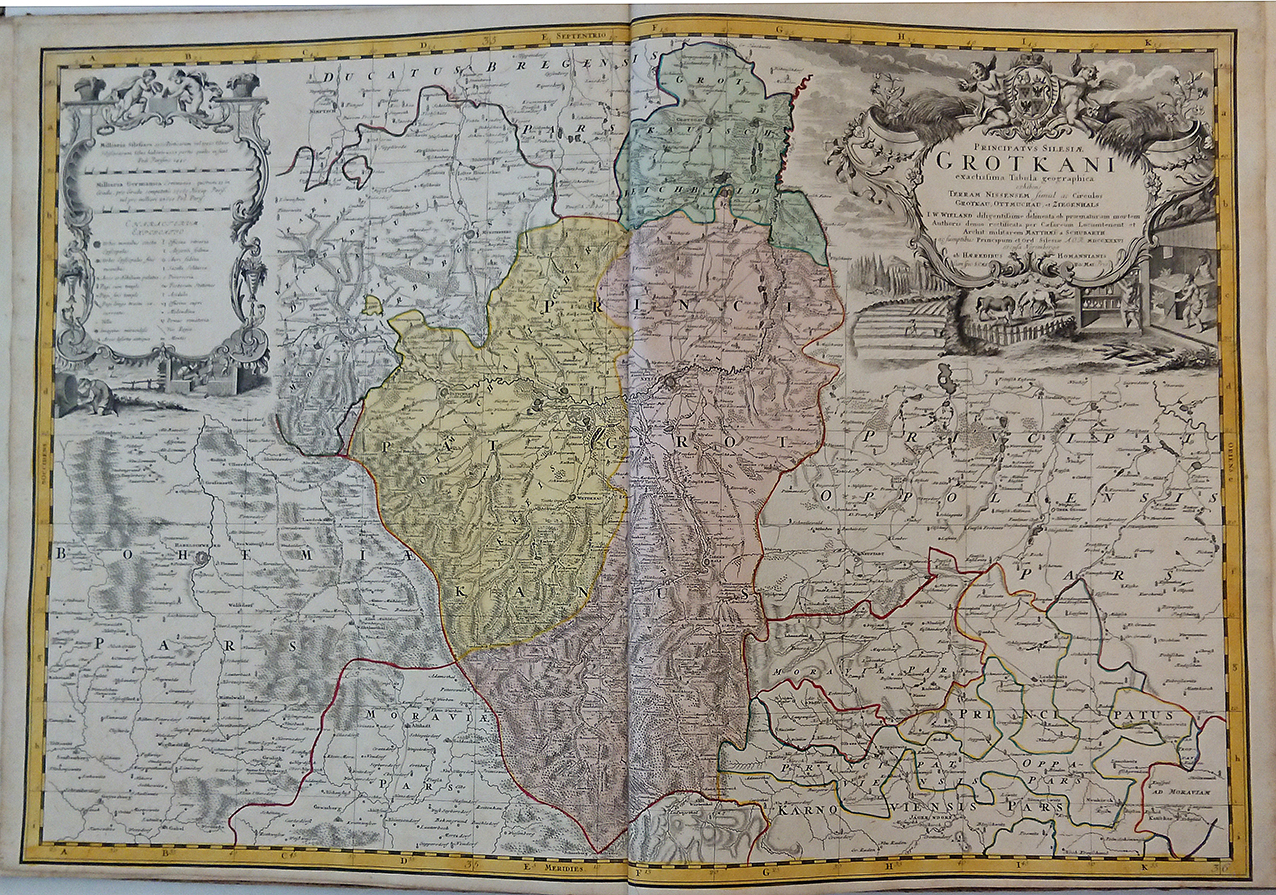
Contemporary cardboard binding of the publication period, covered with marble paper (with abrashions at the corners). Blank 18th century front- and endpapers, 1 printed title page, printed index of the 20 engraved maps with table of explanations at the bottom, 20 double page engraved maps all hand colored in outline and wash in the period when published. Map number 9 misbound between maps number 6 and 7. The „Atlas Silesiae ..." was published as a large scale atlas of Silesia, which incorporated 20 double page engraved maps of which most of them are detailed regional maps of the various principalities and duchies of Silesia. The maps are based upon land surveys by Johann Wolfgang Wieland (1673-1736), they were corrected by M. v. Schubarth. In Silesia, during the reign of Charles VI (1711-1740) a work begun surveying the Habsburg hereditary lands. This survey was appointed to engineer Lieutenant Johann Wolfgang Wieland. In 1735 the 'Homann Heirs' a Nuremberg company which continued to print Homanns maps after his death, was charged with the publication of the map sheets. It appeared in an atlas with maps of the 16 principalities and two general maps. In 1736 a further revision of the Wieland drawn maps was carried out by the imperial engineer Lieutenant Matthew of Schubarth. That same year the copper plates (featuring also the principalities of Wroclaw, Brzeg and Sagan) were completed. King Frederick II of Prussia (1740-1786) was initially resistant to the completion of the survey. An atlas was published which included a map of Silesia, one of Lower and Upper Silesia, a map of the diocese of Wroclaw and 16 principalities. The atlas was for a long time the only publication of a government land survey of Silesia. Provinces on this map include Freyhan, Adelnau, Mittelwalde, Kempen, Pitschen, Ohlau and Breslau. This map was published in 'Atlas Silesiae Id Est Ducatus Silesiae Generaliter Quatuor Mappis Nec Non Specialiter XVI Mappis Tot Principatus Repraesentantibus Geographice Exhibitus'. Reference: Tooley's Dictionary of Mapmaker, Early World Press, 2004, pp 361-362
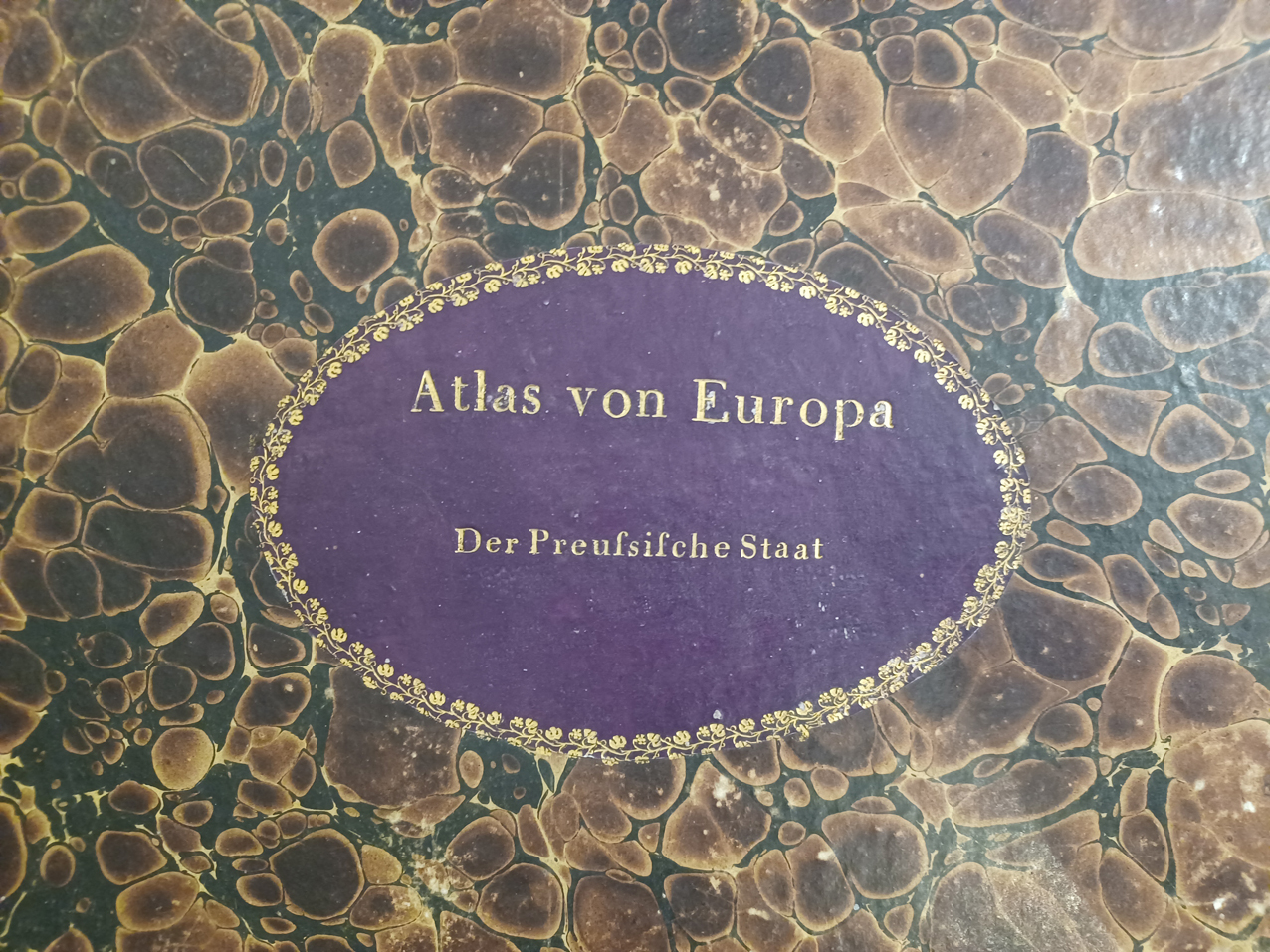
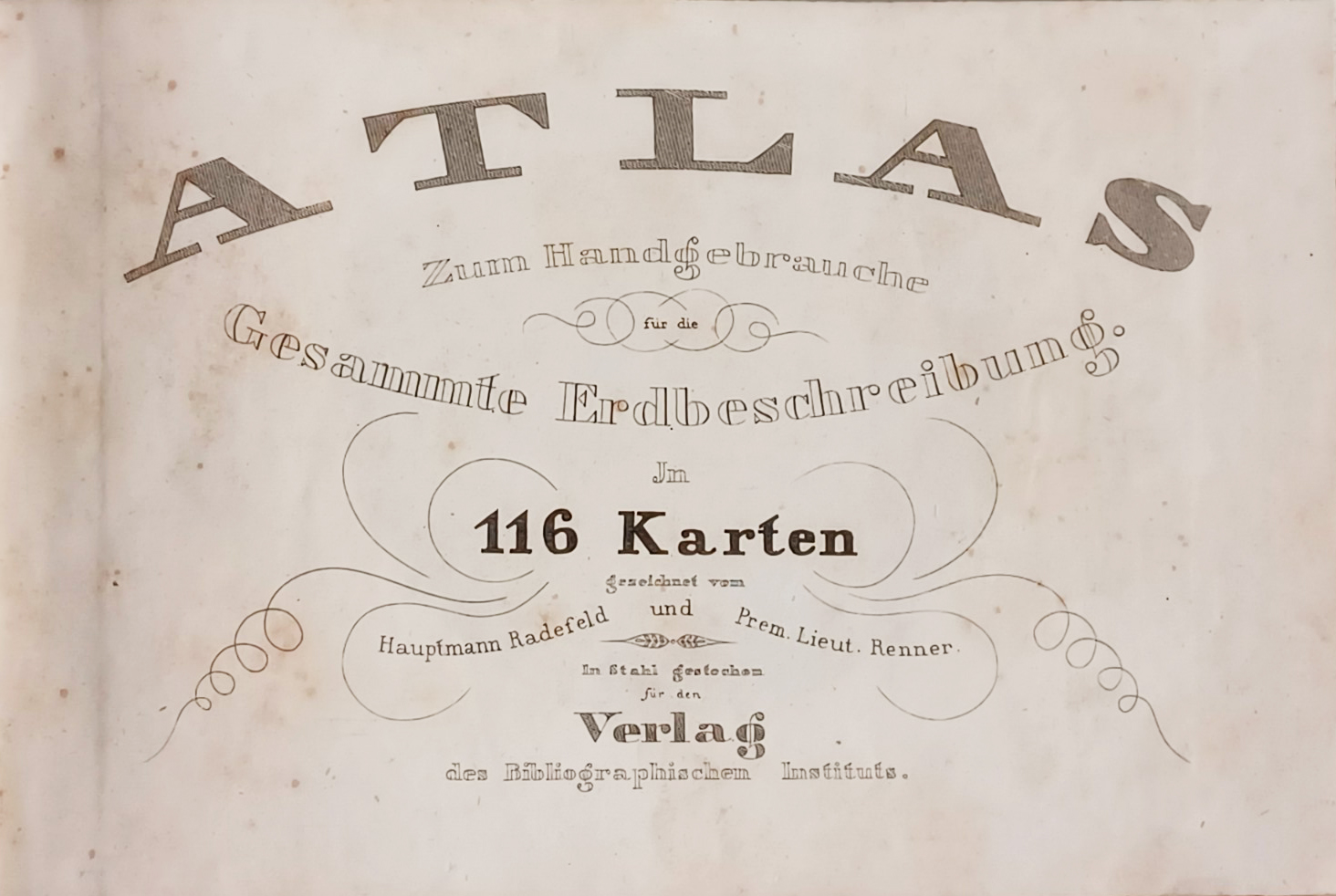
Illustrated with 26 engraved maps showing the Prussian state. All hand colored in the period when published, including 41 leaves of printed descriptive text.
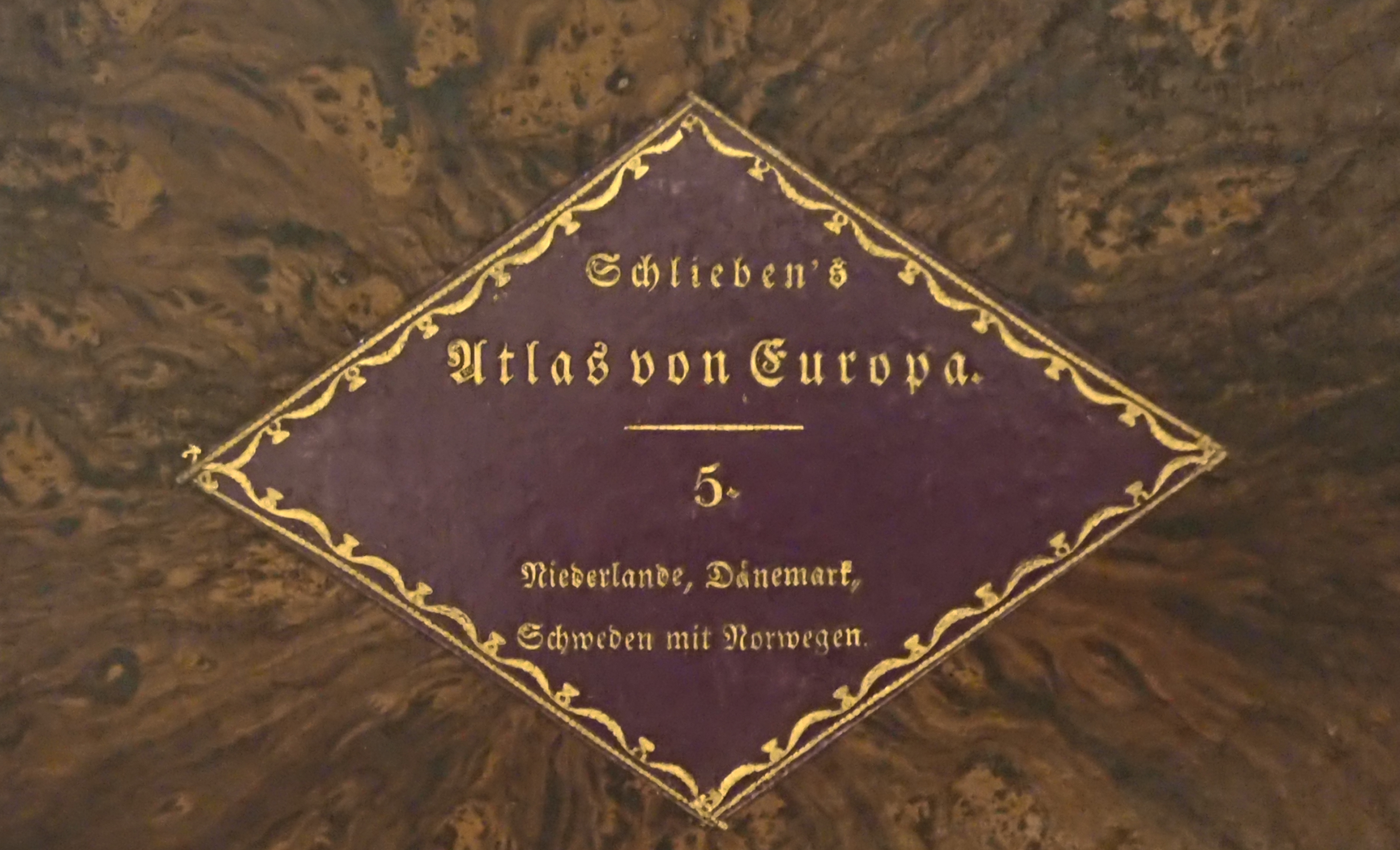
Original Kupferstiche, in zeitgenössischem Kolorit. 24 Blatt Kupferstichkarten u. beigleitender Text. Dritte Lieferung illustriert mit insgesamt 13 Blatt Kupferstichkarten zur Niederlande (incl. der dänischischen Kolonien), 6 Blatt Kupferstichkarten von Dänemark und 5 Blatt Kupferstichkarten von Norwegen und Schweden. Wilhelm Ernst August v. Schlieben, geboren zu Dresden am 24. Juli 1781 und † am 11. September 1839
Title, 115 engraved maps (hand colored in outline) and index. The atlas comprises 103 fine engraved maps, mainly all of them are hand colored in outline and twelve engraved plates with 24 uncolored city plans, engraved in round. of VIII, 382 pp. and a Paris, Dentu, 1802, in-8, from VIII, 382 pp. and a folding map, blue cardboard from the Bradel era, First edition published when Louisiana was sold to France, it contains a long and interesting history as well as the vocabularies of the Dakota and Chippeway Indians. The work contains interesting details on the nature of the soil, the productions of trade and industry of the country, it traces the wars of the French against the English and the natives. Baudry des Lozières analyzes with finesse and precision the historical and current circumstances of Louisiana; it expands on its resources in wheat, wine, vegetables and game as well as on ornithology, ichthyology and entomology; he describes the culture of tobacco and the habits of the Louisiana people. The map engraved out of text by L. Collin goes from Canada to the Gulf of Mexico.
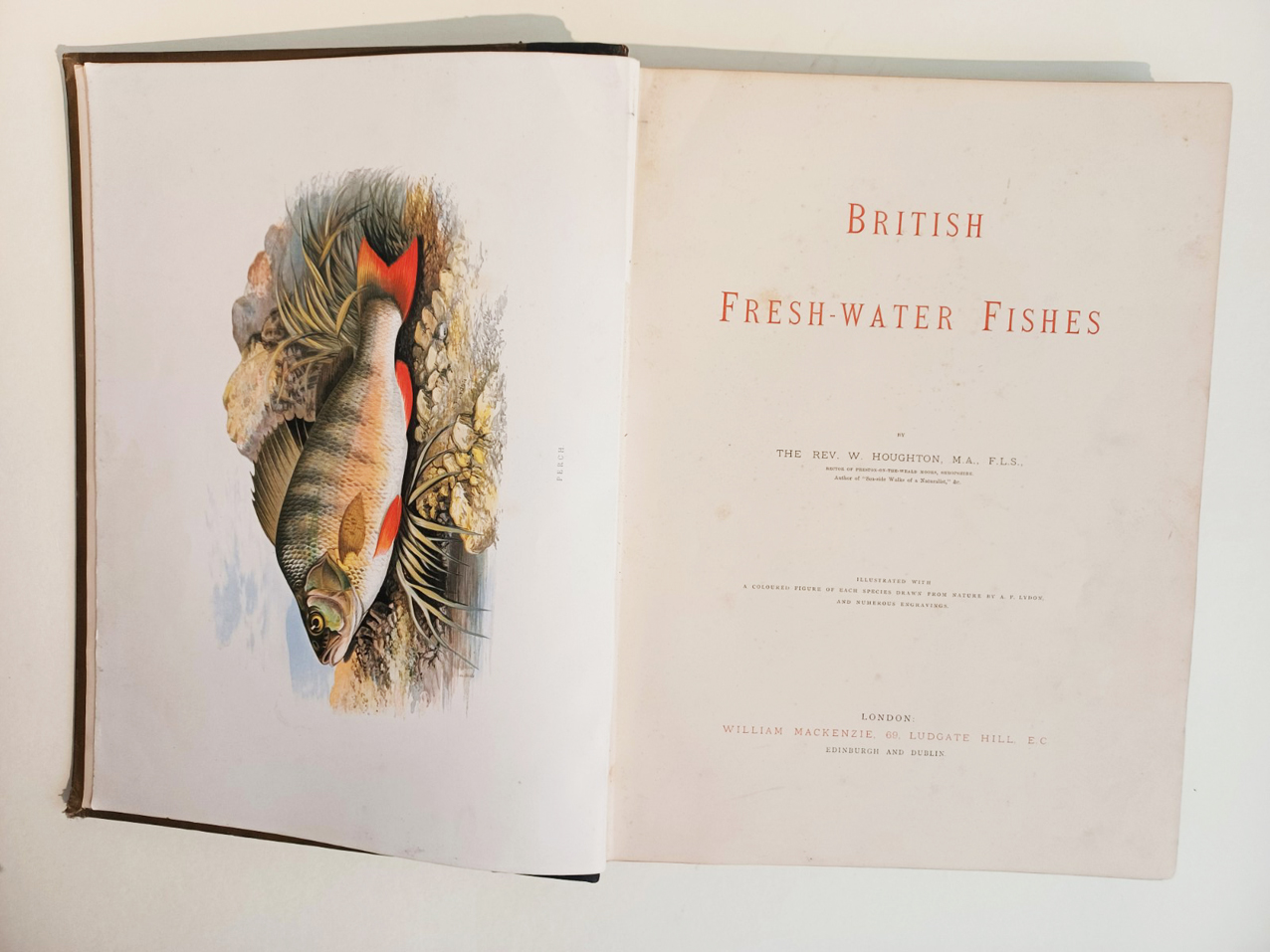
Half leather, with decorative title on spine, gilt. 204 pp., complete with all the 41 superb full-page coloured lithographs, depicting species of fishes drawn from nature by A. F. Lydon. All the colored illustrations of fishes do have opposite an attractive woodcut illustration at the beginning of the descriptrive text, showing a landscape with a river or a lake and a fisher man. William Mackenzie gives information on recognition, feeding and breeding habits, habitat, bait, and so on" (Buchanan, Nature into Art, 168). Alexander Francis Lydon's plates, printed by Benjamin Fawcett, show each fish in its supposed natural habitat. For this work Houghton studied the specimens in the British Museum collection. British Fresh-Water Fishes is notable for its incorporation of the naturalistic backgrounds of the fish habitats.
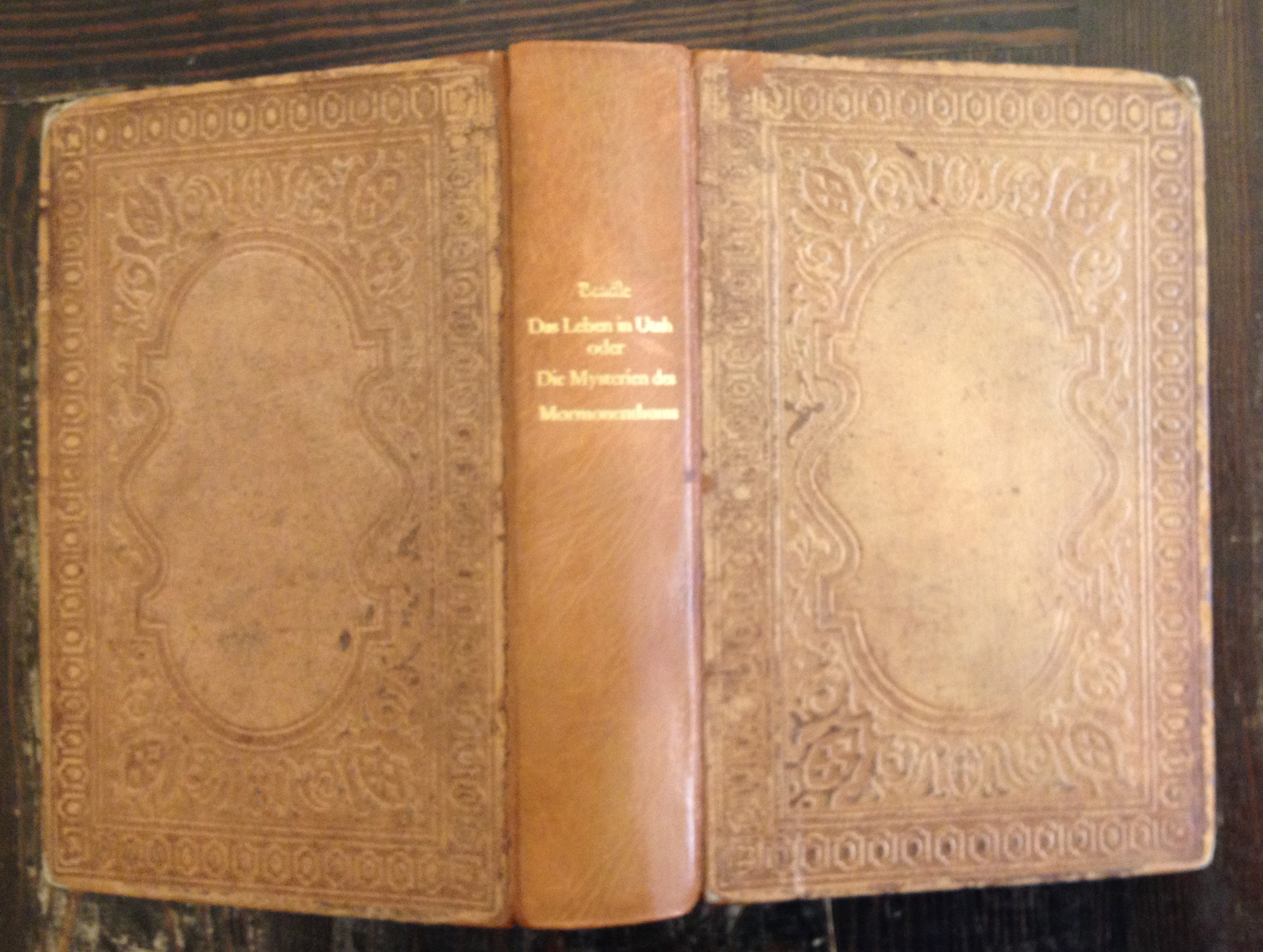
Illustrated with a woodcut illustrations,Portraits of leading Mormons' and the,Mormon Temple now being built in Salt Lake City' as frontispices next to the title, as well illustrated with one folded map,Map of Utah To Accompany Beadle's History of the Mormons' 210 by 215mm (8¼ by 8½ inches). 544 pp. with several partly fullpage woodcut illustrations in text.
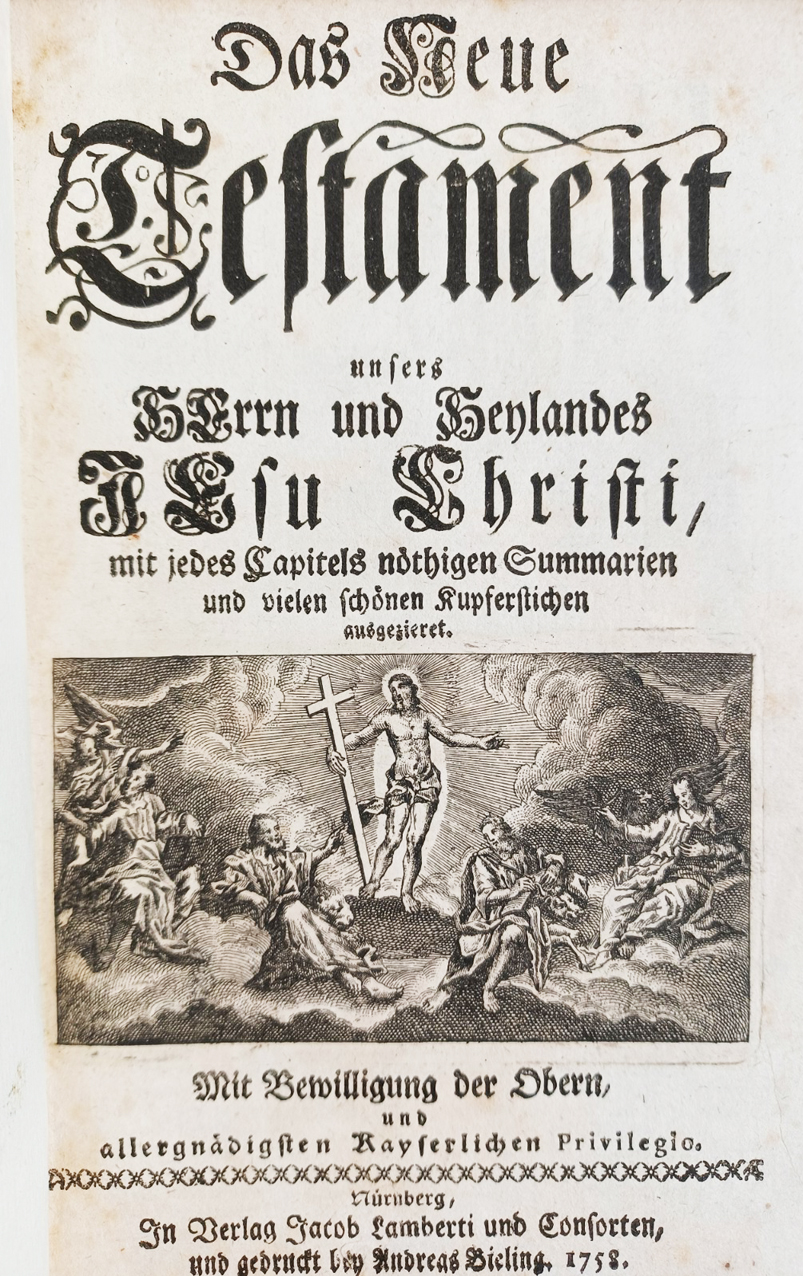
348 pp. New Testament; 118 pp. Catholic Catechism. 64 copper engravings in text.
Brown leather binding with gold embossed spine title "Holy Scripture - New Test." and leaf tendril pattern. Small blemish on the upper spine of the book. Otherwise in very good condition. 64 copper engravings in text. A classic New Testament bound with a Catholic catechism, mid-18th century. Illustrated with 60 finely engraved engravings in the text. Full leather binding of the time.
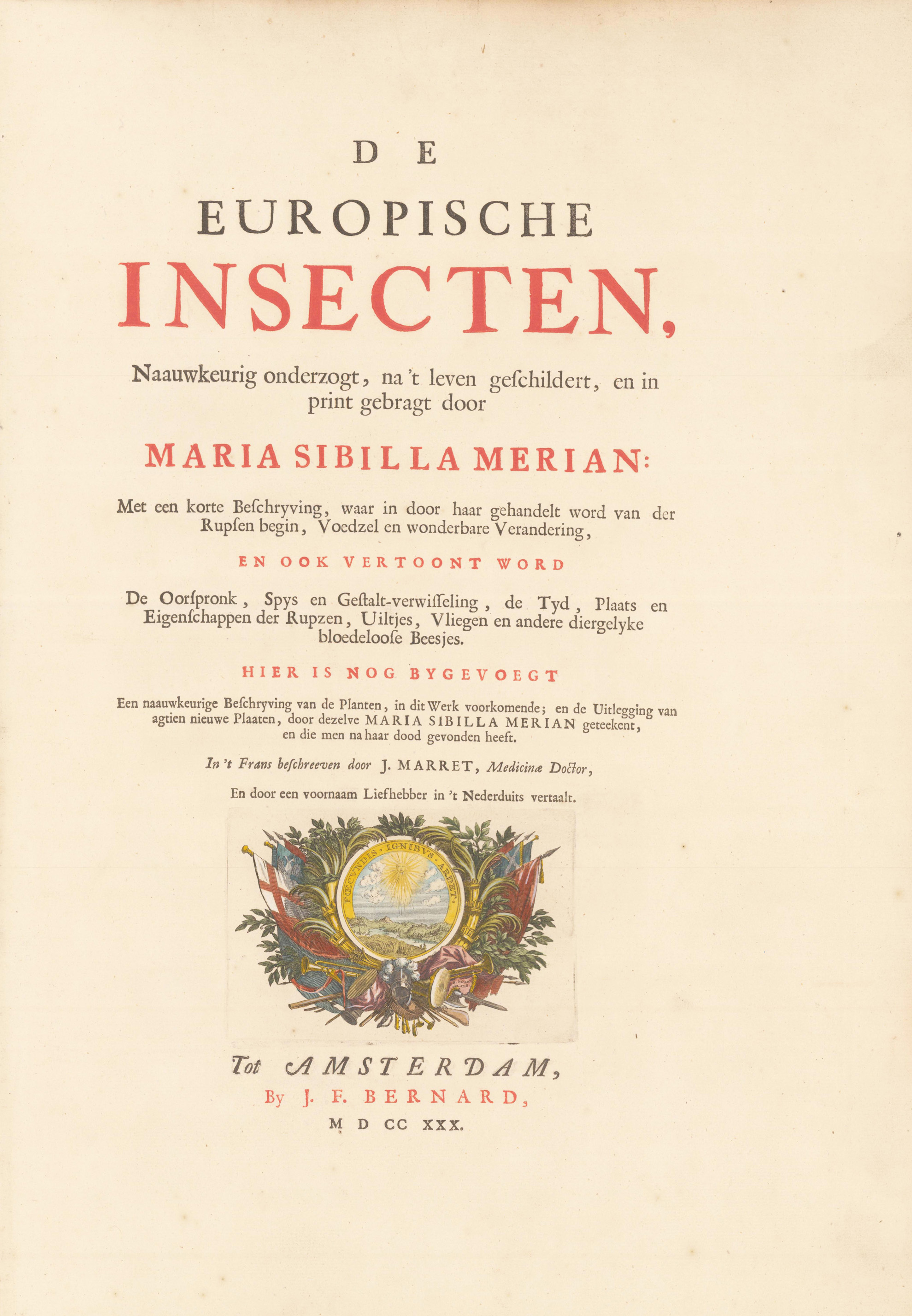
2 leaves, 84 pp.; engraved title- and end-vignette in text, 184 engravings on 47 leaves. First folio edition. Primary leaf (De Europische Insecten), title printed in red and black with hand colored vignette. Illustrated with 184 carefully finely hand colored engravings printed on 47 leaves. Each of the engravings show mostly scenes of decorative flowers and various caterpillars with their appropriate butterflies. The plates originate after Maria Sybilla Merian's own observations and were published for the first time in her 'Raupenbuch', a quart-edition between 1679 und 1717. Maria Sybilla Merian belonged to the first scientists, who watched the insects in a systematic order and she also took a significant part in the investigation of the metamorphosis of the butterflies. With the publication of her books the new knowledge was spread out to a larger circle of the population lived in those days. Theis example is very well preserved, the engravings are probably later colored and are printed on Dutch paper with wide margins in excellent quality. This is the first folio edition and the first appearance of the full suite of Maria Sybilla Merian's plates of the European insects, the companion and complement to her great Surinam work. It is as remarkable for its botanical as for its entomological content: the insects are presented in different stages of metamorphosis on and around flowers. In addition, some Surinamese insects are figured as well, these deriving from Johanna's drawings. Finely hand colored throughout, occasionally minor spotting in text or margins. Rebound in a wine red calf binding, the spine in seven compartments and richly gilt, the covers with decorative blind stamping with gilt fillets to board and spine.
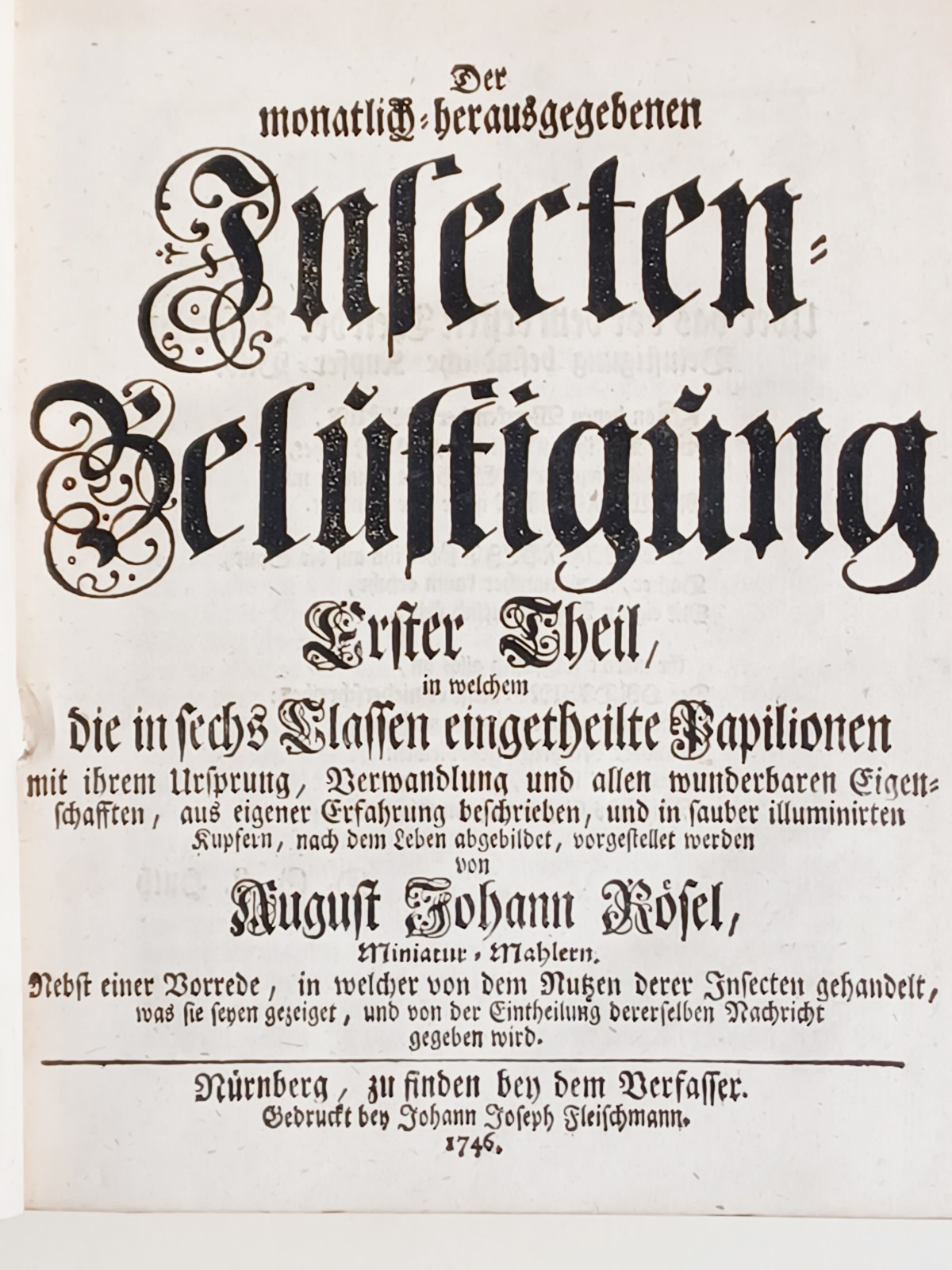
First (- fourth) part. (Part 4 described and edited by C. F. C. Kleemann). 4 vols. Nbg., Fleischmann for d. Author or Rösel Erben (Tl. 4), 1746-61. 4°. With 1 portrait of Rösels v. Kleemann after von der Smissen, d. G. Windter, 3 color. copper tit. after Gabler u. 285 (st. 286) partly found. colour. copperplate of the author Ldr. i.e. Zt. with Rverg. u. Rsch., cover with blind embossing. (3) and Hldr. i.e. Zt. (part 4). First edition of one of the best known and most beautiful entomolog. Works from the 18th century, continued by his son-in-law Kleemann after Rösel's death (1759). – Vol. 1: 121 illustrations on 78 plates. Vol. 2: 75 (st. 76) plates. Vol. 3: 101 illustrations on 92 plates. Plates 90 and 91 printed in colour. Vol. 4: 40 plates – Text collation: Vol. 1: 24 ll., 64 pp., 4 ll., 60 pp., 4 ll., 64 pp., 4 ll., 312 pp., 4 ll., 48, 48 p.., 12 ll. Reg. Vol. 2: 4 ll., 72, 28, 16 pp., 2 ll., 32 pp., 4 ll., 76, 200, 64, 52 pp., 10 ll. Reg. Vol. 3: 4 ll., 624 pp., 4 ll. Reg. Vol. 4: 6 ll., 48, 264 pp., 2 ll. – In vol. 2 at the beginning of the chapter "Erd-Kefer 1st Class" the plate V is missing. First edition of the,Der monatlich-hrsg. Insecten-Belustigung...' (Insect Entertainment), which is one of the most oustanding published entomological works of the eighteenth century. August Johann Rösel von Rosenhof (1705-1759) was a talented engraver and miniature painter in Nürnberg. Rösel von Rosenhof has engraved and drawn the plates himself. Overall a very well preserved set of these four volumes bound in contemporary full leather bindings of the period. All engraved plates throughout in fine hand coloring of the period, occasionally the paper or plates minor browned or toned. Illustrated with 3 fine engraved allegoric title pages, the engraved portait of Rosenhof in volume four and a total 285 (286) hand colored, partly folded engraved plates. Lacking plate V (Erd-kefer erster KLasse) depicting insects among them beautiful engraved butterflies, caterpillars, beetles, haystacks, dragonflies and many other species. Volume four was published 1761 two years after Rösel's death by his son in law C. Kleemann. He also was working as a miniature painter in Nürnberg. The bindings minor rubbed at the corners & edges, overall very good.
Christen (1700-1756), classical philologist, art historian and archaeologist, conducted extensive research in the areas of gemstones and coins, reliefs and painting.
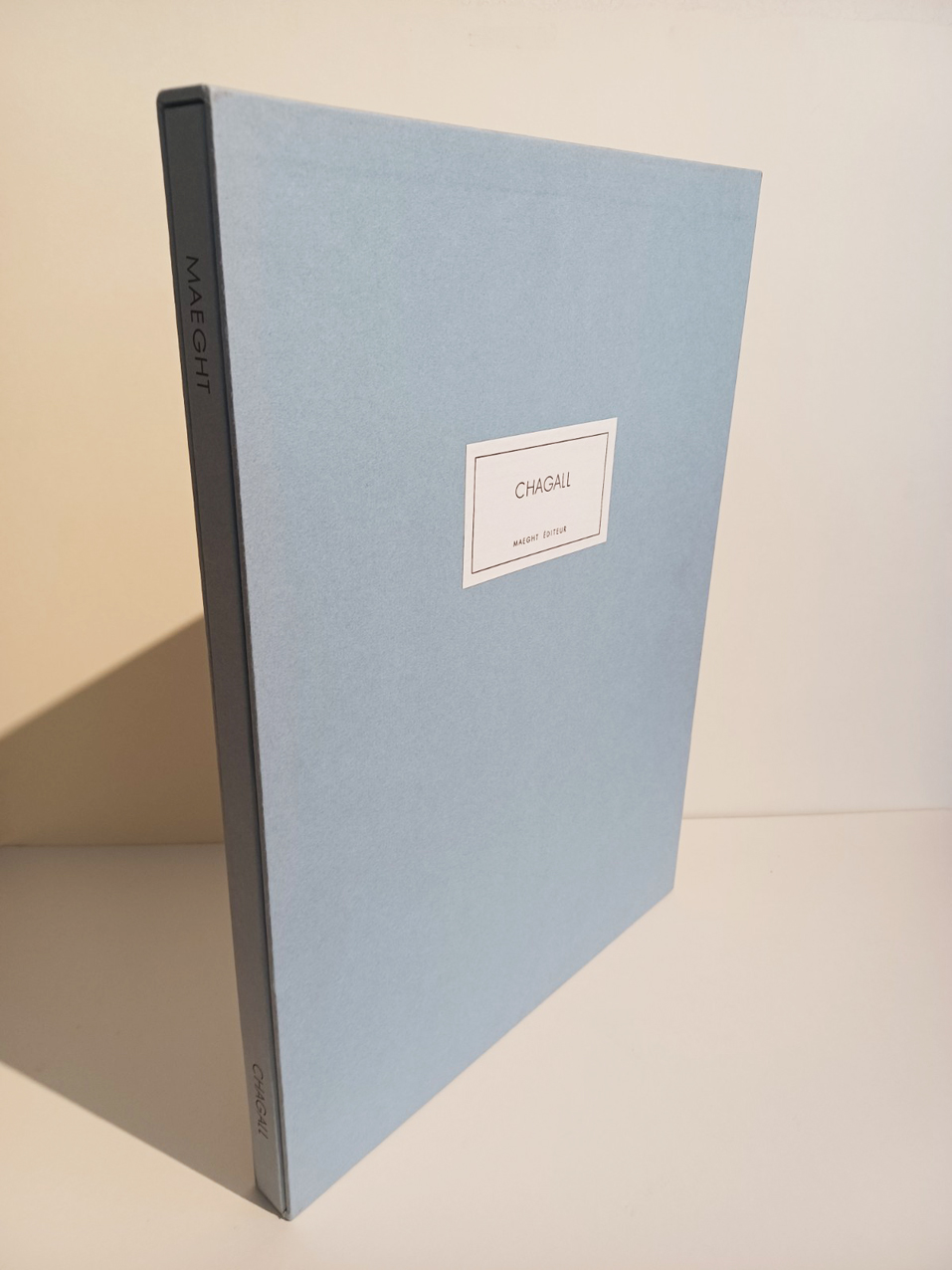
Deluxe edition on,vélin d'arches' paper, numbered 109/150. Cover and one double-page color lithograph with an additional 14 images mostly in color. Printed to by Mourlot under the direction of Charles Sorlier. Marc Chagall (born Moishe Shagal; 6 July [O.S. 24 June] 1887 – 28 March 1985) was a Belarusian-French artist. An early modernist, he was associated with several major artistic styles and created works in a wide range of artistic formats, including painting, drawings, book illustrations, stained glass, stage sets, ceramics, tapestries and fine art prints. Born in modern-day Belarus, then part of the Russian Empire, he was of Belarusian Jewish origin. Before World War I, he travelled between Saint Petersburg, Paris, and Berlin. During this period he created his own mixture and style of modern art based on his idea of Eastern Europe and Jewish folk culture. He spent the wartime years in Belarus, becoming one of the country's most distinguished artists and a member of the modernist avant-garde, founding the Vitebsk Arts College before leaving again for Paris in 1923. Art critic Robert Hughes referred to Chagall as "the quintessential Jewish artist of the twentieth century". According to art historian Michael J. Lewis, Chagall was considered to be "the last survivor of the first generation of European modernists". For decades, he "had also been respected as the world's pre-eminent Jewish artist". Using the medium of stained glass, he produced windows for the cathedrals of Reims and Metz as well as the Fraumünster in Zürich, windows for the UN and the Art Institute of Chicago and the Jerusalem Windows in Israel. He also did large-scale paintings, including part of the ceiling of the Paris Opéra. He had two basic reputations, writes Lewis: as a pioneer of modernism and as a major Jewish artist. He experienced modernism's "golden age" in Paris, where "he synthesized the art forms of Cubism, Symbolism, and Fauvism, and the influence of Fauvism gave rise to Surrealism". Yet throughout these phases of his style "he remained most emphatically a Jewish artist, whose work was one long dreamy reverie of life in his native village of Vitebsk." "When Matisse dies," Pablo Picasso remarked in the 1950s, "Chagall will be the only painter left who understands what colour really is". (Wikipedia)
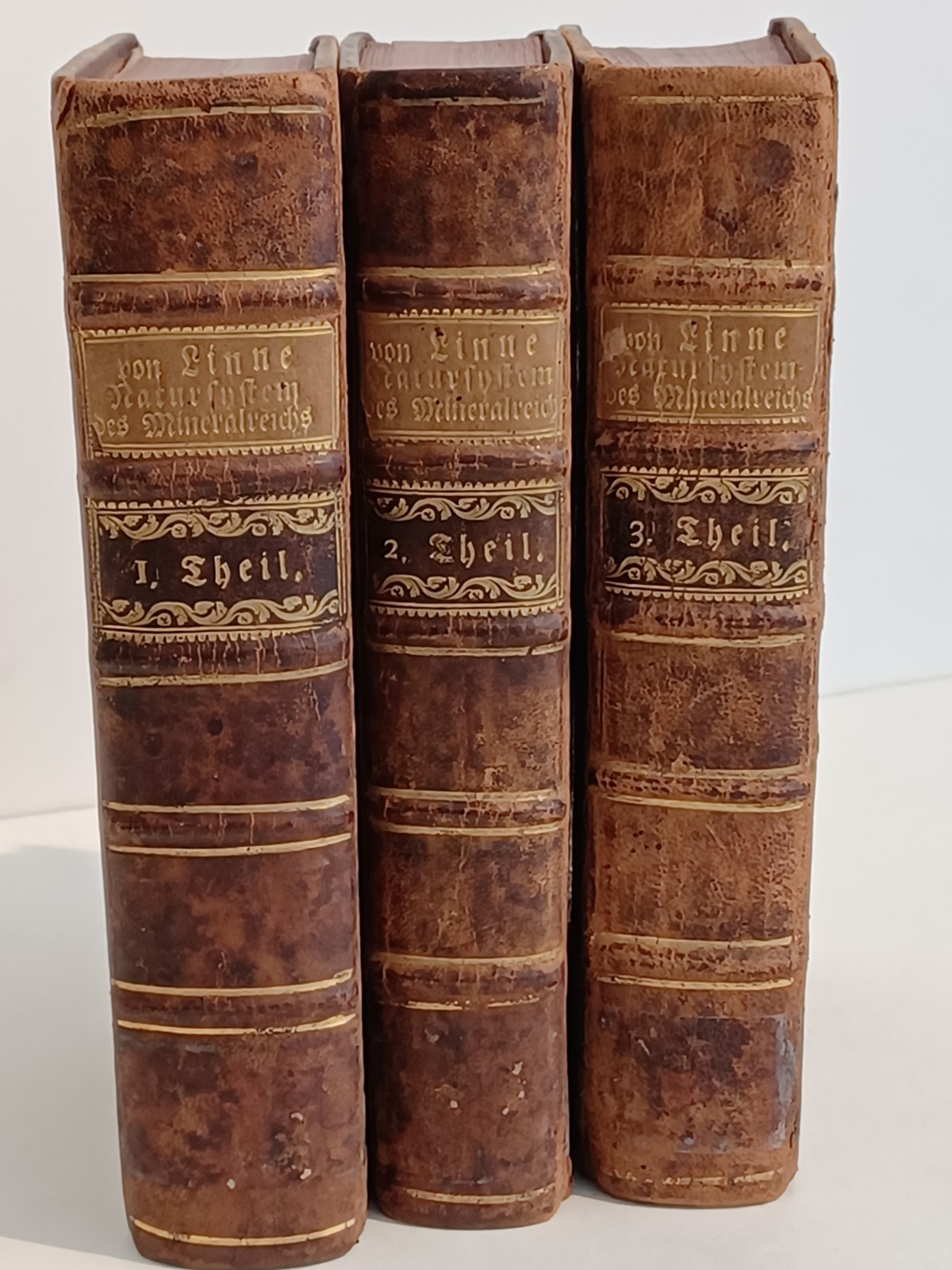
3 vol. (4) 8vo (195 x 120mm). 2 leaves, 652 pp., with 5 engraved folded plates; 8 leaves, 496 pp., 4 leaves, with 9 folded plates; 9 leaves, 486 pp. 2 leaves, with 13 folded plates. Johann Friedrich Gmelin (8 August 1748 – 1 November 1804) was a German naturalist, botanist, entomologist, herpetologist, and malacologist. Gmelin was born as the eldest son of Philipp Friedrich Gmelin in 1748 in Tübingen. He studied medicine under his father at University of Tübingen and graduated with an MD in 1768, with a thesis entitled: Irritabilitatem vegetabilium, in singulis plantarum partibus exploratam ulterioribusque experimentis confirmatam, defended under the presidency of Ferdinand Christoph Oetinger, whom he thanks with the words Patrono et praeceptore in aeternum pie devenerando, pro summis in medicina obtinendis honoribus. In 1769, Gmelin became an adjunct professor of medicine at University of Tübingen. In 1773, he became professor of philosophy and adjunct professor of medicine at University of Göttingen. He was promoted to full professor of medicine and professor of chemistry, botany, and mineralogy in 1778. He died in 1804 in Göttingen. Johann Friedrich Gmelin when young became an "apostle" of Carl Linnaeus, probably when Linnaeus was working in the Netherlands, and undertook a plant-collecting expedition to "Persia" on his behalf. Later in life he published several textbooks in the fields of chemistry, pharmaceutical science, mineralogy, and botany. He also edited and published the 13th edition of Systema Naturae by Carl Linnaeus from 1788 to 1793. This contained descriptions and scientific names of many new species, including birds that had earlier been catalogued without a scientific name by John Latham in his A General Synopsis of Birds. Gmelin's publication is cited as the authority for over 290 bird species and also a number of butterfly species.
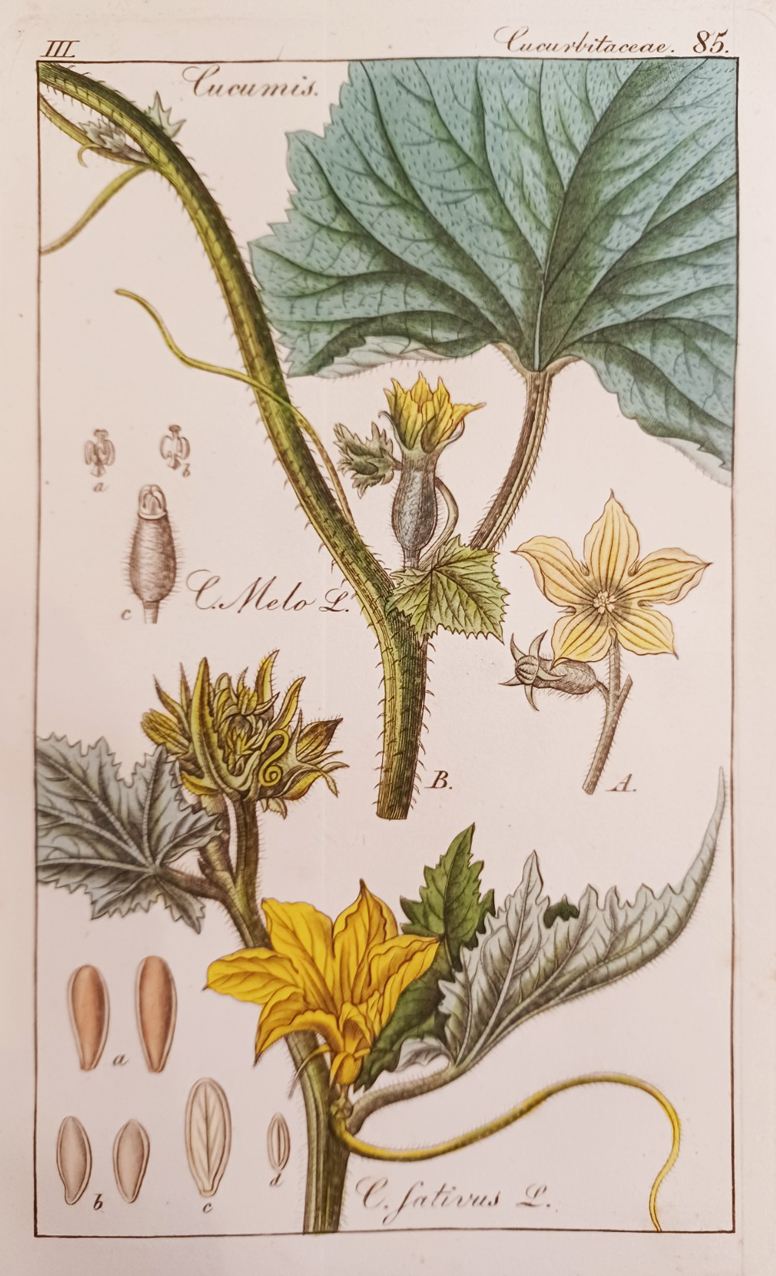
3rd volume of David Dietrich's Flora of Germany. David Nathaniel Friedrich Dietrich (3 October 1800 – 23 December 1888) was German botanist and gardener. Dietrich's birth year is listed as 1799 and 1800. He was born in Ziegenhain. In 1828 Dietrich worked as a botanical gardener in Jena. In 1836 he received his doctorate at the University of Jena, and later served as a curator at the botanical garden in Jena. He was the nephew of the botanist Friedrich Gottlieb Dietrich (1765-1850). Dietrich wrote pamphlets on poisonous plants, mosses, and forest flora and fauna of Germany as well as several botanical encyclopedias. His five-volume, 1839-1852 Synopsis Plantarum included about 80,000 species and 524 genera. The five-volume Flora of Germany published from 1833 to 1864 contains 1150 colored panels. The two-volume Forst Flora and the 476 booklets of the comprehensive Flora Universalis are his most famous work. (Wikipedia) Illustrated with 240 hand colored engravings (numbered 1-240); p. 207-242 index.

![100 Meister Exlibris [Portfolio]](https://bergbook-sw6.1drop.dev/media/71/15/4b/1713265151/24755_1grwxgsxvcu9ds.jpg "24755_1gRwxgSxVCU9dS")